Summary
Advances in data analytics, artificial intelligence, and real-time economic monitoring are reshaping how the Federal Reserve evaluates economic conditions. Policymakers increasingly rely on large datasets, predictive modeling, and high-frequency indicators to complement traditional statistics. These tools help the Fed detect inflation trends, labor shifts, and financial risks earlier, improving monetary policy decisions in a fast-moving global economy.
Why the Federal Reserve Is Turning to Technology and Data
The U.S. economy generates enormous volumes of information every day—from credit card transactions and online job postings to freight movements and digital payments. Historically, central banks relied primarily on monthly or quarterly reports such as employment data, inflation indexes, and GDP estimates.
Today, those traditional reports remain essential, but they often arrive weeks after economic activity has already changed. In a highly interconnected global economy where financial conditions can shift within hours, policymakers increasingly need faster insights.
For this reason, the Federal Reserve System—the central bank of the United States—is integrating modern data science tools into its economic analysis. These tools allow economists to monitor real-time signals, build more dynamic forecasting models, and better understand the complexity of modern markets.
Technology does not replace economic expertise; rather, it expands the toolkit policymakers use to interpret economic signals and make decisions about interest rates, liquidity, and financial stability.
From Monthly Reports to Real-Time Economic Signals
One of the most significant shifts in Federal Reserve analysis is the move toward high-frequency data—information updated daily, hourly, or even minute by minute.
Traditional indicators such as GDP or unemployment rates remain critical, but they often lag behind real-time economic conditions. Technology now allows economists to observe behavior across the economy much sooner.
Examples of high-frequency economic data include:
- Credit and debit card spending patterns
- Online job posting data from hiring platforms
- Freight shipment and trucking activity
- Energy consumption and mobility data
- Retail inventory and shipping logistics
- Digital payment network activity
These datasets help the Fed see how consumers and businesses are responding to economic changes before official statistics are released.
During the early months of the COVID-19 pandemic, for example, high-frequency data from private payment processors and mobility tracking helped policymakers understand how quickly spending and travel were collapsing. That information supported rapid emergency policy responses.
Artificial Intelligence and Machine Learning in Economic Forecasting
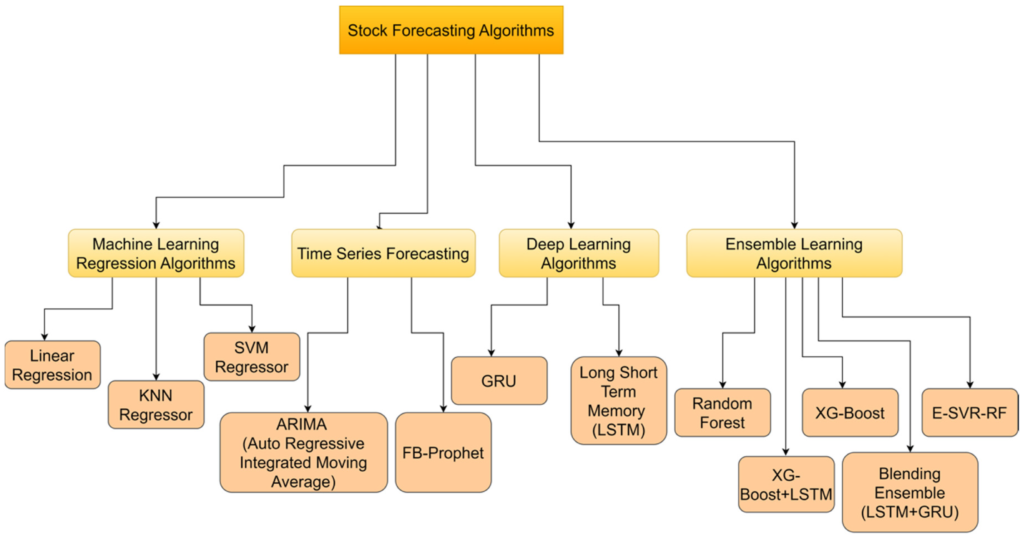
Artificial intelligence and machine learning are increasingly used to analyze large datasets that traditional economic models struggle to process.
Economic forecasting involves evaluating thousands of variables that influence inflation, employment, investment, and global trade. AI systems can scan enormous datasets and identify patterns that might otherwise remain hidden.
These tools assist economists in several areas:
- Detecting emerging inflation trends in large price datasets
- Forecasting labor market shifts from job posting patterns
- Identifying supply chain disruptions
- Analyzing financial market sentiment
- Improving predictive models for GDP growth
Importantly, machine learning models are used as support tools, not decision makers. Federal Reserve economists still rely on theory, experience, and human judgment when interpreting results.
AI provides additional analytical depth, helping economists test scenarios and improve forecasting accuracy.
The Rise of “Nowcasting” in Monetary Policy
A concept gaining traction in central banking is nowcasting—the ability to estimate economic conditions in near real time.
Instead of waiting weeks for official statistics, nowcasting models continuously update estimates using incoming data streams.
These models combine dozens or even hundreds of datasets, including:
- Industrial production signals
- Online retail sales
- Commodity prices
- Shipping and logistics activity
- Financial market indicators
By combining these signals, economists can generate near-real-time estimates of economic growth or inflation.
For example, the Federal Reserve Bank of Atlanta’s GDPNow model provides a continuously updated estimate of quarterly GDP growth based on incoming data releases. Although not an official forecast, it gives policymakers and market participants a useful real-time snapshot of economic momentum.
Big Data and Inflation Measurement
Inflation remains one of the Federal Reserve’s most closely watched indicators. Measuring it accurately is crucial for setting interest rates.
Traditionally, inflation measures rely on surveys and price collection from physical stores. Today, economists can supplement these methods using big data price tracking.
Online retailers, e-commerce platforms, and digital marketplaces generate massive datasets showing how prices change daily.
Examples of modern inflation data sources include:
- E-commerce price scraping
- Digital grocery pricing databases
- Rental market platforms
- Real-time commodity pricing feeds
These data sources help economists detect price changes more quickly than traditional surveys.
While official inflation metrics such as the Personal Consumption Expenditures (PCE) index remain the benchmark, big data tools allow policymakers to observe price trends earlier and adjust forecasts more quickly.
Data Science and Financial Stability Monitoring
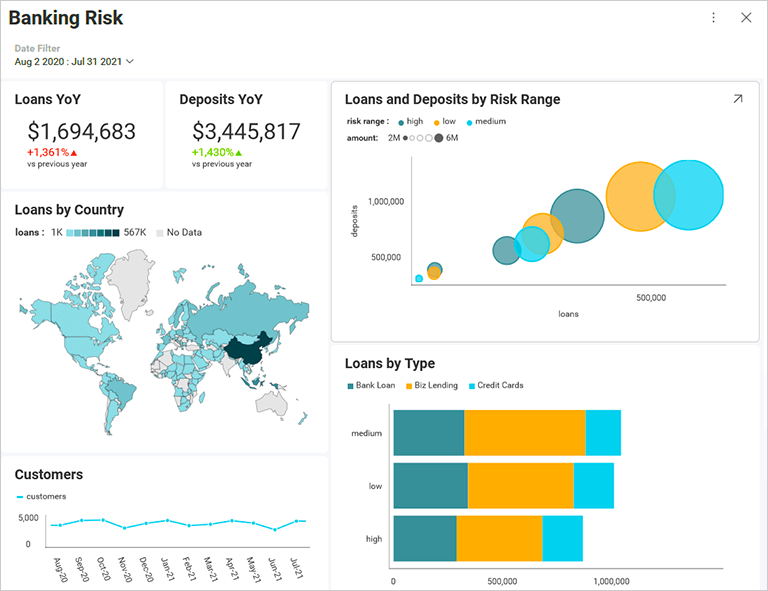
Another critical role of the Federal Reserve is maintaining financial system stability. Technology now allows regulators to monitor risk across banks, markets, and financial institutions more effectively.
Financial institutions generate enormous quantities of regulatory and transaction data. Data science tools help analysts identify emerging vulnerabilities.
Examples include:
- Monitoring liquidity flows in financial markets
- Tracking leverage levels across institutions
- Identifying correlated risks across asset classes
- Detecting unusual trading patterns
These tools became particularly important after the 2008 global financial crisis, which exposed gaps in financial oversight and data visibility.
Since then, regulators have invested heavily in advanced analytics to better understand systemic risk.
Cloud Computing and Economic Research Infrastructure
Modern economic research requires massive computing power. Large-scale data processing, machine learning training, and complex simulations often exceed the capacity of traditional desktop computing.
To address this, the Federal Reserve and other central banks increasingly rely on secure cloud computing environments.
Cloud infrastructure allows researchers to:
- Process massive datasets efficiently
- Run large economic simulations
- Share datasets across research teams
- Store historical financial data securely
This technological infrastructure allows economists to explore more sophisticated research questions, including global financial linkages and supply chain dynamics.
Natural Language Processing and Policy Insight
Not all economic data comes in numerical form. A growing share of valuable information exists in text—earnings calls, corporate filings, news reports, and consumer sentiment.
Natural Language Processing (NLP), a branch of artificial intelligence, helps economists analyze large text datasets.
For example, NLP models can examine thousands of corporate earnings transcripts to detect common themes related to:
- Supply chain disruptions
- Wage pressures
- Consumer demand trends
- Capital investment plans
This information provides an additional layer of insight into how businesses are experiencing economic conditions.
Some Federal Reserve regional banks also analyze qualitative business surveys, combining them with machine learning to identify regional economic trends.
Challenges of Using Advanced Data in Monetary Policy
While new technologies provide powerful analytical tools, they also introduce challenges.
Economic policymakers must ensure that new datasets are reliable, unbiased, and representative of the broader economy.
Key challenges include:
- Data privacy and security concerns
- Potential bias in privately sourced datasets
- Overreliance on algorithmic models
- Difficulty interpreting complex machine learning systems
Because of these issues, the Federal Reserve maintains a careful balance between technological innovation and methodological caution.
Human expertise, institutional knowledge, and traditional economic models remain central to policy decision-making.
How Technology Is Changing the Fed’s Policy Process
Technology has not replaced the core structure of Federal Reserve decision-making, but it has changed the speed, scope, and depth of economic analysis.
Before meetings of the Federal Open Market Committee (FOMC), policymakers review extensive economic briefings prepared by staff economists. These briefings increasingly incorporate insights from large datasets and advanced models.
The result is a more comprehensive understanding of economic conditions across:
- Labor markets
- Consumer spending
- Housing activity
- Financial markets
- Global economic developments
As the economy becomes more digital and data-driven, these analytical tools will continue to play a growing role in how policymakers evaluate risks and opportunities.
Frequently Asked Questions
1. Why does the Federal Reserve use big data?
Big data helps the Fed analyze economic conditions more quickly and accurately by incorporating real-time signals from across the economy.
2. Does artificial intelligence make policy decisions for the Fed?
No. AI tools assist economists in analysis and forecasting, but human policymakers ultimately make all decisions.
3. What is nowcasting in economics?
Nowcasting refers to estimating current economic conditions using real-time data rather than waiting for official reports.
4. How does technology help measure inflation?
Digital price tracking, e-commerce data, and rental market platforms provide faster insight into changing prices.
5. What role does cloud computing play in economic research?
Cloud computing allows economists to process large datasets and run complex economic simulations efficiently.
6. Is high-frequency data reliable?
It can be useful but must be carefully validated because some datasets may not represent the entire economy.
7. How does the Fed monitor financial stability using technology?
Advanced analytics help track market liquidity, leverage levels, and systemic risks across financial institutions.
8. Can machine learning predict recessions?
Machine learning can improve forecasting models, but economic cycles remain difficult to predict with complete accuracy.
9. Do regional Federal Reserve banks use these technologies?
Yes. Many regional Fed banks conduct advanced research using big data, machine learning, and real-time indicators.
10. Will technology completely transform monetary policy?
Technology will enhance analysis, but economic expertise and institutional judgment will remain central to policymaking.
The Emerging Future of Data-Driven Central Banking
The growing integration of data science, artificial intelligence, and real-time economic monitoring marks a significant evolution in how central banks operate. For the Federal Reserve, these tools provide earlier signals about economic changes, deeper insight into financial markets, and stronger analytical capabilities.
However, technology works best when combined with human expertise. Economic judgment, historical perspective, and institutional knowledge remain essential components of effective monetary policy.
As the digital economy continues to expand, the Federal Reserve’s analytical methods will likely become even more data-rich—allowing policymakers to respond more effectively to economic challenges in an increasingly complex world.
Key Insights at a Glance
- Technology enables the Federal Reserve to analyze real-time economic signals
- High-frequency data complements traditional economic indicators
- AI and machine learning improve forecasting and data analysis
- Big data tools enhance inflation tracking and market monitoring
- Cloud computing supports large-scale economic research
- Natural language processing analyzes business sentiment and textual data
- Advanced analytics strengthen financial stability oversight
- Human expertise remains central to policy decisions