
Summary
The Federal Reserve System is the United States’ central banking structure responsible for managing monetary policy, supervising banks, and maintaining financial stability. Its unique design blends government oversight with regional representation through a Board of Governors, 12 regional Reserve Banks, and the Federal Open Market Committee. Understanding this structure helps Americans see how interest rates, inflation policy, and banking regulation affect the economy.
Why the Federal Reserve’s Structure Matters
The Federal Reserve—often called “the Fed”—plays a central role in shaping the American economy. When mortgage rates rise, inflation slows, or banks face regulatory changes, those outcomes frequently trace back to decisions made within the Fed’s structure.
Unlike many central banks around the world, the U.S. Federal Reserve was deliberately designed as a hybrid system. It balances centralized authority in Washington, D.C., with regional representation across the country. This structure reflects historical concerns that financial power should not be concentrated in a single city or institution.
For individuals, businesses, and policymakers, understanding how the Federal Reserve is organized makes it easier to interpret policy decisions such as:
- Interest rate changes
- Inflation control strategies
- Emergency financial interventions
- Banking regulations
These decisions influence everything from credit card rates to unemployment levels.
A Brief History of Why the Fed Was Created
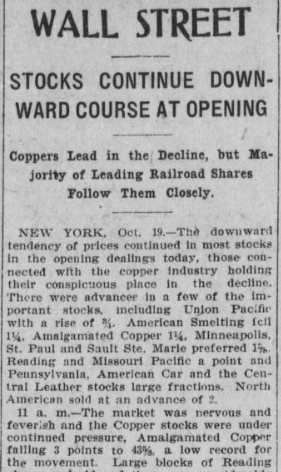
Before the Federal Reserve existed, the United States experienced frequent financial crises. The most famous example was the Panic of 1907, when a collapse in trust among banks caused widespread bank runs and threatened the financial system.
At the time, the U.S. lacked a central authority to stabilize the banking system. Private financiers like J.P. Morgan had to intervene informally to prevent deeper collapse.
In response, Congress passed the Federal Reserve Act of 1913, establishing a central banking system designed to:
- Provide financial stability
- Serve as a lender of last resort
- Manage the nation’s money supply
- Supervise banks
The designers intentionally created a decentralized central bank to avoid giving too much influence to either Wall Street or Washington.
More than a century later, that structure still defines how the Fed operates.
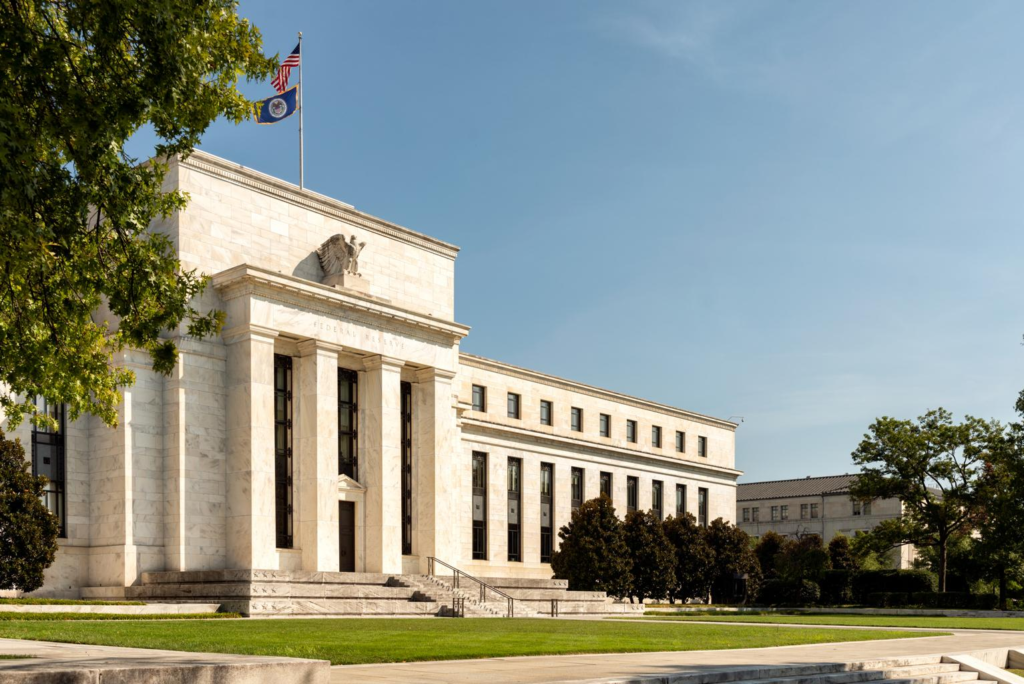
The Three Core Components of the Federal Reserve System
The Federal Reserve System is built around three primary institutions. Each plays a different role in shaping U.S. monetary policy and financial regulation.
1. The Board of Governors
The Board of Governors is the central governing body of the Federal Reserve System.
Located in Washington, D.C., it consists of seven members appointed by the U.S. President and confirmed by the Senate. Each governor serves a 14-year term, a design intended to insulate monetary policy from short-term political pressure.
The Board of Governors is responsible for:
- Setting national monetary policy direction
- Supervising and regulating major banking institutions
- Overseeing the 12 regional Reserve Banks
- Establishing reserve requirements and regulatory frameworks
The Chair of the Federal Reserve—currently one of the most influential economic policymakers in the world—serves a four-year renewable term.
In practice, the Chair communicates the Fed’s outlook to financial markets, Congress, and the public.
2. The 12 Regional Federal Reserve Banks
While policy leadership sits in Washington, the Fed’s operational structure is decentralized across 12 regional Federal Reserve Banks.
These banks represent geographic regions of the United States and provide localized economic insights.
The twelve districts include:
- Boston
- New York
- Philadelphia
- Cleveland
- Richmond
- Atlanta
- Chicago
- St. Louis
- Minneapolis
- Kansas City
- Dallas
- San Francisco
Each Reserve Bank performs several important functions:
- Conducts economic research for its region
- Supervises regional financial institutions
- Processes payments and financial transactions
- Distributes currency and coin
- Provides economic data to policymakers
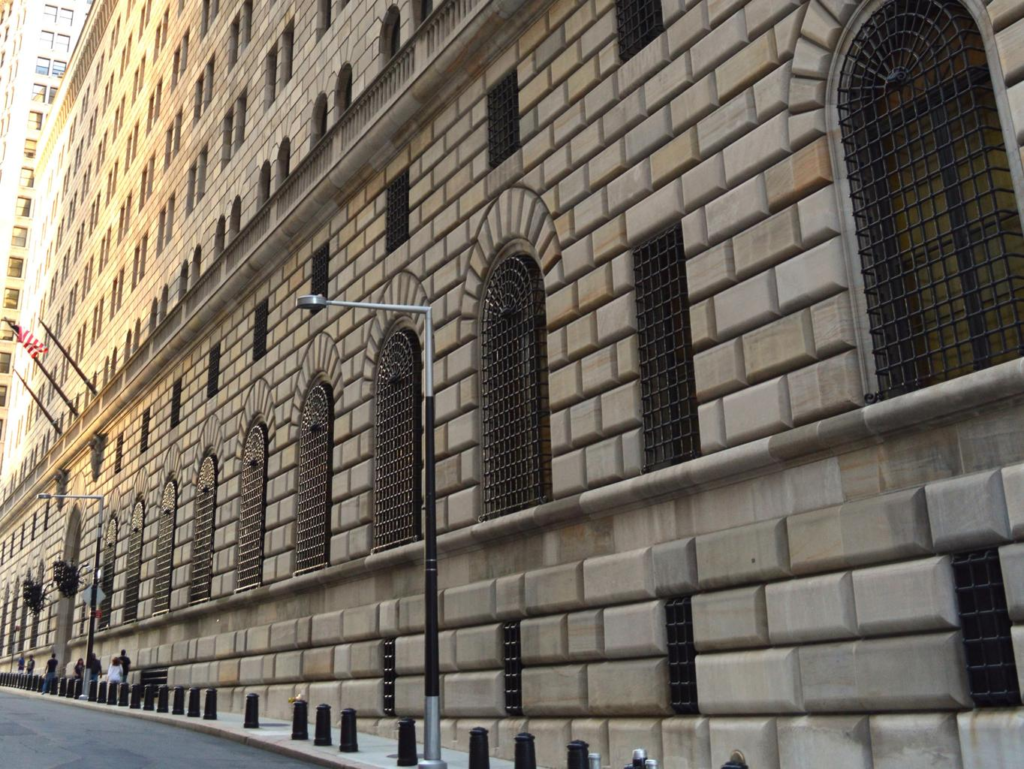
For example, the Federal Reserve Bank of New York plays a particularly important role in financial markets. It conducts open market operations and manages relationships with major financial institutions.
This regional structure ensures that economic conditions in places like the Midwest, South, and West Coast are represented in national policy decisions.
3. The Federal Open Market Committee (FOMC)
The Federal Open Market Committee, or FOMC, is the body responsible for setting U.S. monetary policy, particularly interest rates.
It meets approximately eight times per year to determine the direction of the federal funds rate—the benchmark interest rate influencing borrowing costs across the economy.
The FOMC consists of:
- The 7 members of the Board of Governors
- The President of the Federal Reserve Bank of New York
- 4 rotating presidents from the remaining Reserve Banks
The committee’s primary responsibilities include:
- Setting the federal funds target rate
- Conducting open market operations
- Managing the Fed’s balance sheet
- Responding to economic crises
These decisions influence borrowing costs for mortgages, business loans, and consumer credit.
For instance, during the 2020 pandemic crisis, the FOMC cut rates close to zero and launched large-scale bond purchases to stabilize financial markets.
How Monetary Policy Decisions Are Made
Federal Reserve decisions are based on extensive economic analysis and forecasting.
Economists across the Fed system track indicators such as:
- Inflation
- Employment growth
- Wage trends
- Consumer spending
- Business investment
- Global economic conditions
The Fed’s official mandate—established by Congress—is known as the dual mandate:
- Maximum employment
- Stable prices
In recent years, the Fed has interpreted “stable prices” as around 2% inflation annually.
If inflation rises significantly above that level, the Fed typically raises interest rates. If unemployment rises sharply, the Fed may lower rates to stimulate economic activity.
This balancing act is one of the most complex responsibilities in economic policy.
How the Federal Reserve Interacts With the U.S. Government
Although the Federal Reserve was created by Congress, it operates independently from the executive branch in most policy decisions.
This independence is considered essential for maintaining credibility in financial markets.
Key relationships include:
- Congress: The Fed reports to Congress through regular testimony and oversight hearings.
- U.S. Treasury: The Fed works closely with the Treasury on financial system operations and crisis response.
- Banking regulators: It coordinates with agencies such as the FDIC and OCC.
Importantly, the Federal Reserve does not receive congressional funding. Instead, it finances its operations through earnings on government securities.
After covering expenses, the Fed returns most of its profits to the U.S. Treasury. In many years, this amount exceeds $50–100 billion annually.
The Role of Federal Reserve Banks in Everyday Life
Although most Americans never interact directly with the Federal Reserve, its influence is felt daily.
Examples include:
Mortgage Rates
When the Fed raises interest rates to control inflation, mortgage rates often rise as well. This directly affects home affordability.
Credit Cards and Loans
Variable interest rates on credit cards and business loans are closely tied to changes in the federal funds rate.
Bank Supervision
The Fed supervises major banks to ensure they maintain sufficient capital and risk controls. These safeguards aim to prevent financial crises like the 2008 financial collapse.
Economic Stability
During recessions or financial disruptions, the Fed can inject liquidity into financial markets to prevent systemic failures.
Why the Fed’s Structure Is Designed This Way
The Federal Reserve’s unusual structure reflects a compromise between competing interests in early 20th-century America.
At the time, lawmakers wanted to avoid:
- Excessive control by Wall Street
- Too much power centralized in Washington
- Lack of regional economic representation
The resulting system created a distributed central bank, combining federal oversight with regional participation.
This design helps ensure that economic perspectives from across the country influence policy discussions.
For example:
- Agricultural concerns from the Midwest
- Technology sector insights from the West Coast
- Financial market developments in New York
All feed into the Fed’s decision-making process.
Challenges and Criticism of the Federal Reserve Structure
Despite its long history, the Federal Reserve’s structure continues to face criticism from economists and policymakers.
Common critiques include:
- Transparency concerns: Some critics argue the Fed should communicate policy decisions more clearly.
- Political pressure: Even though the Fed is independent, political leaders sometimes publicly pressure the central bank.
- Regional influence questions: Some economists debate whether regional banks still provide meaningful representation in modern financial markets.
Others argue that the Fed’s independence is one of the key reasons the United States maintains a stable financial system.
The debate highlights how central banking remains both technical and political.
Frequently Asked Questions
What is the main purpose of the Federal Reserve?
The Federal Reserve’s primary purpose is to maintain economic stability by managing monetary policy, supervising banks, and ensuring the smooth functioning of financial markets.
How many Federal Reserve Banks exist?
There are 12 regional Federal Reserve Banks, each serving a different geographic district of the United States.
Who controls the Federal Reserve?
The system is overseen by the Board of Governors, whose members are appointed by the President and confirmed by the Senate.
What does the Federal Open Market Committee do?
The FOMC sets the federal funds rate and directs monetary policy to achieve stable prices and maximum employment.
Why is the Federal Reserve independent?
Independence helps ensure that monetary policy decisions are based on economic data rather than short-term political pressures.
How often does the Fed change interest rates?
The Fed reviews interest rates during eight scheduled FOMC meetings each year, though emergency meetings can occur during crises.
Does the Federal Reserve print money?
Technically, the U.S. Treasury prints physical currency. However, the Fed controls the money supply and circulation.
How does the Fed fight inflation?
The Fed typically raises interest rates, making borrowing more expensive and slowing economic demand.
Can the Federal Reserve prevent recessions?
The Fed cannot fully prevent recessions, but it can mitigate their severity through monetary policy actions.
Who audits the Federal Reserve?
The Fed’s financial statements are audited annually, and various aspects of its operations are reviewed by Congress and government oversight bodies.
How the Federal Reserve’s Design Shapes Economic Stability
The Federal Reserve System’s structure reflects more than a century of experimentation with monetary governance. By combining national oversight with regional insight, the system attempts to balance economic expertise, democratic accountability, and financial stability.
While debates continue about its policies and influence, the Fed remains one of the most powerful institutions shaping the U.S. economy.
Understanding how it works provides valuable context for interpreting economic headlines—from inflation reports to interest rate announcements.
Essential Points to Remember
- The Federal Reserve was created in 1913 to stabilize the U.S. financial system
- It consists of three core components: the Board of Governors, 12 Reserve Banks, and the FOMC
- The Fed’s primary goals are maximum employment and stable prices
- Interest rate decisions strongly influence borrowing costs across the economy
- Regional Reserve Banks ensure economic perspectives from across the U.S. are considered
- Independence from political pressure helps maintain financial market credibility