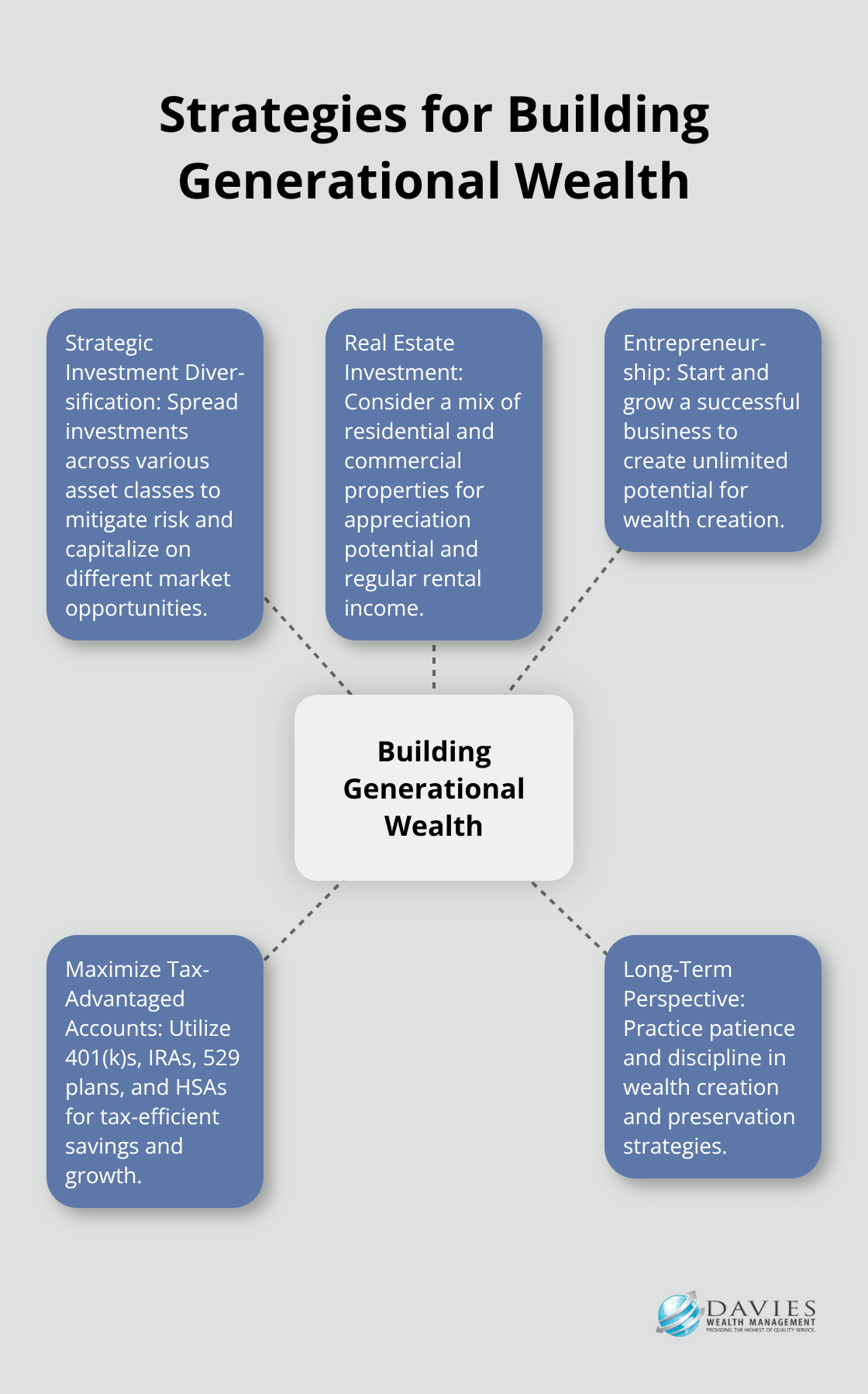
Wealth building in America is evolving beyond traditional saving accounts and investment portfolios. While investing remains important, many households are focusing on income diversification, business ownership, real estate opportunities, skill development, tax efficiency, and strategic financial planning. These approaches emphasize long-term financial resilience, creating multiple paths to growth while reducing dependence on any single source of income or market outcome.
Why Wealth Building Is Expanding Beyond Traditional Approaches
For decades, Americans were taught a relatively straightforward formula for financial success: earn income, save consistently, invest in diversified assets, and wait for compound growth to work over time. While that framework still holds significant value, economic changes, technological innovation, shifting labor markets, and rising living costs have encouraged many households to explore additional wealth-building strategies.
Today, wealth creation is increasingly viewed as a comprehensive system rather than a single investment plan. Americans are asking broader questions:
- How can I create multiple income streams?
- Is business ownership worth considering?
- How do wealthy households use tax strategies?
- Can skills and education generate better returns than some investments?
- What role does real estate play in modern wealth building?
These questions reflect a growing recognition that wealth often results from a combination of financial decisions rather than one specific strategy.

The Shift From Asset Accumulation to Income Creation
One of the most noticeable trends is the growing emphasis on creating income-producing assets.
Traditional saving focuses on accumulating money. Modern wealth-building conversations increasingly focus on acquiring assets that generate ongoing cash flow.
These assets may include:
- Rental properties
- Dividend-producing investments
- Small businesses
- Digital businesses
- Royalties and licensing income
- Professional consulting services
Many financial planners note that households with multiple income sources often have greater flexibility during economic downturns. A job loss becomes less financially disruptive when supplemental income streams already exist.
Consider a marketing professional who earns a salary but also operates a small consulting practice. The consulting income may initially be modest, but over time it can become an additional wealth-building engine independent of traditional employment.
The focus shifts from simply saving money toward creating systems that continuously generate money.
Why Business Ownership Is Receiving Renewed Attention
Small business ownership has long been a pathway to wealth in America, but digital tools have dramatically lowered barriers to entry.
Many entrepreneurs today launch businesses with relatively modest startup costs compared to previous generations.
Examples include:
- E-commerce stores
- Professional service firms
- Online education businesses
- Content publishing businesses
- Specialized consulting operations
- Local service companies
Business ownership provides a unique wealth-building advantage because owners can influence growth directly through decisions, innovation, and operational improvements.
Unlike traditional investments, where returns depend largely on market performance, businesses offer opportunities to create value through effort, expertise, and strategic execution.
Of course, businesses involve risk and require significant commitment. However, many Americans view entrepreneurship as a way to build assets with growth potential beyond what traditional savings accounts can offer.
Real Estate Remains a Powerful Wealth-Building Tool
Despite changing market conditions, real estate continues to attract attention as a long-term wealth-building strategy.
Property ownership offers several potential advantages:
- Equity accumulation through mortgage payments
- Potential appreciation over time
- Rental income opportunities
- Certain tax benefits
- Inflation protection characteristics
Many successful wealth builders view real estate as both an investment and a business.
For example, a homeowner who purchases a duplex and rents one unit may generate rental income while simultaneously building equity. Others pursue long-term rental properties, short-term vacation rentals, or commercial real estate investments.
The key lesson emerging among experienced investors is that successful real estate ownership typically requires careful analysis, disciplined financing, and a long-term perspective.

The Growing Importance of Skill-Based Wealth Building
One of the most overlooked wealth-building strategies involves investing in personal capabilities.
Skills can generate returns throughout an individual’s career and often influence earning power more directly than many financial assets.
Americans increasingly invest in:
- Professional certifications
- Technical training
- Industry-specific expertise
- Leadership development
- Sales skills
- Artificial intelligence and automation knowledge
A software engineer who acquires specialized cybersecurity expertise may significantly increase earning potential. Similarly, a healthcare professional who obtains advanced credentials may access higher-paying positions and expanded career opportunities.
In many cases, the return on educational investment can exceed the return from financial investments, particularly early in a career.
This perspective has led many financial experts to describe skill development as a critical wealth-building asset rather than merely a career expense.
Tax Strategy Is Becoming Part of the Wealth Conversation
Many households focus heavily on earning and investing while paying relatively little attention to tax efficiency.
However, wealth-building discussions increasingly include strategies designed to legally reduce tax burdens and preserve more capital for long-term growth.
Common areas of focus include:
- Employer-sponsored retirement plans
- Individual retirement accounts
- Health savings accounts
- Tax-efficient investment placement
- Capital gains planning
- Business-related deductions where appropriate
High-net-worth households often devote significant attention to tax planning because reducing taxes can improve long-term net worth without increasing investment risk.
For example, maximizing retirement contributions can potentially lower current taxable income while simultaneously increasing future investment assets.
Tax efficiency is rarely the most exciting aspect of wealth building, but it often produces meaningful long-term results.
The Rise of Multiple Income Streams
Economic uncertainty has encouraged many Americans to diversify income in much the same way investors diversify portfolios.
Rather than relying exclusively on one employer, households increasingly pursue secondary income opportunities.
Popular examples include:
- Freelancing
- Consulting
- Online teaching
- Digital product sales
- Affiliate publishing
- Real estate income
- Contract work
Importantly, not every secondary income stream needs to become a full-scale business. Even modest supplemental income can increase savings capacity, accelerate debt reduction, and provide greater financial flexibility.
The objective is often resilience rather than rapid wealth accumulation.
When one source slows, another may continue generating revenue.
How Technology Is Changing Wealth Creation
Technology has democratized access to wealth-building opportunities that were once limited to large institutions or wealthy investors.
Today, individuals can:
- Open investment accounts online in minutes
- Access educational resources at low cost
- Launch digital businesses globally
- Build professional audiences through content platforms
- Manage finances with sophisticated software
- Analyze investments using powerful online tools
The accessibility of information has created both opportunities and challenges.
While resources are more available than ever, misinformation is also widespread. Successful wealth builders increasingly focus on evidence-based decision-making and long-term planning rather than chasing trends.
Technology is most valuable when used as a tool to improve financial discipline, knowledge, and productivity.

The Role of Financial Resilience in Modern Wealth Building
Recent economic disruptions have highlighted the importance of resilience.
Many households now recognize that wealth is not simply about maximizing returns. It is also about maintaining stability during unexpected events.
Financial resilience often includes:
- Emergency savings
- Appropriate insurance coverage
- Diversified income
- Reasonable debt levels
- Flexible spending habits
A household with moderate wealth but strong resilience may weather economic challenges more effectively than a household with higher net worth but greater financial vulnerability.
This shift has influenced how many Americans define financial success.
Rather than pursuing maximum growth at all costs, many focus on balancing growth with stability.
What Wealth Builders Often Have in Common
Although wealth-building journeys vary significantly, several recurring patterns appear among financially successful individuals.
Common characteristics include:
- Consistent long-term planning
- Disciplined spending habits
- Continuous learning
- Strategic risk management
- Diversified income sources
- Patience during market fluctuations
- Focus on asset ownership
- Strong understanding of taxes and cash flow
Notably, these habits are often more important than any specific investment selection.
Many financial professionals emphasize that behavior frequently has a greater impact on outcomes than market timing.
Common Mistakes That Can Slow Wealth Growth
Building wealth requires avoiding costly errors as much as identifying opportunities.
Some of the most common obstacles include:
- Lifestyle inflation that outpaces income growth
- Excessive consumer debt
- Lack of emergency savings
- Chasing investment trends
- Ignoring tax planning
- Delaying retirement contributions
- Overconcentration in a single asset
- Failing to invest in professional development
Each of these issues can reduce long-term financial progress, even among high earners.
Sustainable wealth building typically results from steady, disciplined decision-making rather than dramatic financial moves.
Frequently Asked Questions
1. Is saving money still important for wealth building?
Yes. Saving provides the foundation for investing, emergency preparedness, and future opportunities. Most advanced wealth-building strategies still depend on strong saving habits.
2. What is the biggest difference between saving and wealth building?
Saving focuses on preserving money, while wealth building focuses on growing assets, income, and net worth over time.
3. How many income streams should someone have?
There is no universal number. The goal is creating sufficient diversification to improve financial stability and reduce dependence on a single source.
4. Is real estate necessary to build wealth?
No. Many individuals build substantial wealth through businesses, investments, and professional careers. Real estate is one option among many.
5. Are side businesses worth pursuing?
For some individuals, yes. Side businesses can generate additional income and potentially become valuable assets, though they require time and effort.
6. Why is tax planning important?
Tax-efficient strategies help retain more earnings and investment gains, allowing wealth to compound more effectively over time.
7. Can skill development be considered an investment?
Absolutely. Improved skills often lead to higher earnings, expanded opportunities, and stronger career resilience.
8. What role does diversification play in wealth building?
Diversification can reduce risk by limiting reliance on any single investment, industry, employer, or income source.
9. Should younger adults focus more on skills or investments?
Both matter, but increasing earning potential through skill development often produces substantial long-term benefits early in a career.
10. What is the most overlooked wealth-building strategy?
Many experts point to increasing income capacity through education, specialized skills, and entrepreneurship as an often-underappreciated approach.
Building Wealth in a More Dynamic Economy
The most notable change in wealth-building conversations across America is the growing recognition that financial success rarely comes from a single strategy. Saving and investing remain essential foundations, but many households are combining those traditional methods with business ownership, real estate opportunities, skill development, tax efficiency, and diversified income streams.
The result is a broader, more resilient approach to financial growth. Rather than depending entirely on market performance or employment income, individuals are increasingly building interconnected systems that create opportunities for long-term stability and wealth accumulation.
Key Lessons Worth Remembering
- Wealth building extends beyond saving and investing alone.
- Income-producing assets are gaining attention nationwide.
- Business ownership remains a significant path to wealth creation.
- Real estate continues to offer long-term opportunities.
- Skill development can generate powerful financial returns.
- Tax efficiency plays an important role in preserving wealth.
- Multiple income streams can improve financial resilience.
- Technology has expanded access to wealth-building tools.
- Long-term discipline often matters more than short-term tactics.
- Financial resilience is becoming as important as growth itself.