Summary
Market movers—stocks experiencing notable price or volume changes—often attract analysts’ attention because they signal shifts in investor sentiment, economic trends, or sector developments. By examining these stocks more closely, investors can better understand what’s driving the market. This guide explores how analysts identify market movers, what factors influence them, and how everyday investors can interpret these signals responsibly.
Understanding What “Market Movers” Really Means
In financial markets, the term market movers typically refers to stocks or sectors showing significant activity—either through sharp price changes, unusual trading volume, or strong reactions to news events.
For professional analysts, market movers are more than just trending tickers on financial news feeds. They often represent signals of broader market shifts, such as:
- Changes in consumer demand
- Regulatory or policy developments
- Technological innovation
- Supply chain disruptions
- Earnings surprises
For example, when a large technology firm reports stronger-than-expected earnings, its stock may rise sharply. Analysts often monitor how this move affects related companies across the sector, such as suppliers or competitors.
According to data from the New York Stock Exchange and Nasdaq, daily lists of the most active stocks frequently include companies reacting to earnings announcements, economic reports, or shifts in interest rate expectations.
Understanding these dynamics helps investors interpret why certain stocks appear repeatedly on analysts’ radar.

Why Analysts Pay Attention to Market Movers
Professional analysts track market movers because they can reveal emerging narratives in the economy and financial markets.
A sudden increase in trading activity can suggest that institutional investors—such as pension funds or hedge funds—are repositioning their portfolios.
Common reasons analysts monitor market movers include:
- Earnings surprises
- Economic data releases
- Mergers and acquisitions activity
- Regulatory changes
- Major product launches
For instance, when inflation data or employment reports are released by the U.S. Bureau of Labor Statistics, analysts often watch how specific sectors respond.
If energy companies suddenly become market movers following a change in oil prices, it may signal broader expectations about economic growth or supply conditions.
The Types of Market Movers Analysts Track
Not all market movers are created equal. Analysts usually categorize them into several groups depending on what triggered the movement.
Earnings-Driven Movers
Quarterly earnings season is one of the most common catalysts for market-moving activity.
Companies that significantly exceed or fall short of expectations often see large stock swings.
For example, analysts frequently track earnings results reported through the U.S. Securities and Exchange Commission filings.
When earnings diverge from forecasts, analysts examine:
- Revenue growth trends
- Profit margins
- Future guidance
- Changes in consumer demand
Even a small adjustment in guidance can sometimes lead to a noticeable shift in stock price.
News and Event-Driven Movers
Corporate announcements can also create market movers overnight.
Examples include:
- Leadership changes
- Regulatory approvals
- Product launches
- Strategic partnerships
When companies in industries like pharmaceuticals or semiconductors receive regulatory approvals, analysts watch closely to see how competitors react.
These developments can influence entire industry segments, not just a single company.
Macroeconomic Movers
Some market movers emerge due to broader economic forces.
Interest rate decisions by the Federal Reserve often influence banking, technology, and housing-related stocks.
For example:
- Rising interest rates may affect growth-oriented technology companies
- Lower borrowing costs may support housing and construction stocks
Analysts evaluate these shifts to determine how monetary policy might reshape sector performance.
Key Sectors Frequently Producing Market Movers
Certain sectors generate market movers more frequently due to innovation cycles, regulatory developments, or economic sensitivity.
Technology
Technology companies often dominate daily market-mover lists because of rapid product innovation and strong investor interest.
Major developments in artificial intelligence, cloud computing, or semiconductor supply chains frequently influence tech stocks.
Companies listed on the Nasdaq Composite often show heightened volatility during product launches or earnings reports.
Energy
Energy markets are highly sensitive to global supply and demand.
Changes in oil prices, geopolitical developments, or energy policy can quickly shift energy stocks.
Analysts closely follow energy companies during fluctuations in crude oil benchmarks.
Financials
Banking and financial institutions are often influenced by interest rates, lending trends, and economic growth.
Changes in Treasury yields or Federal Reserve policy can quickly place financial stocks among the day’s market movers.
Healthcare and Biotech
Healthcare companies frequently move due to clinical trial results, drug approvals, and policy decisions.
Biotech firms in particular may see sharp price movements when new research findings are released.
How Analysts Identify Market Movers
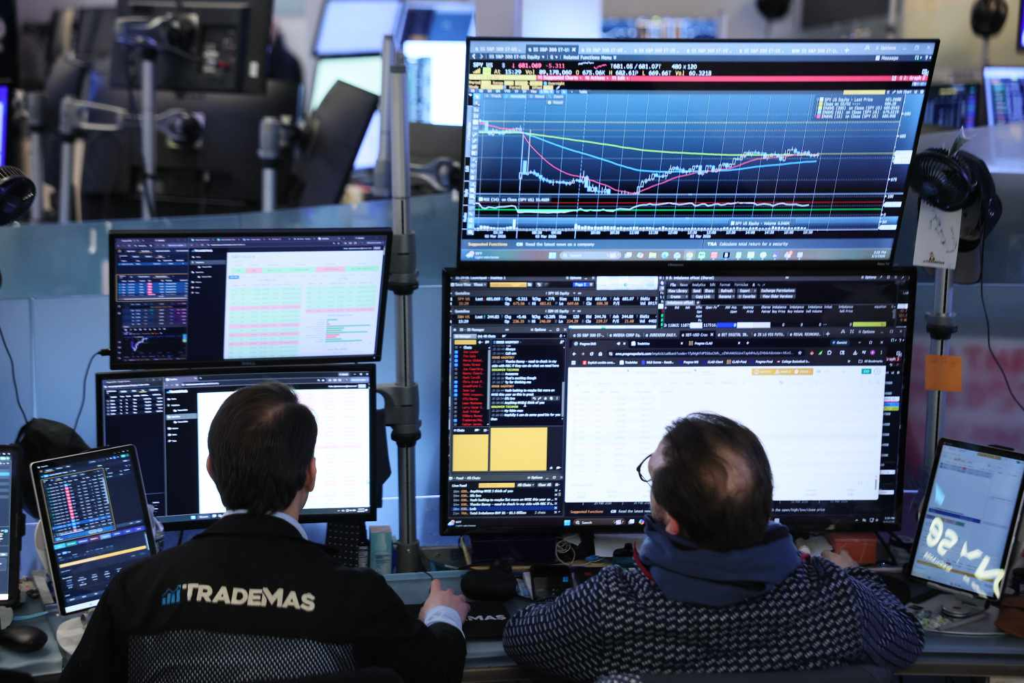
Professional analysts rely on several tools and data sources to track unusual market activity.
These include:
- Real-time trading platforms
- Institutional research reports
- Volume and volatility indicators
- Earnings calendars
- News feeds from financial publications
For example, market analytics tools often highlight stocks experiencing unusual trading volume, which can indicate large institutional trades.
Analysts also monitor price movement relative to market indices such as the S&P 500 and the Dow Jones Industrial Average.
If a stock moves sharply while the broader index remains stable, analysts investigate the underlying cause.
Real-World Examples of Market Movers in Action
Market movers often emerge during moments of economic or corporate transition.
Example: Earnings Surprises
Suppose a major retailer reports unexpectedly strong holiday sales. Investors may respond by pushing the stock higher during early trading hours.
Analysts then examine whether this surge reflects:
- Strong consumer spending trends
- Improved supply chains
- Successful pricing strategies
If competitors in the retail sector also rise, analysts may interpret the move as a broader industry trend rather than a single-company event.
Example: Economic Data Reactions
When inflation readings exceed expectations, financial markets may react immediately.
Interest-rate-sensitive sectors such as technology or housing often respond quickly to new data.
Analysts review these reactions to assess how investors are adjusting expectations for future Federal Reserve policy.
What Individual Investors Should Watch For
While professional analysts have access to advanced tools, everyday investors can still learn a great deal by observing market movers.
The key is understanding why a stock is moving, not just noticing that it is moving.
Important questions to ask include:
- Is the movement tied to company fundamentals or short-term news?
- Are other companies in the same sector moving similarly?
- Is the movement supported by higher trading volume?
- Does the development affect long-term growth prospects?
By focusing on context rather than price alone, investors can develop a clearer picture of market dynamics.
Risks of Following Market Movers Without Context
Although market movers can offer valuable insights, reacting impulsively to price movements can sometimes lead to poor investment decisions.
Short-term volatility may be driven by temporary events such as:
- Media headlines
- Analyst rating changes
- Algorithmic trading activity
Analysts often emphasize the importance of longer-term fundamentals, including earnings growth, competitive advantages, and industry trends.
In many cases, the most meaningful insights come not from the initial price movement but from how the market reacts over time.
How Market Movers Reflect Broader Economic Trends
Market movers can also serve as early indicators of broader economic developments.
For example:
- Rising transportation stocks may signal stronger trade activity
- Increased activity in homebuilding companies may reflect housing demand
- Semiconductor stocks moving sharply may point to shifts in technology investment
By observing which sectors dominate daily market-mover lists, analysts gain clues about evolving economic narratives.

Frequently Asked Questions
What qualifies a stock as a market mover?
A market mover is typically a stock showing significant price changes or unusually high trading volume during a trading session.
Why do analysts track market movers daily?
They help analysts identify emerging trends, investor sentiment shifts, and potential sector-wide developments.
Are market movers always driven by company news?
No. Market movers may be influenced by economic reports, policy changes, sector developments, or broader market sentiment.
Can market movers indicate long-term investment opportunities?
Sometimes, but not always. Many price movements reflect short-term reactions rather than lasting changes in fundamentals.
Where can investors find lists of market movers?
Financial news platforms and stock exchanges such as the New York Stock Exchange and Nasdaq publish daily lists of active stocks.
Do institutional investors influence market movers?
Yes. Large institutional trades can significantly impact trading volume and stock price movement.
Are small-cap stocks more likely to become market movers?
Small-cap stocks often move more dramatically due to lower liquidity, though large-cap companies also experience notable movements.
How do earnings announcements affect market movers?
Earnings surprises—either positive or negative—often trigger sharp stock movements.
Should investors buy stocks simply because they are market movers?
Most financial professionals recommend evaluating company fundamentals and long-term prospects before making investment decisions.
How do analysts verify the cause of a market move?
They examine company filings, earnings reports, trading volume data, and relevant news events.
Reading the Signals Behind Market Activity
Market movers capture attention because they highlight moments when expectations, data, and investor behavior intersect. For analysts, these movements provide clues about economic shifts, industry dynamics, and emerging investment narratives.
For individual investors, the value lies not in reacting quickly but in interpreting the underlying story. Understanding why a stock moves—whether due to earnings performance, macroeconomic trends, or sector innovation—can provide valuable context for navigating the broader market landscape.
Key Insights at a Glance
- Market movers are stocks with significant price or volume changes
- Analysts track them to identify emerging market narratives
- Earnings reports, economic data, and corporate news often trigger movements
- Technology, energy, healthcare, and financial sectors frequently produce market movers
- Understanding the reasons behind the movement is more valuable than reacting to the movement itself