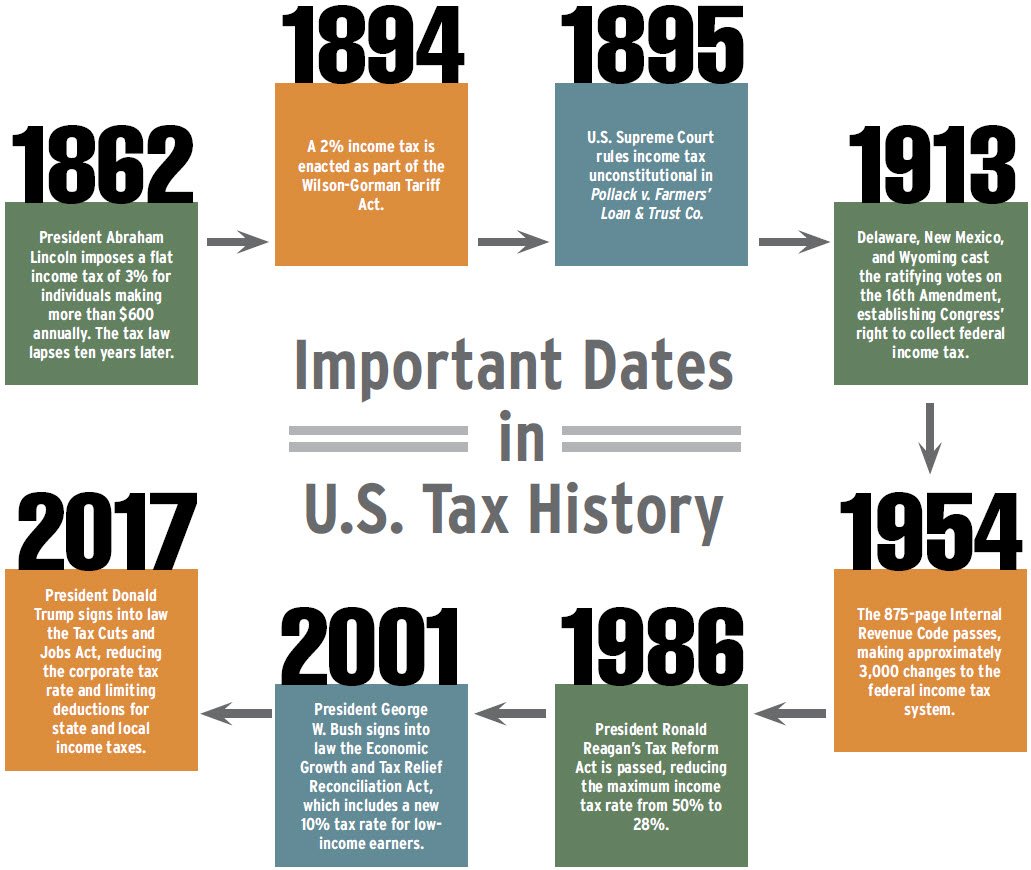
The U.S. tax system is entering a period of potential change as lawmakers debate reforms affecting individuals, businesses, and federal revenue. With several provisions from the 2017 tax overhaul approaching expiration, policymakers are evaluating updates to tax rates, deductions, corporate rules, and family credits. These discussions aim to balance economic growth, fiscal sustainability, and fairness within the tax system.
Why the U.S. Tax System Is Entering Another Reform Cycle
Tax policy in the United States evolves in cycles. Major reforms typically occur when economic priorities shift, federal budget pressures rise, or existing tax provisions approach expiration.
Today’s debate largely stems from the approaching sunset of several provisions in the Tax Cuts and Jobs Act. When the legislation was enacted, many provisions affecting individual taxpayers and small businesses were intentionally temporary. As a result, Congress must now decide whether to extend, revise, or replace them.
At the same time, broader economic trends—including rising federal debt, global tax competition, and changes in the labor market—are shaping policy discussions.
Analysts at institutions such as the Congressional Budget Office regularly emphasize that tax policy decisions made in the next few years could influence federal revenue and economic growth well into the next decade.
For households and businesses, understanding these discussions helps clarify why tax policy frequently becomes a central topic in national economic debates.
What Policymakers Are Trying to Fix
Modern tax reform proposals typically aim to address several structural challenges within the U.S. tax system.
Economists studying Public Economics often focus on how tax systems can balance efficiency, fairness, and simplicity. Achieving all three simultaneously is difficult, which is why tax reform debates often involve trade-offs.
Some of the key challenges policymakers are attempting to address include:
- Complexity in tax filing and compliance
- Incentives for business investment and innovation
- Distribution of tax burdens across income levels
- International competitiveness of U.S. companies
- Long-term sustainability of federal revenue
Each reform proposal tends to prioritize these goals differently, which is why policy debates can become extensive and complex.
The Role of Expiring Tax Provisions
A major driver of the current tax policy conversation is the scheduled expiration of several provisions from the 2017 tax law.
If Congress does not act, certain changes could occur automatically after 2025. These potential changes may affect:
- Individual income tax brackets
- The size of the standard deduction
- Child-related tax credits
- Small-business tax deductions
For example, the standard deduction was significantly increased in 2017, which simplified tax filing for many households. If that provision expires, more taxpayers may return to itemizing deductions.
From a policy perspective, expiration deadlines often force lawmakers to revisit earlier compromises and reassess whether those policies achieved their intended goals.
Individual Income Taxes and Household Finances
Individual tax rates represent one of the most visible aspects of tax reform.
The 2017 law lowered tax rates across several brackets. Policymakers are now debating whether those rates should remain in place or change.
Potential policy directions include:
- Extending the current tax brackets
- Allowing higher brackets to revert to previous levels
- Introducing new brackets for high-income households
- Simplifying the overall rate structure
For many households, these decisions could affect annual tax liability and financial planning.
Consider a dual-income household earning $120,000 annually. If tax rates remain unchanged, their tax burden may stay relatively stable. If brackets shift upward, they could see modest changes in the amount owed each year.
While these differences may appear incremental, they can accumulate significantly over time.
The Importance of Family-Focused Tax Credits
Tax credits aimed at families have become increasingly important components of U.S. tax policy.
Programs such as the Child Tax Credit are designed to help offset the costs associated with raising children. These policies often reflect broader social goals, including reducing poverty and supporting workforce participation.
Data published by the U.S. Census Bureau found that temporary expansions of the credit during the pandemic corresponded with measurable declines in child poverty rates during that period.
Policymakers are now debating how family-related credits should evolve.
Current proposals include:
- Expanding eligibility for low-income households
- Increasing credit amounts
- Delivering credits as monthly payments
- Maintaining the current structure
Each option would carry different budget implications and economic effects.
Small Businesses and the Pass-Through Tax Debate
Small businesses play a major role in the American economy. According to the U.S. Small Business Administration, small firms account for the vast majority of U.S. businesses and employ tens of millions of workers.
Many of these companies operate as pass-through entities such as partnerships, S-corporations, or limited liability companies. Instead of paying corporate taxes, business profits pass through to the owner’s individual tax return.
A key provision affecting these businesses is the Qualified Business Income deduction, which allows eligible owners to deduct up to 20 percent of qualifying income.
This deduction is currently scheduled to expire after 2025.
Policy analysts are examining how its potential expiration could influence:
- Hiring decisions
- Capital investment
- Small-business expansion
- Entrepreneurial activity
For example, a small manufacturing firm planning to purchase new machinery might adjust its investment timeline depending on whether the deduction continues.
Corporate Tax Policy and Global Competition
Corporate tax policy remains one of the most debated elements of modern tax reform.
The United States significantly lowered its corporate tax rate in 2017 to improve global competitiveness. This move brought the U.S. closer to the average corporate tax rates of other developed economies.
However, policymakers continue to debate whether the current rate strikes the right balance between encouraging investment and generating federal revenue.
Several questions remain under discussion:
- Should the corporate tax rate remain unchanged?
- Would modest increases affect investment decisions?
- How should multinational corporations report global income?
- How should international tax agreements be implemented?
Because multinational corporations often choose investment locations based on a range of factors—including taxation, infrastructure, and workforce quality—tax policy decisions can influence where companies build factories or conduct research.
Tax Incentives for Innovation and Domestic Production
In addition to tax rates, lawmakers frequently use targeted incentives to support specific economic activities.
These incentives can encourage companies to invest in research, technology, or domestic manufacturing.
Examples include:
- Research and development tax credits
- Manufacturing investment incentives
- Clean energy tax credits
- Infrastructure-related tax benefits
For instance, a biotechnology company conducting clinical research may rely on R&D tax credits to offset development costs. These incentives are designed to encourage long-term innovation that can strengthen the economy.
Economists often debate how effective these incentives are compared with broader tax reductions.
Fiscal Sustainability and Federal Budget Pressures
While tax reductions can stimulate economic activity, they also affect federal revenue. Policymakers must therefore consider the long-term sustainability of the federal budget.
The Congressional Budget Office regularly publishes projections examining how tax policies may influence deficits and national debt levels.
Important considerations include:
- Federal spending commitments
- Interest payments on national debt
- Economic growth projections
- Long-term revenue stability
Balancing these factors is one of the most challenging aspects of tax reform.
Lawmakers must weigh the economic benefits of tax incentives against the fiscal realities of maintaining government services.
Real-World Ways Tax Policy Shapes Economic Decisions
Although tax policy discussions often occur at the national level, their effects appear in everyday financial decisions.
Consider several examples:
A small construction company deciding whether to purchase new equipment might analyze depreciation rules and tax deductions before finalizing the investment.
A family with two children may compare how different tax credit proposals affect their annual refund.
A technology company evaluating a new research facility might examine tax incentives offered by different countries before selecting a location.
In each case, tax policy does not operate alone—but it becomes one of the factors shaping economic choices.
Frequently Asked Questions
1. Why are U.S. tax reforms being debated now?
Several provisions of the 2017 tax law are scheduled to expire after 2025, requiring Congress to revisit them.
2. Will individual tax rates increase?
They could rise if current provisions expire, although lawmakers may choose to extend or modify them.
3. What is the Qualified Business Income deduction?
It allows certain small-business owners to deduct up to 20 percent of qualifying business income.
4. How could tax reform affect families?
Changes to tax credits and deductions may influence annual refunds and overall tax liability.
5. Why do policymakers use tax incentives?
Incentives can encourage investment, innovation, and economic activity in specific sectors.
6. Do corporate taxes influence where companies invest?
Yes. Tax rates are one factor companies consider when choosing where to locate operations.
7. How do economists evaluate tax proposals?
They analyze effects on economic growth, government revenue, income distribution, and complexity.
8. Are small businesses affected differently than corporations?
Yes. Many small businesses are taxed through pass-through structures rather than corporate tax rates.
9. What role does federal debt play in tax policy?
Higher debt levels can influence how much room policymakers have to reduce taxes.
10. Where can Americans follow tax policy developments?
Government agencies, economic research organizations, and congressional reports regularly publish updates.
Navigating the Next Chapter of U.S. Tax Policy
Tax reform discussions rarely revolve around a single issue. Instead, they involve balancing multiple priorities—economic growth, fairness, fiscal sustainability, and administrative simplicity.
As lawmakers evaluate potential reforms, their decisions will shape the economic environment for households, entrepreneurs, and large corporations alike. Understanding these policy debates can help Americans anticipate how future changes may influence financial planning, investment strategies, and the broader economy.
Key Developments to Watch in the U.S. Tax Landscape
- Several major tax provisions are scheduled to expire after 2025
- Policymakers are debating the future of individual tax rates
- Family tax credits remain a central policy issue
- Small-business deductions may face significant changes
- Corporate tax competitiveness continues to influence reform proposals