Summary
Daily market movers—stocks, sectors, commodities, and bond yields—offer a window into how investors are positioning for economic change. By examining where capital flows during a trading session, investors can detect shifts in sentiment, risk appetite, and macro expectations. Understanding these signals helps individuals interpret volatility and make more informed portfolio decisions in uncertain markets.
Why Market Movers Matter More Than Headlines
Every trading day produces a list of “market movers”—the stocks, sectors, or asset classes experiencing the largest price changes. While financial headlines often frame these moves as isolated events, experienced investors understand they are usually symptoms of deeper positioning shifts within the market.
Market movers represent where institutional capital is actively reallocating. Large hedge funds, pension managers, and asset allocators rarely move billions of dollars randomly. Their trades often reflect evolving views on interest rates, economic growth, inflation expectations, or geopolitical risk.
For individual investors trying to understand market direction, these movements provide a real-time map of investor sentiment.
Consider a common scenario: on a day when Treasury yields rise sharply, technology stocks often decline while banks gain. That pattern reveals more than simple volatility. It suggests investors expect higher interest rates and stronger bank profitability, while discounting future tech earnings at a steeper rate.
In other words, daily market movers function like financial fingerprints of investor positioning.
What “Investor Positioning” Actually Means
Investor positioning refers to how market participants allocate capital across different assets, sectors, and strategies based on their expectations about the future.
This positioning evolves constantly as new information emerges. When expectations shift—whether because of economic data, central bank policy, or corporate earnings—investors adjust their portfolios accordingly.
Positioning can appear through several common patterns:
- Sector rotations between growth and value stocks
- Increased demand for defensive assets like utilities or consumer staples
- Rising interest in commodities or energy during inflationary periods
- Heavy buying of government bonds during economic uncertainty
- Increased volatility in currency markets during policy divergence
For example, in 2022 and early 2023, markets saw a broad rotation from high-growth technology companies toward energy and industrial stocks as inflation surged and interest rates climbed.
These moves weren’t random—they reflected institutional investors repositioning portfolios for a higher-inflation, higher-rate environment.
The Most Important Signals Hidden in Market Movers
Not every stock gaining 10% tells a meaningful story. But when entire sectors move together, the message becomes clearer.
Sector Rotation
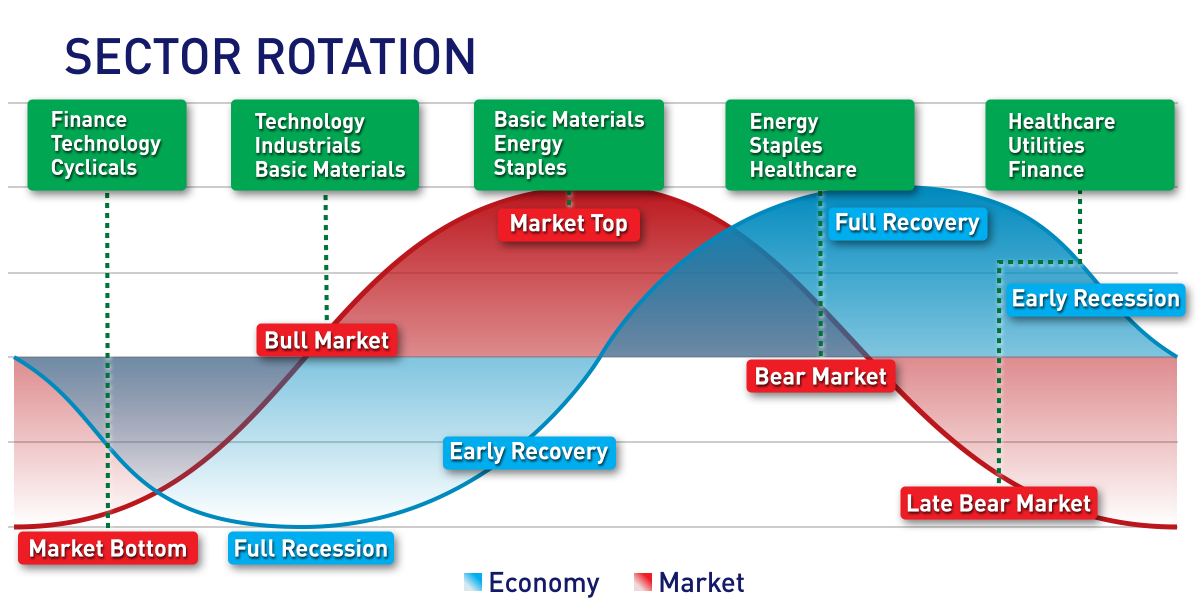
Sector rotation is one of the most powerful indicators of positioning shifts.
When investors believe the economy is accelerating, they often move capital into cyclical sectors such as:
- Industrials
- Financials
- Energy
- Materials
Conversely, when recession fears rise, money tends to flow toward defensive sectors, including:
- Utilities
- Healthcare
- Consumer staples
For instance, during periods when inflation data surprises to the upside, energy and commodity stocks frequently outperform while consumer discretionary companies fall.
This pattern reflects investors adjusting portfolios for rising input costs and reduced consumer spending power.
Bond Yield Movements
Stock market movers rarely exist in isolation. Bond yields often drive the underlying shifts.
When U.S. Treasury yields rise rapidly, markets are typically signaling expectations for higher interest rates or stronger economic growth. Higher yields tend to pressure long-duration assets like technology companies, whose valuations rely heavily on future earnings.
On the other hand, falling yields often coincide with rallies in growth stocks and defensive sectors. This dynamic emerged repeatedly during the pandemic era when aggressive Federal Reserve policy pushed yields to historic lows.
Tracking market movers without watching the bond market can lead to misinterpreting the underlying signal.
Commodity Surges
Commodity spikes frequently reveal macroeconomic positioning before the equity market fully reacts.
Oil, copper, and agricultural commodities often rise when investors anticipate:
- Global growth acceleration
- Supply disruptions
- Persistent inflation
For example, during the early months of the Russia-Ukraine conflict in 2022, oil prices surged above $120 per barrel while energy stocks became some of the biggest market movers.
Investors were positioning for supply shocks and prolonged energy shortages.

Mega-Cap Leadership
Another signal appears when a handful of mega-cap companies drive the majority of market gains.
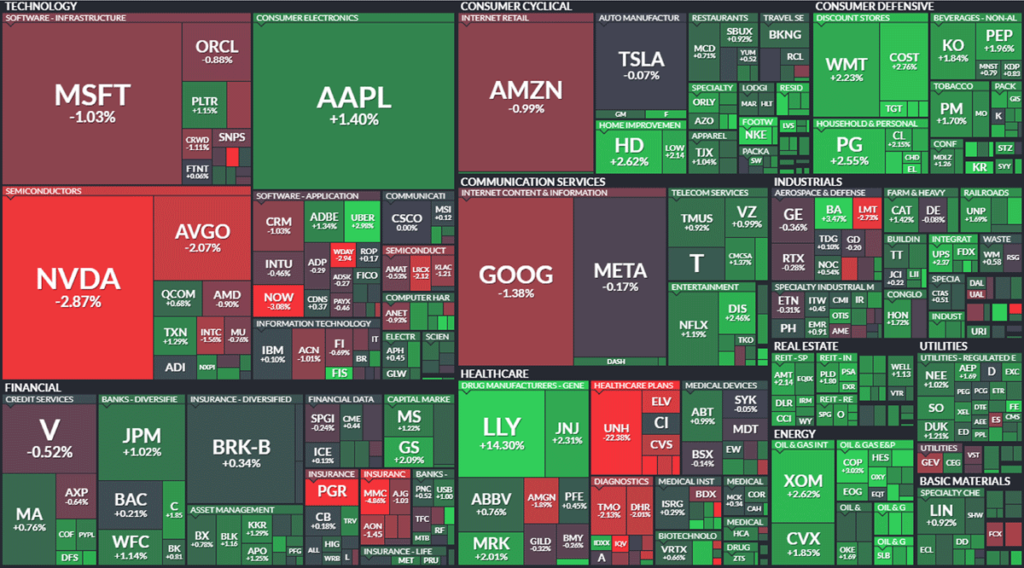
This phenomenon has occurred multiple times in recent years when companies like Apple, Microsoft, or Nvidia accounted for a large portion of index performance.
Such concentration often signals:
- Investor preference for quality and balance-sheet strength
- Uncertainty about smaller or cyclical companies
- A search for perceived “safe growth”
When leadership narrows, it can indicate defensive positioning within equities, even if major indexes appear strong.
How Institutional Investors Shape Market Movers
Retail investors often focus on individual stocks, but most large market moves originate from institutional flows.
Major participants include:
- Pension funds managing retirement assets
- Hedge funds adjusting macro positions
- Mutual funds responding to inflows or redemptions
- Quantitative funds executing algorithmic strategies
- Sovereign wealth funds allocating global capital
When these players adjust positioning, the effect can ripple across markets.
For example, if multiple large funds simultaneously reduce exposure to growth stocks due to rising interest rates, the selling pressure may trigger declines across the entire technology sector.
Understanding this dynamic helps explain why market moves sometimes appear sudden and synchronized.
Reading Market Movers Like a Professional Investor
Professional portfolio managers rarely interpret daily market action in isolation. Instead, they look for patterns across several indicators simultaneously.
Key factors they monitor include:
- Relative sector performance
- Changes in bond yields and yield curves
- Currency fluctuations
- Commodity price movements
- Options market positioning
- Trading volume spikes
When several of these indicators move together, the message becomes stronger.
For instance:
If bank stocks rally, bond yields rise, and the U.S. dollar strengthens on the same day, the market may be positioning for stronger economic growth and tighter monetary policy.
Conversely, falling yields, rising gold prices, and gains in defensive sectors often indicate risk-off positioning.
Real-World Example: Inflation Surprises and Market Reactions
A useful example occurred repeatedly during 2022 when U.S. Consumer Price Index (CPI) reports exceeded expectations.
On those days, markets typically displayed a recognizable pattern:
- Treasury yields spiked
- Technology stocks declined sharply
- Energy and commodity companies rallied
- The U.S. dollar strengthened
This reaction reflected investors quickly repositioning for the possibility that the Federal Reserve would raise interest rates more aggressively.
Understanding this dynamic allows investors to interpret market volatility more clearly.
Instead of viewing declines in certain sectors as random, they can recognize them as macro positioning adjustments.
Why Individual Investors Should Pay Attention
For long-term investors, daily volatility can feel like noise. However, observing market movers still provides valuable insights.
First, it helps explain why portfolios move the way they do. If defensive sectors are rising while growth stocks fall, the market may be shifting toward caution.
Second, tracking positioning shifts can highlight emerging macro themes earlier than traditional news coverage.
Third, understanding these signals can help investors avoid emotional decisions during periods of volatility.
For example, if a technology stock falls during a day when rising bond yields pressure the entire sector, the decline may reflect broader macro forces rather than company-specific weakness.
Common Mistakes When Interpreting Market Movers
While market movers offer useful clues, they are not perfect predictors. Investors should avoid several common pitfalls.
- Overreacting to single-day moves: Short-term trading activity can exaggerate trends that later reverse.
- Ignoring macro context: Sector moves often reflect economic expectations rather than company fundamentals.
- Following momentum blindly: Just because a sector is rising today does not mean the trend will continue.
- Confusing noise with positioning: True positioning shifts typically persist across several trading sessions.
Successful interpretation requires pattern recognition over time, not simply reacting to headlines.
How Retail Investors Can Track Positioning Signals
Individual investors now have access to tools once limited to institutional desks.
Useful resources include:
- Financial news platforms that track sector performance
- Treasury yield charts and economic data releases
- Commodity price dashboards
- Exchange-traded fund (ETF) flows
- Market breadth indicators
By monitoring these indicators together, investors can develop a clearer picture of how the broader market is positioning.
Over time, this perspective can help investors better understand why markets behave the way they do.
FAQ: Understanding Market Movers and Investor Positioning
What are market movers?
Market movers are stocks, sectors, or assets that experience significant price changes during a trading session, often driven by news, earnings reports, or shifts in macroeconomic expectations.
Why do investors track sector rotation?
Sector rotation reveals how investors are reallocating capital based on expectations for economic growth, inflation, or interest rates.
How do bond yields influence stock market movers?
Rising bond yields can pressure growth stocks while benefiting financial companies, while falling yields often support technology and other long-duration assets.
Do market movers predict future market direction?
Not necessarily. They reflect current positioning and sentiment, but trends can change quickly as new information emerges.
Why do commodities sometimes lead stock market trends?
Commodity prices often respond early to supply disruptions or inflation expectations, making them useful signals of macroeconomic positioning.
What role do institutional investors play in market moves?
Large institutions manage massive portfolios, and their reallocations can drive broad sector movements across the market.
Are daily market movers relevant for long-term investors?
Yes. While long-term investors shouldn’t trade frequently, understanding market positioning can provide context for short-term volatility.
How can individual investors monitor positioning trends?
They can track sector ETFs, bond yields, commodity prices, and economic data releases through financial platforms and market dashboards.
Why do mega-cap stocks sometimes dominate market gains?
During uncertain periods, investors often concentrate capital in large companies with strong balance sheets and stable earnings.
Can market movers signal recession risks?
Yes. When defensive sectors outperform while cyclical stocks decline, markets may be positioning for slower economic growth.
The Market’s Daily Message Beneath the Volatility
Behind every sharp rally or sudden sell-off lies a deeper story about how investors see the future. Market movers reveal these narratives in real time. By examining sector rotations, bond yields, commodity trends, and leadership concentration, investors gain insight into how capital is positioning for economic change.
Understanding these signals doesn’t guarantee market success—but it helps transform daily volatility into meaningful information rather than noise.
Key Insights From Today’s Market Signals
- Market movers often reflect institutional positioning shifts rather than isolated events
- Sector rotation can reveal expectations about economic growth or recession risk
- Bond yields frequently drive equity market leadership changes
- Commodity spikes often signal inflation or supply concerns
- Concentrated gains in mega-cap stocks may indicate defensive investor behavior
- Patterns across several indicators provide stronger signals than single-day moves