Tax policy is increasingly central to economic planning in the United States because it shapes investment decisions, government revenue, technological development, and long-term economic stability. Policymakers, businesses, and households closely monitor tax proposals to understand how they may affect growth, competitiveness, and fiscal sustainability. As the economy evolves, tax strategy is becoming a key tool for guiding national economic priorities.
The Growing Role of Tax Policy in Economic Strategy
Tax policy has long influenced the U.S. economy, but in recent years it has become a central element of national economic planning. Governments increasingly rely on tax tools to guide investment, encourage innovation, and address fiscal challenges.
Economic planning today extends far beyond simple revenue collection. Modern tax policy shapes decisions about where companies invest, how entrepreneurs build new businesses, and how households allocate income and savings.
Institutions such as the Congressional Budget Office and the Brookings Institution regularly analyze how tax policies affect economic growth, productivity, and public finances. Their research highlights how changes to tax rules can influence long-term economic outcomes.
As a result, tax policy discussions are increasingly connected to broader planning efforts involving industrial policy, infrastructure investment, and technological development.
Why Tax Policy Is More Important Than Ever
Several structural changes in the global economy have elevated the importance of tax policy in economic planning.
First, governments face rising fiscal pressures. Public spending on infrastructure, healthcare, and retirement programs requires stable revenue sources. At the same time, policymakers want tax systems that encourage economic growth rather than discourage investment.
Second, economic competition between countries has intensified. Nations often use tax incentives to attract businesses, research facilities, and skilled workers.
Third, technological change is reshaping industries faster than traditional policy frameworks can adapt. Tax incentives are sometimes used to support emerging sectors such as clean energy, semiconductor manufacturing, and artificial intelligence.
These factors mean that tax policy is no longer viewed solely as a budget tool—it is increasingly a strategic economic instrument.
How Tax Policy Influences Business Investment
Businesses make investment decisions based partly on expected after-tax returns. When companies evaluate whether to build factories, develop new products, or hire employees, tax rules can affect the financial viability of those decisions.
Several aspects of the tax code influence investment behavior:
- Corporate tax rates
- Depreciation rules for equipment and facilities
- Research and development tax credits
- Capital gains tax treatment for investors
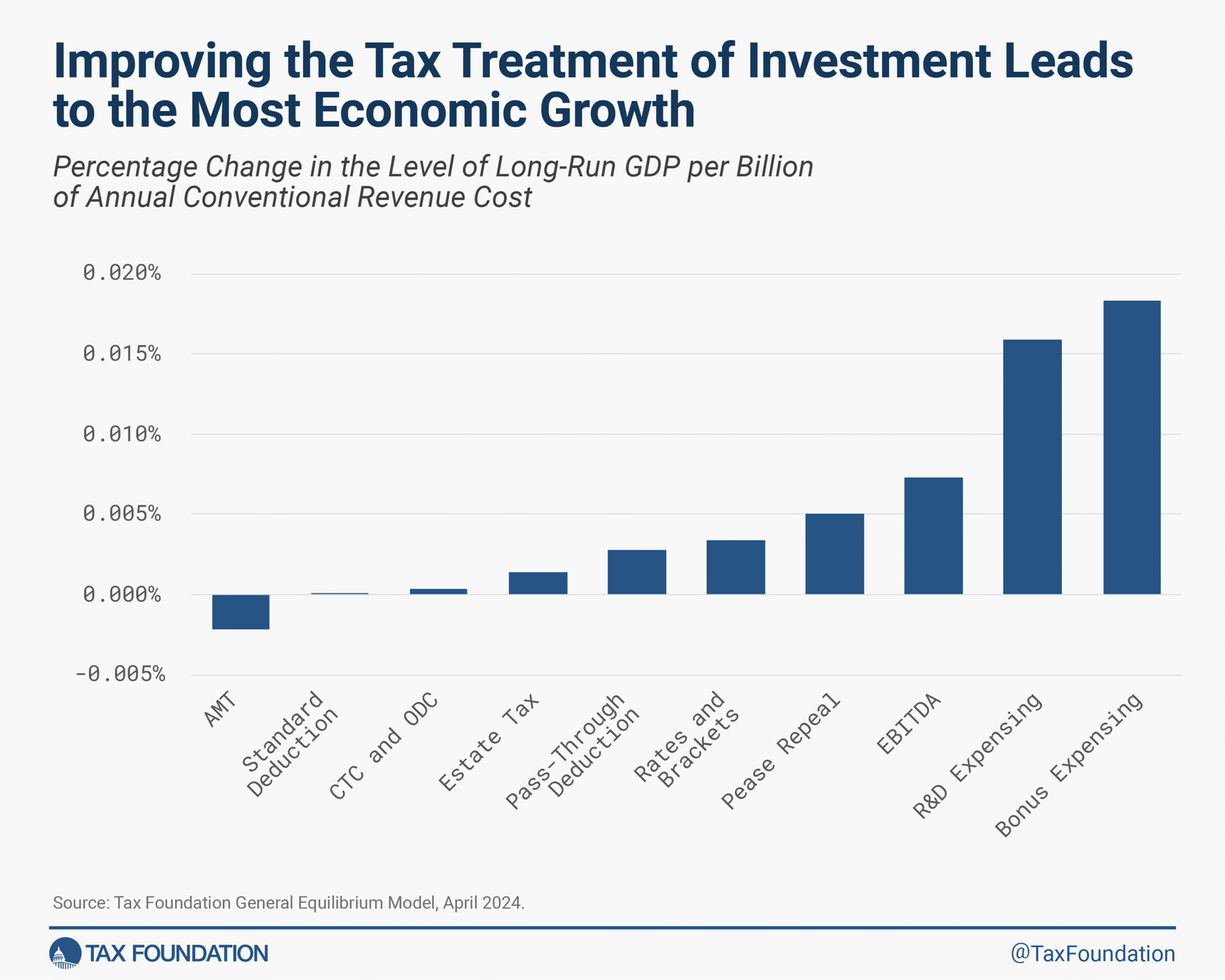
For example, accelerated depreciation allows companies to deduct the cost of machinery more quickly. This reduces the effective cost of investment and can encourage businesses to modernize their operations.
According to analysis from the Tax Foundation, policies that reduce the tax burden on capital investment tend to increase productivity over time by encouraging businesses to upgrade equipment and technology.
These dynamics explain why tax incentives often play a central role in economic planning strategies.
The Link Between Tax Policy and Innovation
Innovation is one of the most powerful drivers of long-term economic growth. New technologies can improve productivity, create new industries, and raise living standards.
Because innovation often requires significant investment with uncertain outcomes, governments frequently use tax policy to encourage research and development.
The U.S. tax system includes several incentives designed to support innovation, including research tax credits that help businesses offset the costs of developing new products or technologies.
Data from the National Science Foundation shows that businesses fund a large share of research and development activity in the United States. Tax incentives can help make these investments more attractive, particularly for startups and technology firms.
For example, a biotechnology startup developing new medical treatments may spend years conducting research before earning revenue. Tax credits and deductions can help reduce financial pressure during these early stages.
Fiscal Stability and Long-Term Economic Planning
Tax policy is also closely tied to fiscal sustainability. Governments rely on tax revenue to fund public programs, infrastructure, and national defense.
As the U.S. population ages and healthcare costs increase, federal spending is expected to rise. Policymakers must therefore consider how tax policies affect long-term revenue.
According to projections from the Committee for a Responsible Federal Budget, federal debt is expected to increase significantly in the coming decades unless policy changes occur.
This reality means tax policy debates often focus on balancing two objectives:
- Supporting economic growth
- Maintaining sufficient government revenue
Finding the right balance between these goals is a central challenge in economic planning.
Global Competition and the Tax Policy Landscape
Economic globalization has made tax policy an important factor in international competition.
Multinational companies often have flexibility in deciding where to locate manufacturing plants, research centers, or corporate headquarters. Differences in tax policy can influence these decisions.
Organizations such as the Organisation for Economic Co-operation and Development have worked to coordinate international tax rules in response to global competition and profit-shifting concerns.
Countries around the world offer tax incentives aimed at attracting investment in areas such as technology, renewable energy, and advanced manufacturing.
For the United States, tax policy plays an important role in ensuring that domestic industries remain competitive while also protecting the integrity of the tax system.
How Tax Policy Affects Households
Although tax policy discussions often focus on businesses, households are also significantly affected.
Individual income taxes influence decisions about work, savings, and consumption. Tax credits and deductions can affect how families plan their finances.
Examples of household-related tax provisions include:
- Child tax credits
- Education tax incentives
- Retirement savings deductions
- Mortgage interest deductions
These policies can influence economic behavior at a large scale. For instance, retirement savings incentives may encourage individuals to invest more for the future, which can increase capital available for economic growth.
The Complexity Challenge
One of the most widely discussed issues in U.S. tax policy is the complexity of the tax code.
Over decades, policymakers have added numerous deductions, credits, and special provisions designed to achieve specific policy goals. While these provisions may address important issues, they also make the tax system more complicated.
Complexity can create several challenges:
- Higher compliance costs for taxpayers
- Increased administrative burden for businesses
- Difficulty understanding eligibility for tax benefits
Simplifying the tax code is often proposed as a solution. However, simplification may require eliminating certain deductions or credits that taxpayers value, which can make reform politically challenging.
Why Businesses Closely Monitor Tax Policy
Businesses frequently track tax policy developments because changes to the tax code can influence long-term planning.
Companies may evaluate policy proposals by examining how they affect:
- Investment returns
- Cash flow projections
- Capital allocation decisions
- Workforce expansion plans
Large corporations often employ economists and tax specialists to model how different policy scenarios could affect operations.
Smaller businesses typically rely on accountants or tax advisors to interpret policy changes and ensure compliance.
Regardless of size, most businesses view tax policy as a key component of financial planning.
Tax Policy and Economic Planning at the National Level
At the national level, tax policy is often integrated into broader economic planning strategies.
Governments may use tax tools to support specific goals such as:
- Encouraging domestic manufacturing
- Supporting renewable energy industries
- Promoting technological innovation
- Strengthening regional economic development
For example, investment incentives can encourage companies to build facilities in regions seeking economic revitalization.
While tax policy alone cannot determine economic outcomes, it can influence the incentives that guide private sector activity.
Frequently Asked Questions
Why is tax policy important for economic planning?
Tax policy influences investment decisions, government revenue, and economic incentives, making it a central tool for guiding economic strategy.
How do taxes affect business investment?
Taxes affect the after-tax return on investments, which can influence whether companies pursue expansion or new projects.
What role do tax incentives play in innovation?
Tax incentives can reduce the cost of research and development, encouraging businesses to invest in new technologies.
Why is the U.S. tax system considered complex?
Over time, numerous deductions and credits have been added to achieve specific policy goals, increasing complexity.
How does tax policy affect households?
Income taxes, credits, and deductions influence household decisions about spending, saving, and work.
Do tax policies affect global competitiveness?
Yes. Tax rules can influence where companies choose to locate investment and operations.
Why do governments use tax incentives?
Governments use incentives to encourage activities such as innovation, infrastructure investment, and job creation.
Can tax policy improve economic growth?
Well-designed tax policies can encourage investment and productivity, which may contribute to economic growth.
How do businesses prepare for tax policy changes?
Businesses often consult tax professionals, analyze policy proposals, and adjust financial planning strategies.
Preparing for Future Tax Policy Developments
Because tax policy plays such a large role in economic planning, both businesses and individuals benefit from staying informed about potential reforms.
Practical steps include:
- Monitoring legislative proposals affecting taxes
- Consulting financial advisors for long-term planning
- Evaluating how tax changes might affect investment strategies
- Understanding available deductions or credits
By maintaining awareness of tax policy developments, organizations and households can make more informed financial decisions.
The Strategic Importance of Tax Policy in a Changing Economy
As the economy evolves, tax policy will likely remain a central topic in economic planning.
Technological change, demographic trends, and global competition are reshaping economic priorities. Policymakers are increasingly turning to tax tools to guide investment, encourage innovation, and maintain fiscal stability.
While debates about tax policy can be complex, understanding the underlying economic principles helps individuals and businesses better evaluate policy proposals.
Understanding the Direction of Future Tax Strategy
The prominence of tax policy in economic discussions reflects the broader role it plays in shaping national priorities. Decisions about taxes influence how resources are allocated across the economy, from household budgets to large-scale investment projects.
For policymakers, the challenge is to design tax systems that support economic growth while maintaining fairness and fiscal responsibility. For businesses and households, staying informed about these developments is an essential part of financial planning in a changing economic landscape.
Essential Insights from the Tax Policy Conversation
- Tax policy now plays a central role in economic planning.
- Business investment decisions are strongly influenced by tax rules.
- Innovation incentives are often delivered through tax credits and deductions.
- Fiscal sustainability is a major driver of tax policy discussions.
- Global economic competition has increased the strategic importance of taxation.