Summary
The Federal Reserve’s interest rate decisions shape borrowing costs, consumer spending, business investment, and financial markets across the United States. Recent policy moves aim to balance inflation control with economic stability. Understanding how rate changes ripple through mortgages, credit, employment, and markets helps households, investors, and businesses make more informed financial decisions during periods of economic adjustment.
Why Federal Reserve Rate Decisions Matter
When the Federal Reserve adjusts interest rates, it is responding to the broader economic environment. The central bank’s primary tool is the federal funds rate, the benchmark rate at which banks lend reserves to each other overnight. While this may sound technical, the ripple effects extend throughout the economy—from mortgage rates and auto loans to job growth and stock market performance.
The Federal Reserve operates under a dual mandate established by Congress:
- Maintain price stability (controlling inflation)
- Promote maximum employment
Balancing those two goals is not simple. If inflation rises too quickly, the Fed often raises interest rates to cool demand. When economic growth slows significantly, lowering rates can stimulate borrowing and spending.
Recent years have presented a particularly complex situation. Following pandemic-era stimulus and supply disruptions, inflation surged to levels not seen in decades. In response, the Federal Reserve implemented a series of rate increases beginning in 2022 to stabilize prices.
By 2024–2025, inflation had moderated from its peak but remained above the Fed’s long-term target of about 2 percent, according to data from the U.S. Bureau of Labor Statistics and the Federal Reserve Bank system.
Understanding what these rate changes mean requires looking beyond financial headlines and examining how they affect real-world economic behavior.
How Interest Rate Changes Work in Practice
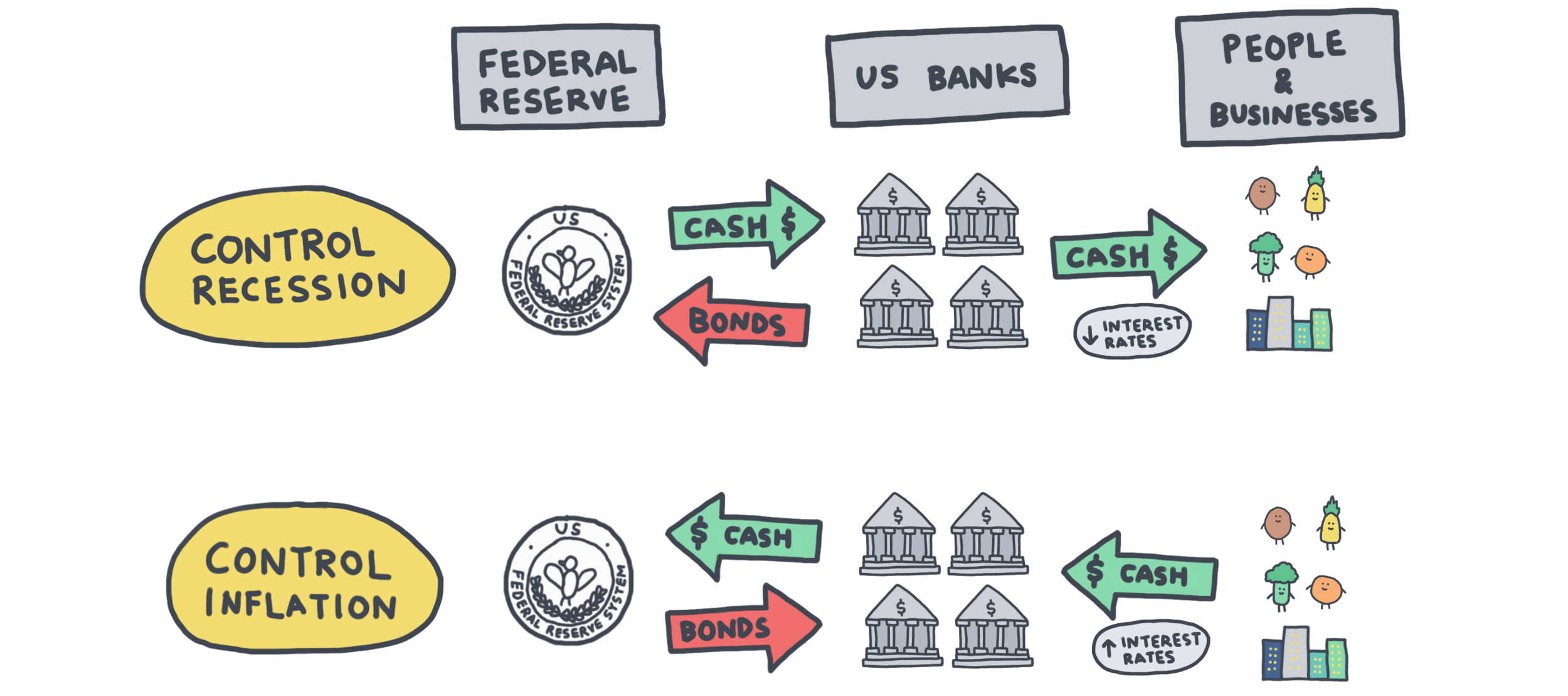
When the Federal Reserve raises or lowers rates, it does not directly change the rate consumers pay on loans. Instead, it influences the broader financial system.
Banks, lenders, and investors adjust their rates based on expectations of future monetary policy and borrowing costs. Over time, this influences everything from credit cards to corporate financing.
A simplified chain reaction typically looks like this:
- The Federal Reserve adjusts the federal funds rate
- Banks face higher or lower borrowing costs
- Financial institutions adjust loan and deposit rates
- Businesses and consumers change spending and investment decisions
- Economic growth either slows or accelerates
For example, when borrowing becomes more expensive, businesses may delay expansion plans. Households may postpone buying homes or cars. That reduced demand can help slow inflation.
Conversely, lower interest rates generally encourage more borrowing and spending, which can stimulate economic activity.
What the Latest Rate Decisions Signal About Inflation
Inflation remains the central concern driving recent Federal Reserve policy decisions. After peaking above 9 percent in mid-2022, consumer price inflation has gradually cooled, though it still fluctuates above the Fed’s long-term target in certain periods.
The Fed closely tracks several inflation indicators, including:
- Consumer Price Index (CPI)
- Personal Consumption Expenditures (PCE) Price Index
- Wage growth data
- Supply chain indicators
The PCE index, the Fed’s preferred inflation measure, provides a broader picture of consumer spending patterns.
The central bank’s recent decisions suggest a cautious approach: policymakers want clear evidence that inflation is consistently trending downward before significantly reducing rates.
This approach is meant to avoid a historical mistake that occurred during the 1970s, when interest rates were lowered too quickly and inflation resurged.
In other words, the Fed is attempting to prevent a situation where inflation rebounds after appearing to slow.
How Rate Decisions Affect Mortgage and Housing Markets
Few sectors feel the impact of interest rate changes as directly as the housing market.
Mortgage rates are heavily influenced by long-term Treasury yields, which in turn respond to expectations about Federal Reserve policy.
When rates rise:
- Mortgage payments increase for new buyers
- Housing affordability declines
- Home sales typically slow
- Construction activity may moderate
For example, during the rate tightening cycle that began in 2022, 30-year mortgage rates climbed above 7 percent, according to Freddie Mac data. That significantly raised monthly payments for many buyers.
Consider a practical example.
A $400,000 mortgage at:
- 3 percent interest results in roughly $1,686 monthly payment
- 7 percent interest raises the payment to roughly $2,661
That difference can change purchasing decisions for many households.
However, higher rates also have stabilizing effects. By cooling demand, they can prevent housing markets from becoming overheated.
Impact on Consumer Borrowing and Household Budgets
Interest rate changes also affect everyday financial products used by millions of Americans.
Credit cards, personal loans, and auto financing typically move quickly when the Federal Reserve adjusts policy.
Key areas affected include:
- Credit card APRs, which often track the prime rate closely
- Auto loans, especially for longer financing terms
- Home equity lines of credit (HELOCs)
- Personal loans and refinancing options
For households carrying variable-rate debt, rising interest rates can increase monthly payments relatively quickly.
At the same time, higher interest rates benefit savers. Bank savings accounts, certificates of deposit (CDs), and money market funds tend to offer higher yields when rates increase.
For retirees or households holding large cash balances, this can improve income from savings.
What Rate Decisions Mean for Businesses
Businesses monitor Federal Reserve policy closely because borrowing costs directly affect investment decisions.
When interest rates rise, companies often:
- Delay major expansion projects
- Reduce debt-financed investments
- Reevaluate hiring plans
- Shift focus toward cost efficiency
This dynamic is particularly important for small and medium-sized businesses, which rely more heavily on bank financing compared with large corporations that can issue bonds.
However, the impact varies by sector.
Technology startups and real estate developers are often more sensitive to interest rate changes because their growth strategies depend on access to capital.
Meanwhile, industries with strong cash flows—such as utilities or consumer staples—may feel less immediate pressure.
Labor Market Implications
The U.S. labor market is another major factor guiding Federal Reserve decisions.
Strong employment growth can contribute to inflation if wage increases push up business costs. However, policymakers are cautious about tightening policy too aggressively because it can weaken job creation.
Recent labor data from the U.S. Bureau of Labor Statistics shows:
- Unemployment rates near historically low levels
- Continued job growth across multiple sectors
- Moderating wage growth compared with earlier peaks
The Federal Reserve aims for a “soft landing,” where inflation declines without causing a sharp increase in unemployment.
Historically, achieving that balance has been difficult, which is why investors and economists watch labor market reports closely.
Effects on Financial Markets and Investments
Financial markets react quickly to Federal Reserve signals, sometimes even before official rate changes occur.
Investors monitor:
- Federal Open Market Committee (FOMC) statements
- Economic projections
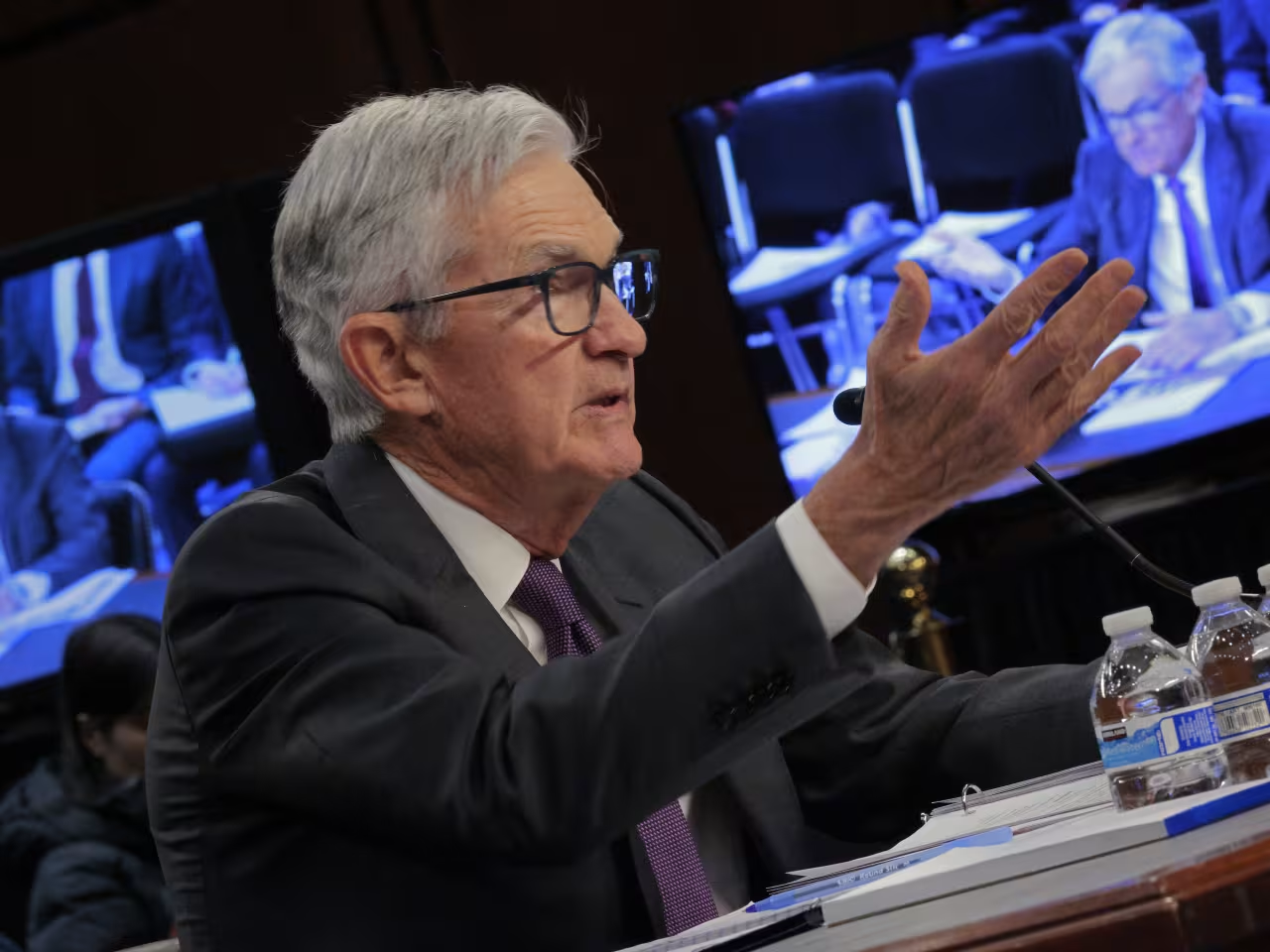
- Press conferences by the Federal Reserve Chair
- Treasury bond yield movements
These signals influence expectations about future interest rates.
Common market reactions include:
- Stocks: Growth stocks tend to struggle during rising-rate environments because future earnings become less valuable when discounted at higher rates.
- Bonds: Higher rates generally push bond prices lower but increase yields for new investors.
- Currency markets: Higher U.S. interest rates can strengthen the dollar relative to other currencies.
For long-term investors, rate cycles are a normal part of economic conditions rather than a reason for abrupt portfolio changes.
What Economists Are Watching Next
Looking ahead, economists are focused on several indicators that could shape future Federal Reserve decisions.
These include:
- Monthly inflation data
- Wage growth trends
- Consumer spending patterns
- Housing market activity
- Global economic developments
Energy prices, geopolitical events, and supply chain disruptions can also influence inflation expectations.
Another important factor is financial conditions, which reflect how easily households and businesses can access credit.
If financial conditions tighten too quickly, the Fed may slow the pace of policy changes.
Conversely, if inflation remains stubbornly high, policymakers may keep rates elevated longer than expected.
Frequently Asked Questions
1. What is the federal funds rate?
The federal funds rate is the interest rate banks charge each other for overnight loans. It serves as the foundation for many other interest rates in the economy.
2. Why does the Federal Reserve raise interest rates?
The Fed raises rates primarily to control inflation by reducing excessive demand in the economy.
3. How quickly do rate changes affect consumers?
Some financial products, like credit cards, adjust within weeks. Mortgage and auto loan rates can change based on market expectations even before official rate decisions.
4. Do higher interest rates cause recessions?
Not necessarily. However, aggressive rate increases can slow economic activity enough to trigger a recession if demand falls sharply.
5. How do rate decisions affect the stock market?
Higher rates can reduce stock valuations because future earnings are discounted at higher interest rates.
6. Why does the Fed target 2 percent inflation?
A moderate level of inflation encourages spending and investment while avoiding the economic instability associated with high inflation.
7. Who decides Federal Reserve policy?
The Federal Open Market Committee (FOMC), consisting of Federal Reserve Board members and regional bank presidents, makes monetary policy decisions.
8. How often does the Federal Reserve change interest rates?
The Fed meets about eight times per year to evaluate economic conditions and decide whether rate adjustments are necessary.
9. Do rate cuts automatically boost the economy?
Rate cuts can encourage borrowing and investment, but their effectiveness depends on broader economic conditions.
10. Where can the public track Federal Reserve decisions?
Official announcements and economic projections are published on the Federal Reserve’s website and reported by major financial news outlets.
Reading the Signals: What Rate Policy Tells Us About the Economy
Federal Reserve interest rate decisions act as a barometer of economic conditions. When policymakers raise rates, they are signaling concern about inflation and overheating demand. When they lower rates, they are attempting to stimulate economic activity.
For households, businesses, and investors, understanding these signals provides valuable context for financial planning.
Rather than focusing on a single policy decision, the broader trajectory of monetary policy—and the economic data behind it—offers the clearest insight into where the U.S. economy may be headed next.
Key Insights at a Glance
- Federal Reserve rate decisions influence borrowing costs across the entire economy
- Higher rates help slow inflation but can reduce spending and investment
- Mortgage rates and housing activity respond quickly to policy shifts
- Businesses often delay expansion during high-rate environments
- Financial markets closely track signals from Federal Reserve communications
- The central bank aims to balance inflation control with strong employment