Corporate tax rates are once again at the center of economic debate in the United States. Policymakers, economists, and business leaders are discussing whether the current 21% federal corporate tax rate should remain unchanged, increase, or be adjusted alongside new international rules. These decisions could influence business investment, wages, government revenue, and the country’s long-term economic competitiveness.
Why Corporate Tax Rates Are Back in the National Conversation
Corporate taxation has long been one of the most debated areas of U.S. economic policy. In simple terms, corporate taxes are levied on the profits of businesses operating in the United States. But in practice, decisions about these rates can influence a wide range of economic outcomes—from how companies invest to how governments fund public programs.
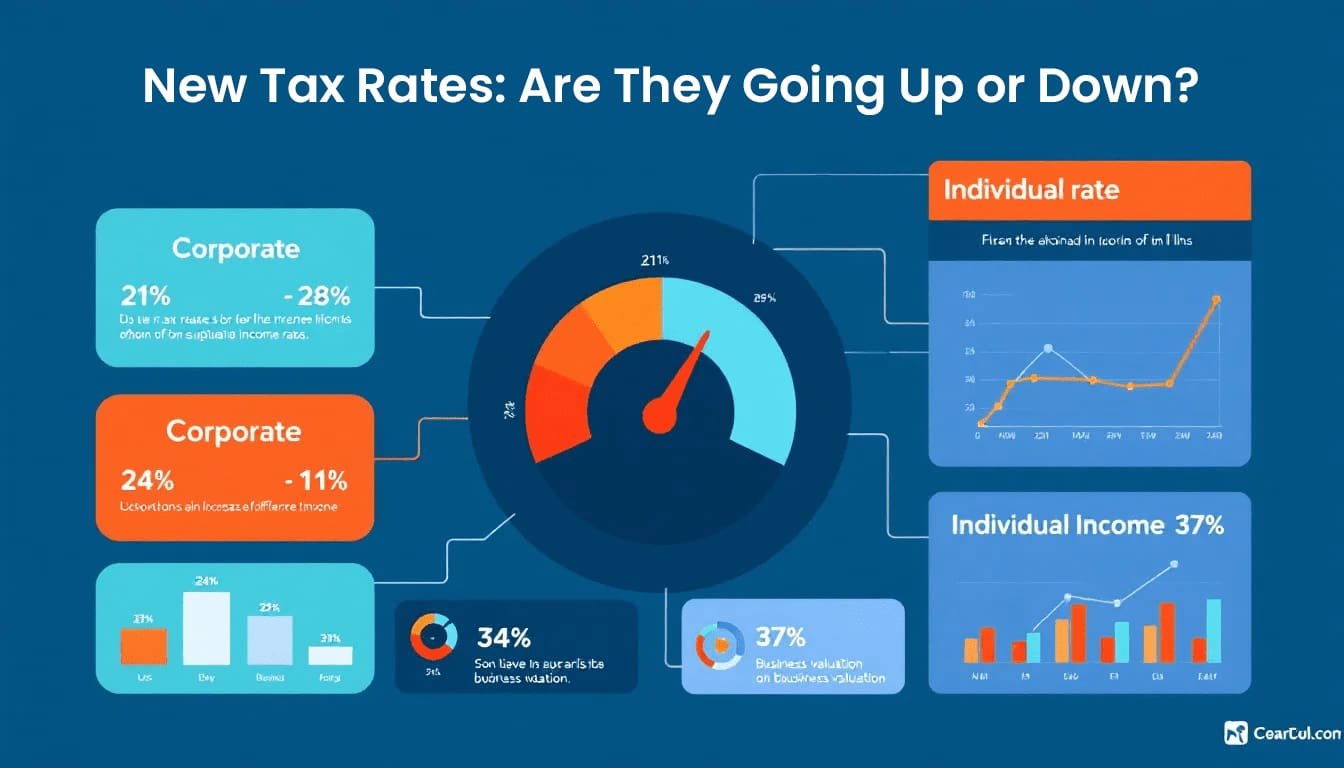
The current debate stems largely from the 2017 Tax Cuts and Jobs Act (TCJA), which reduced the federal corporate tax rate from 35% to 21%. At the time, lawmakers argued that lowering the rate would make American companies more competitive internationally and encourage investment within the United States.
Several years later, economists and policymakers are revisiting the question. Some argue the reduction improved global competitiveness and investment. Others believe the rate could be increased modestly to help address federal budget deficits and fund economic priorities such as infrastructure and clean energy.
According to data from the U.S. Treasury Department, corporate income taxes generated roughly $420 billion in federal revenue in 2023, representing about 9% of total federal tax revenue. While this share is smaller than income taxes collected from individuals, corporate tax policy can still shape broader economic behavior.
Understanding the debate requires looking at both sides of the argument and how corporate taxes interact with the wider economy.
How Corporate Tax Rates Affect the Economy
Corporate tax rates influence more than just government revenue. They shape how businesses allocate capital, where companies locate operations, and how profits are distributed.
When companies evaluate investment decisions, taxes are one of several factors they consider alongside labor costs, access to markets, regulatory stability, and infrastructure.
For example, a manufacturing firm planning a new production facility may compare several possible locations across countries or states. If tax rates differ significantly, the final decision may shift accordingly.
Corporate tax policies can influence economic activity in several key ways:
- Investment incentives: Lower taxes can increase after-tax returns on new investments.
- Job creation: Businesses with higher profits may expand hiring, though this depends on market demand.
- Shareholder returns: Corporate tax changes often affect dividends and stock buybacks.
- Government revenue: Higher rates can generate additional funds for public programs.
Because these factors interact, economists often debate whether lower or higher corporate tax rates ultimately produce stronger economic outcomes.
The Legacy of the 2017 Corporate Tax Cut
The reduction of the corporate tax rate in 2017 was one of the most significant tax policy changes in decades. The rate dropped from 35% to 21%, placing the United States closer to the average among developed economies.
Supporters of the change argued it would encourage domestic investment and reduce incentives for companies to move profits overseas. In the years following the reform, corporate investment initially increased, though other factors—such as global economic conditions and the COVID-19 pandemic—also influenced economic trends.
Research from the Congressional Research Service suggests the tax cuts had mixed effects. Some industries increased capital investment, while others used additional profits for shareholder distributions or debt reduction.
Several observations from economists include:
- Business investment increased in some sectors following the reform.
- Corporate tax revenue initially declined before stabilizing.
- Shareholder returns increased significantly after the tax cut.
These outcomes have fueled ongoing debate about the best corporate tax rate for balancing growth and fiscal stability.
Why Some Policymakers Support Raising Corporate Tax Rates
One group of policymakers believes the corporate tax rate could increase modestly without harming economic competitiveness.
Their arguments typically focus on several factors.
First, they note that even if the federal rate rises slightly, the overall U.S. corporate tax burden may remain competitive globally. Many countries combine national and regional taxes in ways that make direct comparisons complex.
Second, advocates for higher rates often emphasize federal budget pressures. The Congressional Budget Office projects that the U.S. national debt will continue rising in the coming decades if fiscal policies remain unchanged.
Supporters of higher corporate taxes argue that additional revenue could help fund priorities such as:
- Infrastructure modernization
- Renewable energy development
- Education and workforce training
- Healthcare programs
Some policymakers also believe corporate tax increases could improve perceptions of fairness within the tax system, particularly when large multinational corporations report substantial profits.
Why Others Advocate Keeping Corporate Taxes Lower
On the other side of the debate, many economists and business organizations argue that maintaining relatively low corporate tax rates helps support economic growth and global competitiveness.
Their concerns typically center on investment incentives and international competition.
Businesses today operate in an increasingly global environment. If corporate taxes rise significantly in one country, companies may respond by shifting investment, intellectual property, or production to other jurisdictions.
Supporters of lower corporate taxes often emphasize several considerations:
- The U.S. competes globally for corporate investment.
- Higher taxes may discourage large capital projects.
- Companies may relocate profits through international tax strategies.
- Lower taxes can support wage growth through increased investment.
Many economists emphasize that corporate taxes are ultimately paid by a combination of shareholders, employees, and consumers, depending on how companies adjust to tax changes.
The Global Minimum Tax and International Coordination
Another factor shaping the corporate tax debate is the growing international effort to establish a global minimum corporate tax.
Through negotiations coordinated by the Organisation for Economic Co-operation and Development (OECD), many countries have agreed to implement a minimum tax rate on multinational corporations. The goal is to reduce incentives for companies to shift profits to low-tax jurisdictions.
If implemented broadly, this system could change how countries compete on tax policy. Instead of drastically lowering rates to attract multinational profits, governments may focus more on economic fundamentals such as workforce skills, infrastructure, and regulatory stability.
For the United States, this global coordination could reduce pressure to maintain extremely low corporate tax rates while still protecting domestic tax revenues.
How Corporate Tax Rates Affect Workers and Consumers
Corporate tax debates often focus on businesses, but the effects can extend beyond boardrooms.
Economic research suggests corporate taxes are ultimately shared among several groups:
- Shareholders, through lower after-tax profits
- Workers, through potential wage adjustments
- Consumers, through possible price changes
The exact distribution depends on economic conditions and industry dynamics.
For example, if a large retailer faces higher corporate taxes, it may respond in several ways. The company might absorb the cost through lower profits, adjust prices slightly, or slow hiring plans. In reality, companies often combine multiple strategies.
Understanding this broader impact is one reason corporate tax policy remains a complex and often contentious policy issue.
What Corporate Tax Policy Means for Small and Medium Businesses
Although corporate tax debates often focus on large multinational companies, many small and mid-size firms also pay corporate taxes.
However, many small businesses operate as pass-through entities, meaning profits are taxed through the owner’s personal income tax return rather than corporate tax structures.
For businesses structured as traditional corporations, changes to corporate tax rates may affect decisions such as:
- Expanding into new markets
- Investing in equipment or technology
- Hiring additional employees
- Paying dividends to investors
A regional manufacturing company, for example, might weigh potential tax changes when deciding whether to build a new facility or expand existing operations.
Natural Questions Americans Are Asking About Corporate Taxes
What is the current U.S. corporate tax rate?
The federal corporate tax rate is currently 21%, established under the 2017 Tax Cuts and Jobs Act.
Could the corporate tax rate increase in the future?
Yes. Several proposals suggest raising the rate modestly, though any change would require congressional approval.
How do U.S. corporate taxes compare internationally?
The U.S. rate is now closer to the average among developed economies, though total tax burdens vary because many countries include regional taxes.
Do corporate tax cuts create jobs?
Some economists believe lower taxes encourage investment that can lead to job creation, but the relationship is influenced by many other economic factors.
Who actually pays corporate taxes?
Corporate taxes are ultimately shared among shareholders, employees, and consumers through economic adjustments.
Why do governments tax corporations?
Corporate taxes help fund public services and ensure businesses contribute to government revenue.
What is the global minimum corporate tax?
It is an international agreement designed to ensure large multinational corporations pay at least a minimum tax rate in every country where they operate.
Do higher corporate taxes reduce economic growth?
The impact varies depending on the level of taxation, economic conditions, and how tax revenue is used.
How do corporate taxes affect investors?
Changes to corporate taxes can influence company profits, dividends, and stock valuations.
The Policy Choices Ahead for the U.S. Economy
The debate around corporate tax rates reflects broader questions about the future direction of the American economy. Policymakers must balance several competing goals: encouraging business investment, maintaining global competitiveness, generating government revenue, and supporting long-term economic stability.
There is no single corporate tax rate that guarantees the best economic outcome. Instead, policymakers must consider how tax policy interacts with innovation, labor markets, global trade, and fiscal sustainability.
As economic conditions evolve, corporate tax policy will likely remain an important lever for shaping investment and growth.
A Turning Point in Corporate Tax Policy
The United States stands at an important moment in the evolution of corporate taxation. The choices made in the coming years—whether to maintain current rates, increase them modestly, or redesign parts of the tax system—will influence how businesses invest and how government finances public priorities.
While the debate often centers on numbers and percentages, the broader question is how the tax system can support both economic opportunity and fiscal responsibility in an increasingly complex global economy.
Key Corporate Tax Insights Worth Remembering
- The federal corporate tax rate is currently 21%, reduced from 35% in 2017.
- Corporate income taxes represent roughly 9% of federal tax revenue.
- Policymakers debate whether higher taxes could fund government programs without reducing competitiveness.
- Businesses evaluate tax policy alongside many other investment factors.
- Global minimum tax initiatives may reshape international tax competition.