Summary
The Federal Reserve plays a central role in shaping the U.S. economy through interest rate decisions, monetary policy tools, and financial system oversight. As inflation pressures, labor market shifts, and global uncertainty evolve, the Fed’s strategy has adapted significantly. Understanding how the central bank responds to these changes helps households, investors, and businesses anticipate economic conditions and make smarter financial decisions.
Why the Federal Reserve Matters in Everyday Economic Life
The Federal Reserve—often called “the Fed”—is the central bank of the United States. While its decisions may appear technical, they influence nearly every financial activity Americans engage in: mortgage rates, credit card interest, job growth, stock markets, and business investment.
Congress established the Federal Reserve in 1913 to stabilize the financial system after a series of banking crises. Today, its mission centers on three primary objectives often called the dual mandate plus stability:
- Maximum employment
- Stable prices (controlling inflation)
- Moderate long-term interest rates and financial stability
In practice, these goals sometimes compete with each other. For example, raising interest rates can reduce inflation but may slow hiring. The Fed’s strategy constantly balances these tradeoffs as economic conditions evolve.
For American households, this balancing act shows up in practical ways. When the Fed raises interest rates, mortgage payments increase and car loans become more expensive. When rates fall, borrowing becomes easier, encouraging spending and investment.
The Economic Landscape Has Changed Dramatically
Over the past decade—and especially since the COVID-19 pandemic—the environment in which the Federal Reserve operates has shifted.
Several structural forces now shape policy decisions:
- Persistent inflation pressures following pandemic stimulus
- Tight labor markets and demographic changes
- Higher government debt levels
- Global supply chain volatility
- Rapid technological change, including AI-driven productivity shifts
Inflation offers a clear example. In 2022, U.S. inflation reached its highest level in roughly 40 years, exceeding 9% year-over-year according to the Bureau of Labor Statistics. This forced the Fed to raise interest rates aggressively, moving the federal funds rate from near zero to above 5% within about a year—one of the fastest tightening cycles in modern history.
For businesses and investors, the lesson was clear: monetary policy can change rapidly when economic conditions shift.

The Core Tool: Interest Rate Policy
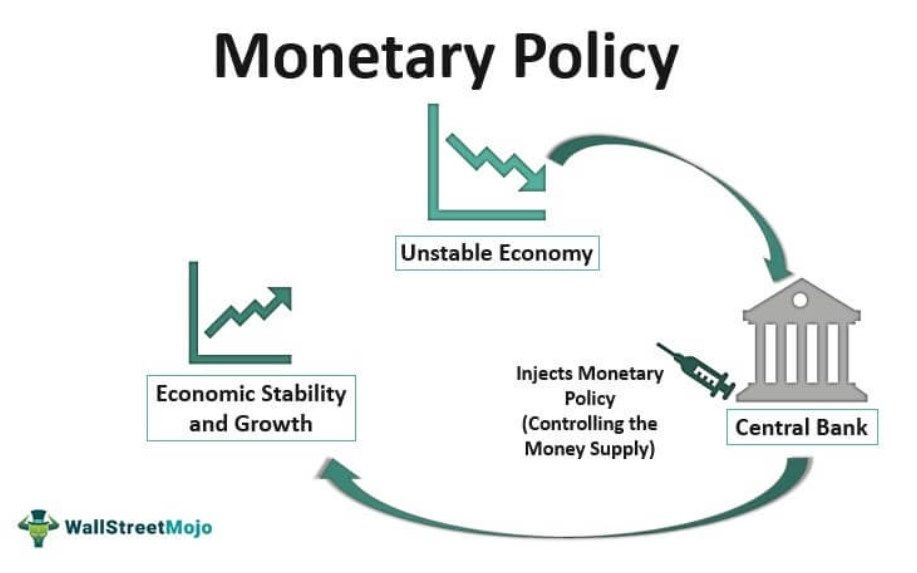
The Fed’s most powerful tool is the federal funds rate, the interest rate banks charge each other for overnight lending. Although consumers never interact directly with this rate, it influences nearly every borrowing cost in the economy.
When inflation rises too quickly, the Fed typically raises rates to slow demand. Higher borrowing costs encourage households and businesses to spend more cautiously.
When the economy weakens, the Fed lowers rates to stimulate borrowing and investment.
This ripple effect moves through the economy in several stages:
- Banks adjust lending rates.
- Mortgage, auto, and business loan rates rise or fall.
- Consumers and companies adjust spending.
- Economic growth and inflation respond over time.
The process can take months or even years to fully impact the economy, which is why Fed decisions rely heavily on forecasts rather than current data alone.
Beyond Rates: The Modern Monetary Toolkit
While interest rates remain central, the Fed now uses additional policy tools that became prominent after the 2008 financial crisis.
Balance Sheet Policy (Quantitative Easing)
During severe downturns, the Fed may purchase large quantities of government bonds or mortgage-backed securities. This policy—called quantitative easing (QE)—injects liquidity into financial markets and lowers long-term interest rates.
Between 2008 and 2021, the Fed’s balance sheet expanded from roughly $900 billion to nearly $9 trillion.
Quantitative Tightening (QT)
When inflation rises or the economy overheats, the Fed reverses course by shrinking its balance sheet. This process allows bonds to mature without replacement, gradually removing liquidity from the system.
Forward Guidance
Another modern strategy is communication itself. The Fed signals future policy intentions to influence expectations.
For example, if officials signal that rates may remain high for an extended period, markets often adjust immediately—even before any official rate change occurs.
Why Inflation Control Is So Critical
Stable prices are essential for long-term economic health. When inflation rises too quickly, it erodes purchasing power and creates uncertainty.
Consider a typical household budget. If grocery costs rise 10% in a year but wages only increase 4%, real purchasing power declines.
Businesses face similar challenges. Rapid inflation makes it harder to plan investments, price products, or negotiate long-term contracts.
The Federal Reserve generally aims for 2% annual inflation, a level considered low enough to preserve purchasing power but high enough to support economic growth.
When inflation drifts too far from that target, the Fed adjusts policy—even if the short-term consequences include slower growth or higher unemployment.

The Labor Market’s Role in Fed Strategy
Employment conditions heavily influence Fed decision-making.
A strong labor market—characterized by low unemployment and rising wages—signals economic expansion. But if wage growth accelerates too quickly, it may contribute to inflation.
Recent labor trends illustrate this complexity. In many industries, worker shortages have pushed wages upward. While this benefits employees, it can also raise business costs, which companies may pass on to consumers through higher prices.
Key labor indicators the Fed monitors include:
- Unemployment rate
- Labor force participation
- Wage growth trends
- Job openings and hiring activity
For instance, when job openings significantly exceed available workers, policymakers often worry the economy may be overheating.
Global Forces Increasing Policy Complexity
The Federal Reserve’s decisions are increasingly shaped by international dynamics.
Global trade, geopolitical tensions, and currency movements all affect the U.S. economy.
Examples include:
- Energy price shocks caused by geopolitical conflicts
- Supply chain disruptions affecting manufacturing
- Currency fluctuations impacting import prices
When international factors drive inflation, interest rate adjustments alone may not fully solve the problem. This creates policy dilemmas where tightening too aggressively risks slowing domestic growth.
Additionally, U.S. monetary policy influences global financial markets. When American interest rates rise, capital often flows into U.S. assets, strengthening the dollar and affecting emerging economies.
Financial Stability: A Growing Priority
Another evolving aspect of Fed strategy involves monitoring risks within the financial system itself.
The 2008 financial crisis revealed how quickly instability in banks or credit markets can spread across the economy. As a result, the Fed now places greater emphasis on financial oversight.
Areas of monitoring include:
- Bank capital levels and liquidity
- Real estate lending risks
- Corporate debt levels
- Stress testing large financial institutions
Stress tests simulate severe economic downturns to evaluate whether banks have enough capital to withstand major losses. These exercises help prevent systemic crises before they occur.
How Fed Policy Affects Households and Investors
For everyday Americans, Federal Reserve decisions influence a wide range of financial outcomes.
Housing Market
Mortgage rates closely track long-term Treasury yields, which respond to Fed policy expectations. When rates rise, housing affordability often declines.
Consumer Borrowing
Credit card and auto loan rates typically move upward during tightening cycles.
Investment Markets
Equities and bonds react quickly to policy signals. Higher interest rates can pressure stock valuations but may increase returns on savings and bonds.
Small Business Financing
Entrepreneurs frequently rely on bank loans or lines of credit. Higher borrowing costs can slow expansion plans or hiring decisions.
In other words, while the Fed’s decisions occur in Washington, their effects ripple through every local economy.
Where Federal Reserve Strategy May Be Heading
Looking forward, several trends are likely to shape the next phase of monetary policy.
Economists increasingly expect the Fed to operate in a world characterized by:
- More frequent supply disruptions
- Higher government debt levels
- Aging demographics reducing labor supply
- Greater fiscal-monetary coordination during crises
This may lead to a more flexible policy framework where inflation temporarily exceeds targets during unusual economic shocks.
Another emerging area involves digital financial infrastructure, including central bank digital currencies and evolving payment systems. While the U.S. has not committed to a digital dollar, the Fed continues to study its potential implications.
Ultimately, the Fed’s strategy will continue evolving alongside the economy it oversees.
Reading the Signals: What Fed Decisions Tell Us About the Economy
Federal Reserve policy is not just about controlling inflation or adjusting rates—it is also a signal about the broader health of the economy.
When policymakers raise rates aggressively, it usually reflects concern about overheating or persistent inflation. When they cut rates quickly, it often signals recession risks or financial stress.
For individuals and businesses, understanding these signals can provide valuable context for financial decisions.
For example:
- Rising rates may encourage locking in fixed mortgage terms sooner.
- Falling rates may signal opportunities for refinancing or expansion.
- Stable policy periods often indicate economic equilibrium.
While predicting the Fed’s exact moves is difficult—even for economists—understanding its strategy provides a clearer view of how economic cycles unfold.
Key Signals to Watch in Future Federal Reserve Decisions
The Federal Reserve operates at the intersection of economics, finance, and policy. In a rapidly changing economic environment, its decisions will continue shaping interest rates, employment trends, and financial stability.
Understanding the Fed’s strategy allows individuals, businesses, and investors to interpret economic signals more clearly and prepare for shifting financial conditions.
Essential Insights at a Glance
- The Federal Reserve manages monetary policy to balance inflation control and employment growth.
- Interest rate adjustments remain the primary tool for influencing economic activity.
- Additional tools like quantitative easing and balance sheet reduction shape financial conditions.
- Inflation targeting around 2% guides long-term policy decisions.
- Labor market strength heavily influences rate decisions.
- Global economic forces increasingly complicate monetary policy.
- Financial stability monitoring has become a major priority since the 2008 crisis.
- Fed policy affects mortgages, credit cards, investments, and business financing.

Frequently Asked Questions
What does the Federal Reserve actually control?
The Fed directly controls the federal funds rate and influences money supply and credit conditions through monetary policy tools.
Why does the Fed raise interest rates during inflation?
Higher rates slow borrowing and spending, which helps reduce demand and stabilize prices.
How long does it take Fed policies to affect the economy?
Monetary policy typically impacts the economy with a lag of 6 to 18 months.
Who decides Federal Reserve policy?
The Federal Open Market Committee (FOMC), composed of Federal Reserve Board members and regional bank presidents.
What is the Fed’s inflation target?
The Federal Reserve aims for about 2% annual inflation over the long term.
Does the Fed control mortgage rates directly?
No. Mortgage rates respond to bond markets, which react to Fed policy expectations.
Why does the Fed care about employment?
Maximum employment is part of the Fed’s dual mandate from Congress.
What is quantitative easing?
A policy where the Fed purchases financial assets to lower long-term interest rates and support economic activity.
Can the Federal Reserve prevent recessions?
The Fed can reduce the severity of downturns but cannot eliminate economic cycles entirely.
Why do markets react strongly to Fed announcements?
Because monetary policy directly affects borrowing costs, liquidity, and investment conditions.