Summary
Near-term market movements are often driven by a combination of macroeconomic data, central bank policy signals, earnings momentum, and geopolitical developments. Traders who understand how these forces interact can better anticipate volatility and identify opportunities. This guide explains the key catalysts likely to influence markets in the coming weeks and how active investors can interpret them.
Understanding What Actually Moves Markets in the Short Term
Short-term market behavior rarely happens randomly. Even when price action appears chaotic, it is usually tied to identifiable catalysts—economic reports, central bank communication, corporate earnings, liquidity shifts, or geopolitical headlines.
Professional traders focus less on predicting exact price levels and more on identifying which forces are likely to change investor expectations. Markets move when expectations shift.
For example, if inflation data comes in slightly lower than expected, the change itself—not the absolute number—can spark major trading reactions. That is because expectations about interest rates, corporate profits, and liquidity all adjust simultaneously.
In near-term trading horizons—from days to several weeks—the following factors tend to dominate price direction.
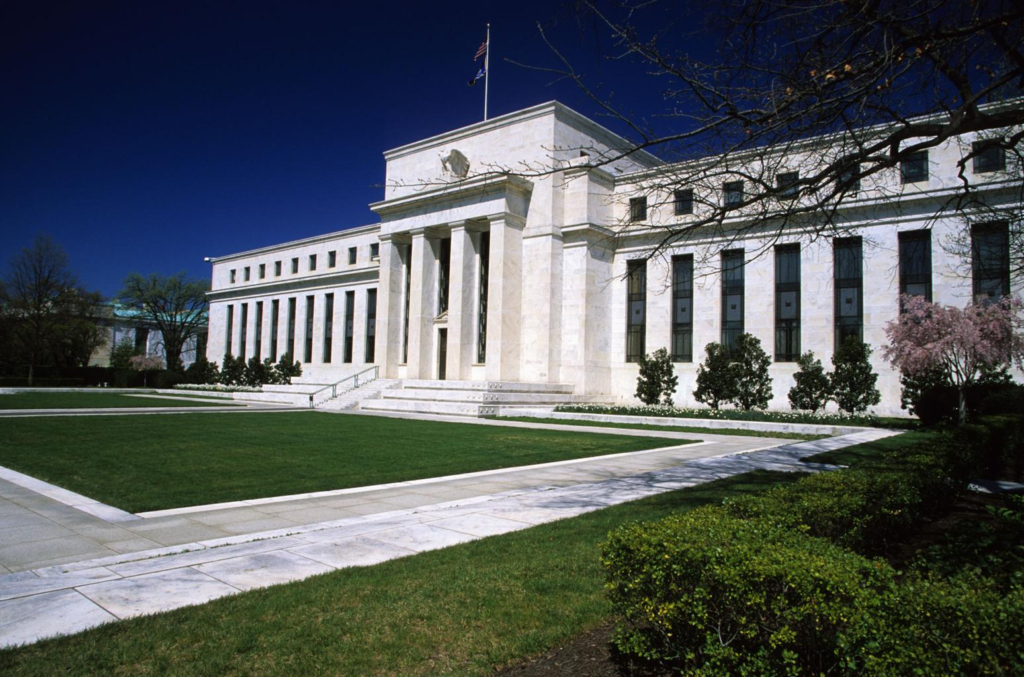
Federal Reserve Policy Signals
Interest rate expectations remain the single most powerful driver of U.S. equity and bond markets.
The Federal Reserve influences market liquidity through rate decisions, balance sheet policy, and forward guidance. Even subtle changes in tone during press conferences or policy statements can shift trillions of dollars in asset valuations.
Traders closely watch:
- Federal Open Market Committee (FOMC) statements
- Speeches from Fed officials
- Dot plot projections
- Quantitative tightening updates
- Market-implied rate expectations in Fed Funds futures
For instance, if policymakers indicate that rate cuts may come earlier than expected, equity markets often rally as borrowing costs and discount rates fall.
Conversely, persistent inflation signals may cause the Fed to maintain restrictive policy longer, which typically pressures growth stocks and risk assets.
In 2023 and 2024, markets repeatedly reacted to small shifts in inflation and rate expectations, demonstrating how sensitive near-term trading remains to central bank messaging.
Inflation and Key Economic Data Releases
Economic data can move markets within seconds of release. Institutional traders prepare extensively for these moments because they represent scheduled volatility events.
Among the most influential reports:
- Consumer Price Index (CPI)
- Producer Price Index (PPI)
- Non-Farm Payrolls (NFP)
- Retail Sales
- GDP growth estimates
- ISM manufacturing and services surveys
Inflation metrics have become particularly influential since 2022 because they directly influence Federal Reserve policy decisions.
For example:
If CPI rises above expectations, traders may assume the Fed will keep rates higher for longer. That assumption often triggers:
- bond yields rising
- tech stocks declining
- the U.S. dollar strengthening
On the other hand, weaker inflation data can ignite strong rallies in rate-sensitive sectors like technology, real estate, and small-cap equities.
Professional traders often monitor consensus estimates versus actual results, because the surprise factor is what creates price movement.

Corporate Earnings and Forward Guidance
Corporate earnings season can reshape market sentiment quickly.
While quarterly earnings themselves matter, forward guidance tends to have an even greater impact on short-term trading.
Companies frequently update expectations around:
- revenue growth
- margins
- supply chain conditions
- consumer demand
- capital spending
When large companies revise forecasts, entire sectors can react.
For example, if a major semiconductor manufacturer signals weakening demand, chip stocks across the industry may decline—even if their own earnings have not yet been reported.
Key areas traders watch during earnings season include:
- revenue growth versus expectations
- margin expansion or compression
- commentary about consumer demand
- inventory levels
- AI-related spending trends
- guidance for the next quarter or year
Companies that consistently beat expectations but lower future guidance often see their stocks decline despite strong results.
Treasury Yields and Bond Market Movements
Many equity traders underestimate the importance of the bond market.
The 10-year U.S. Treasury yield acts as a benchmark for global asset pricing. It influences mortgage rates, corporate borrowing costs, and valuation models used by institutional investors.
When yields rise rapidly:
- growth stocks tend to weaken
- technology companies often underperform
- financial stocks sometimes benefit
- dividend stocks become less attractive compared to bonds
When yields fall:
- high-growth equities often rally
- risk appetite increases
- speculative sectors may outperform
Recent market history shows how dramatic these effects can be. In several periods between 2022 and 2024, rapid yield spikes triggered significant equity corrections.
For near-term traders, monitoring the bond market during macro data releases is essential.
Geopolitical Events and Global Risk Sentiment
Geopolitical developments can create sudden market volatility because they introduce uncertainty into global trade, energy markets, and supply chains.
Examples of market-moving geopolitical developments include:
- armed conflicts
- sanctions and trade restrictions
- elections in major economies
- energy supply disruptions
- shipping route instability
Energy markets are particularly sensitive to geopolitical events. If tensions rise in major oil-producing regions, crude oil prices can spike quickly, affecting inflation expectations and energy stocks.
Equity markets often respond with risk-off behavior, where investors move capital into safe-haven assets like U.S. Treasuries or gold.
While geopolitical events are difficult to predict, traders watch headline flows closely because markets can react before full information is available.
Liquidity Conditions and Market Positioning
Liquidity plays a critical role in short-term trading dynamics.
Even when economic fundamentals appear stable, shifts in liquidity can produce large price swings.
Liquidity drivers include:
- Federal Reserve balance sheet policy
- Treasury issuance levels
- money market fund flows
- hedge fund positioning
- options market gamma exposure
For example, large options expirations—known as “OpEx” events—can amplify volatility when hedging activity accelerates.
Similarly, periods of thin liquidity, such as late summer trading or holiday weeks, can exaggerate price moves because fewer participants are active.
Institutional traders frequently analyze positioning indicators to understand whether markets are crowded in a particular direction.
Sector Rotation Trends
Markets rarely move uniformly. Instead, capital rotates between sectors depending on economic conditions.
Common rotation patterns include:
- Economic expansion: industrials, financials, consumer discretionary
- Defensive environments: utilities, healthcare, consumer staples
- Falling interest rates: technology and growth stocks
- Rising commodity prices: energy and materials
Understanding sector rotation helps traders identify opportunities even when broader market indexes appear flat.
For instance, during periods when interest rates stabilize, capital often flows back into technology and growth sectors that previously underperformed.
Currency Movements and the U.S. Dollar
Currency fluctuations influence multinational companies and global capital flows.
A strengthening U.S. dollar can affect markets in several ways:
- U.S. exports become more expensive
- multinational corporate earnings may decline when foreign revenue converts to dollars
- emerging markets can experience capital outflows
Conversely, a weaker dollar can support commodity prices and improve earnings translation for multinational firms.
Short-term traders often watch the U.S. Dollar Index (DXY) alongside Treasury yields because the two frequently move together during macroeconomic shifts.
Market Sentiment Indicators
Beyond fundamentals, sentiment indicators provide clues about potential turning points.
Popular sentiment measures include:
- volatility index (VIX) levels
- put-call ratios
- investor surveys
- options positioning data
When markets become extremely optimistic or pessimistic, reversals sometimes occur because positioning becomes overcrowded.
For example, a very low VIX may indicate complacency, while extremely high volatility levels often appear near market bottoms.
Professional traders combine sentiment analysis with macro catalysts to identify potential short-term opportunities.
Frequently Asked Questions
What are the biggest drivers of short-term market moves?
Interest rate expectations, inflation data, corporate earnings, bond yields, and geopolitical events are among the most influential near-term market catalysts.
Why does inflation data affect stock markets so much?
Inflation data influences central bank policy. If inflation rises, interest rates may remain higher for longer, which increases borrowing costs and reduces stock valuations.
How quickly do markets react to economic reports?
Major economic reports can trigger price movements within seconds of release, particularly when results differ significantly from expectations.
Why do Treasury yields impact stocks?
Treasury yields influence discount rates used in valuation models. Higher yields reduce the present value of future corporate earnings, which can pressure stock prices.
What role does earnings guidance play in stock movements?
Forward guidance often drives stock reactions more than past results because it changes expectations about future profitability.
How do geopolitical events influence trading?
Geopolitical uncertainty can affect energy prices, supply chains, and global trade flows, which may cause investors to move into safer assets.
What is sector rotation in financial markets?
Sector rotation refers to the movement of capital between different industries depending on economic conditions, interest rates, and growth expectations.
Why do traders monitor the U.S. dollar?
Currency fluctuations affect multinational earnings, commodity prices, and international capital flows.
What is market sentiment?
Market sentiment reflects investor psychology and positioning, often measured through volatility indexes, options activity, and surveys.
Can traders predict market moves reliably?
No indicator guarantees accuracy. Most professional traders rely on probability, risk management, and disciplined strategies rather than predictions.
Navigating the Signals: A Trader’s Strategic Perspective
Short-term trading success rarely comes from predicting a single catalyst. Instead, it comes from understanding how multiple forces interact simultaneously.
A strong jobs report might normally support stocks—but if inflation rises at the same time, markets could react negatively because higher interest rates become more likely.
Successful traders monitor:
- macroeconomic trends
- central bank communication
- bond market reactions
- corporate guidance
- global risk developments
By evaluating these signals together, traders can better anticipate shifts in market sentiment and volatility.
The near-term market environment is rarely simple, but it becomes far more understandable when viewed through the lens of expectations, liquidity, and risk positioning.
Key Signals Traders Are Watching Right Now
- Federal Reserve policy signals remain the dominant market catalyst
- Inflation data continues to drive interest-rate expectations
- Corporate earnings guidance influences sector-level momentum
- Treasury yields shape equity valuations and risk appetite
- Geopolitical developments can trigger sudden volatility
- Liquidity conditions and options positioning amplify price swings
- Sector rotation reveals where institutional capital is moving
- Currency movements affect multinational earnings and commodities