Summary
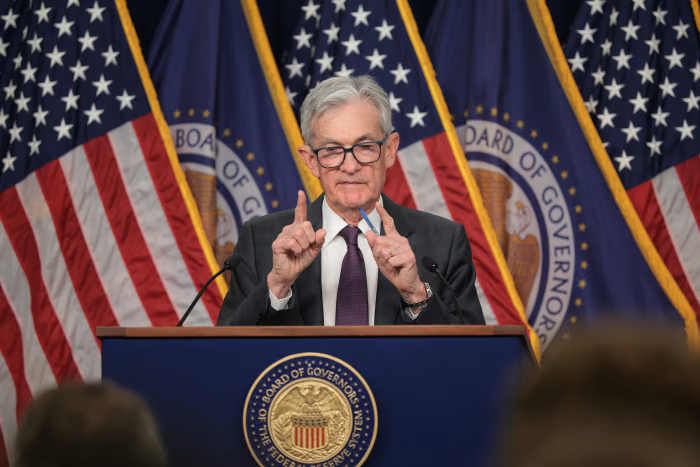
The Federal Reserve plays a central role in shaping Treasury yields and influencing equity markets through interest rate policy, balance sheet operations, and forward guidance. When the Fed adjusts monetary policy, the effects ripple through bond markets first and then across stocks, mortgages, and business investment. Understanding this relationship helps investors, analysts, and households interpret market movements and economic trends.
Understanding the Federal Reserve’s Role in Financial Markets
The Federal Reserve serves as the central bank of the United States, responsible for promoting maximum employment, stable prices, and moderate long-term interest rates. Its decisions affect nearly every corner of the financial system, but two areas respond most directly: Treasury yields and equity markets.
Treasury securities—issued by the U.S. government—form the foundation of global financial markets. Their yields act as benchmarks for everything from mortgage rates to corporate borrowing costs. Equity markets, meanwhile, reflect expectations about economic growth, corporate earnings, and financial conditions.
When the Federal Reserve adjusts monetary policy, these two markets often react immediately.
For example, when the Fed raised interest rates aggressively during 2022–2023 to combat inflation, Treasury yields climbed sharply. The yield on the 10-year Treasury briefly exceeded 5% in October 2023, the highest level in roughly 16 years, according to U.S. Treasury data. Equity markets became more volatile as investors reassessed valuations and economic risks.
The link between these markets and Fed policy is not accidental—it is the result of several key mechanisms.

How the Federal Reserve Directly Influences Treasury Yields
Treasury yields reflect the interest investors demand to lend money to the U.S. government. Although market forces ultimately determine those yields, the Federal Reserve strongly shapes them through policy actions.
Key Channels of Influence
- Federal funds rate adjustments
- Open market operations
- Balance sheet expansion or reduction
- Forward guidance about future policy
Each channel influences Treasury markets in different ways.
When the Fed raises the federal funds rate—the overnight rate banks charge each other—short-term Treasury yields usually rise almost immediately. Two-year Treasury yields are especially sensitive because they closely track expectations for future policy rates.
Longer-term yields, such as the 10-year Treasury, respond more gradually. They incorporate expectations about:
- Future economic growth
- Inflation trends
- Long-term monetary policy
For instance, if investors believe the Fed will successfully control inflation, long-term yields may stabilize even when short-term rates are high.
Quantitative Easing and Its Impact on Bond Markets
One of the most visible examples of the Fed’s influence on Treasury yields occurred during the 2008 financial crisis and again during the COVID-19 pandemic.
The Federal Reserve implemented quantitative easing (QE)—large-scale purchases of Treasury securities and mortgage-backed securities—to stabilize financial markets and lower borrowing costs.
Between 2020 and 2022, the Fed expanded its balance sheet to nearly $9 trillion, according to Federal Reserve data. By purchasing large volumes of Treasuries, the central bank increased demand for government bonds, which pushed yields downward.
Lower Treasury yields had several effects across the economy:
- Mortgage rates declined, encouraging home purchases and refinancing
- Corporate borrowing became cheaper
- Investors sought higher returns in equities and other risk assets
In this environment, stock markets surged. The S&P 500 gained more than 100% from its March 2020 lows to early 2022, reflecting strong liquidity and investor optimism.
This illustrates a key principle: Treasury yields and equity markets are closely connected through monetary policy.
Why Treasury Yields Matter for Equity Markets
Treasury yields influence equities through multiple economic channels.
The most important connection is the concept of the risk-free rate. Treasury securities are widely viewed as the safest investment available because they are backed by the U.S. government.
Investors compare potential returns on stocks with Treasury yields when allocating capital.
If Treasury yields rise substantially, investors may shift funds toward bonds because they offer safer returns. Conversely, when yields fall, stocks often become more attractive.
Key Ways Treasury Yields Affect Stocks
- Valuation models: Higher yields increase discount rates used to value future earnings.
- Corporate borrowing costs: Higher yields raise interest rates for businesses.
- Economic expectations: Rising yields may signal stronger growth or higher inflation.
- Portfolio allocation: Investors rebalance between bonds and equities.
Technology stocks, which rely heavily on future earnings expectations, often react strongly to rising yields. During the Fed tightening cycle in 2022, high-growth technology companies experienced significant declines as discount rates increased.
Market Reactions to Federal Reserve Communications
Financial markets do not respond only to policy actions—they also react to communication from the Federal Reserve.
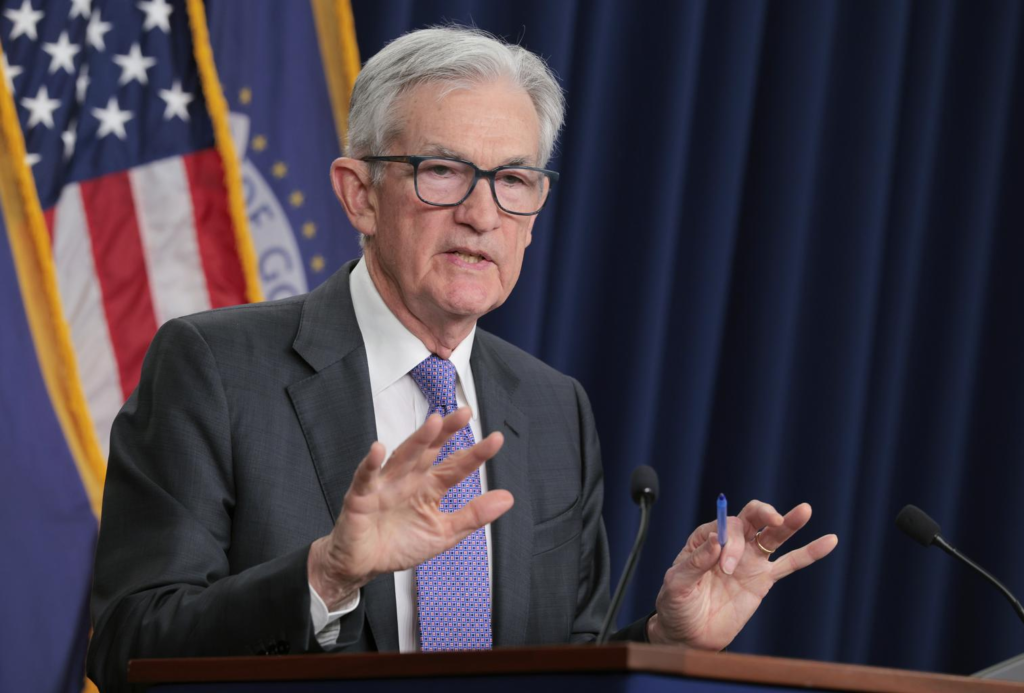
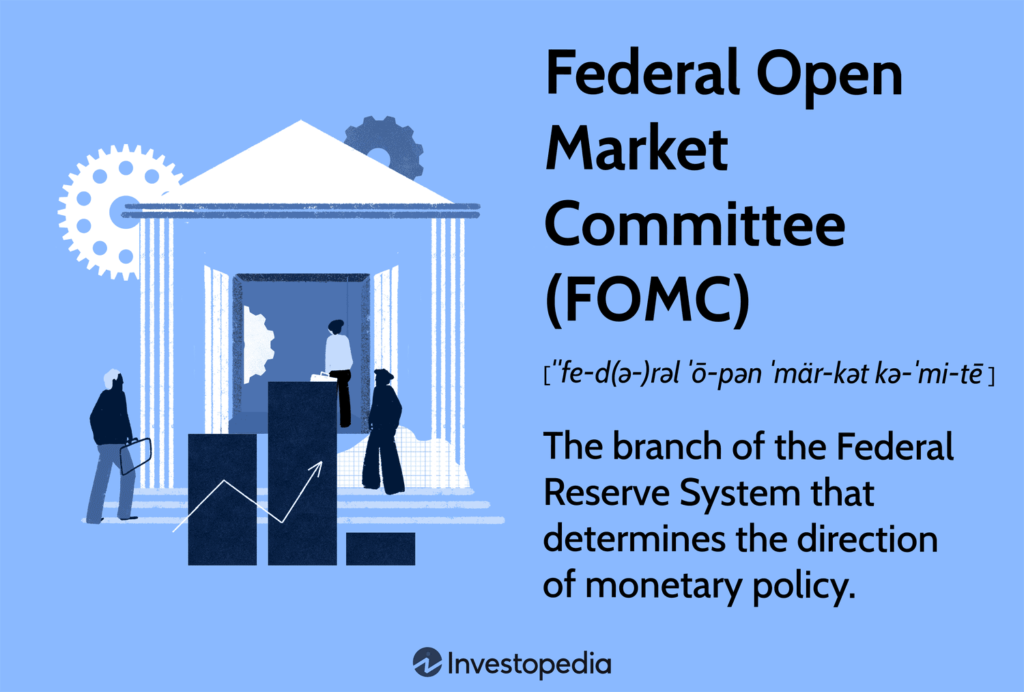
Statements from the Federal Open Market Committee (FOMC), press conferences by the Fed Chair, and published economic projections often move Treasury yields and equity markets within minutes.
This is known as forward guidance.
When the Fed signals a likely policy shift, investors begin adjusting expectations before the policy change actually occurs.
For example, if policymakers suggest interest rate cuts may occur later in the year, Treasury yields may fall immediately as investors anticipate easier financial conditions.
Similarly, stock markets may rally because lower rates could support corporate earnings and economic activity.
Yield Curve Signals and Economic Expectations
Another important concept linking Fed policy and markets is the Treasury yield curve.
The yield curve shows interest rates across Treasury securities with different maturities—from one month to thirty years.
Normally, long-term yields are higher than short-term yields because investors require compensation for risk and time.
However, when short-term rates rise above long-term rates, the curve becomes inverted.
Yield curve inversions have historically preceded U.S. recessions. According to data from the Federal Reserve Bank of New York, every U.S. recession since the 1970s has been preceded by an inverted yield curve.
Fed rate hikes are often a major factor behind these inversions because they push short-term yields higher.
Investors watch the yield curve closely as a signal of future economic conditions.
Real-World Example: The 2022–2024 Policy Cycle
A recent example illustrates how the Federal Reserve influences both bond and stock markets.
Between March 2022 and July 2023, the Federal Reserve raised interest rates from near zero to a range above 5% to combat high inflation.
Treasury yields rose sharply during this period:
- The 2-year Treasury yield surged above 5%
- The 10-year Treasury yield climbed above 4%
- The yield curve inverted for an extended period
Equity markets reacted in several stages.
Initially, stocks declined as investors worried about tighter financial conditions. Technology stocks were particularly sensitive because higher yields reduce the present value of future profits.
Later, equity markets stabilized as inflation began to ease and investors anticipated that the Fed might eventually pause or reverse rate hikes.
This pattern—bond market adjustments followed by equity market reactions—is common during major monetary policy cycles.
Why Investors Closely Watch the Federal Reserve
Professional investors, pension funds, and asset managers closely track Federal Reserve policy because it shapes market conditions.
Several indicators help investors interpret the Fed’s influence.
Indicators Commonly Monitored
- Federal funds rate projections
- FOMC meeting statements
- Treasury yield movements
- Inflation data such as CPI and PCE
- Labor market reports
- Fed balance sheet changes
These indicators help investors estimate how financial conditions may evolve.
For example, if inflation remains elevated, markets may expect the Fed to keep rates higher for longer, which could keep Treasury yields elevated and limit equity market gains.
Long-Term Effects on the Economy and Markets
The Federal Reserve’s influence extends beyond daily market movements. Over time, monetary policy shapes economic cycles.
Periods of low interest rates often encourage borrowing, investment, and risk-taking. This can support economic expansion and rising asset prices.
Conversely, higher interest rates tend to slow economic activity, reduce inflation pressures, and moderate financial market growth.
The goal is not to control markets directly but to maintain economic stability.
Over decades, the Federal Reserve’s actions have contributed to a financial environment in which Treasury yields serve as global benchmarks and U.S. equity markets remain among the largest and most influential in the world.
Frequently Asked Questions
1. Why do Treasury yields move when the Federal Reserve changes interest rates?
Because the federal funds rate influences short-term borrowing costs across the financial system. When the Fed raises or lowers this rate, investors adjust expectations for future interest rates, causing Treasury yields to move accordingly.
2. Why do rising Treasury yields sometimes cause stock markets to fall?
Higher yields increase the risk-free return available from bonds and raise discount rates used to value future corporate earnings. This can reduce stock valuations.
3. Does the Federal Reserve control the 10-year Treasury yield?
Not directly. The Fed influences it through policy expectations, economic conditions, and bond purchases, but market supply and demand ultimately determine the yield.
4. What is quantitative tightening?
Quantitative tightening occurs when the Federal Reserve reduces its balance sheet by allowing bonds to mature without reinvesting proceeds, which can put upward pressure on Treasury yields.
5. Why do investors monitor the yield curve?
Because the yield curve reflects expectations about future economic growth, inflation, and monetary policy.
6. How quickly do markets react to Federal Reserve announcements?
Often within seconds. Treasury yields and equity indexes frequently move immediately after FOMC statements or press conferences.
7. Do rate cuts always cause stocks to rise?
Not always. Rate cuts sometimes occur during economic downturns, which can create uncertainty in equity markets.
8. Why are Treasury securities considered risk-free?
They are backed by the full faith and credit of the U.S. government, making default extremely unlikely.
9. How do global investors influence Treasury yields?
International demand for U.S. Treasuries can affect yields because foreign governments, central banks, and institutions are major buyers.
10. What role does inflation play in Treasury yields?
Higher inflation typically pushes yields higher because investors require compensation for declining purchasing power.
Reading the Signals: What Treasury and Equity Markets Reveal
The relationship between the Federal Reserve, Treasury yields, and equity markets offers valuable insight into economic expectations.
When Treasury yields rise sharply, it often signals tighter financial conditions or stronger inflation concerns. When yields fall, it may indicate expectations of slower growth or future policy easing.
Equity markets interpret these signals through the lens of corporate earnings and economic momentum.
For investors, analysts, and policymakers alike, watching how these markets respond to Federal Reserve decisions provides an important window into the direction of the U.S. economy.
Key Insights at a Glance
- Federal Reserve policy strongly influences Treasury yields through interest rate decisions and bond market operations
- Treasury yields act as benchmarks for borrowing costs across the economy
- Equity markets respond to changes in interest rates, liquidity, and economic expectations
- Forward guidance and Fed communications often move markets before policy changes occur
- The yield curve remains one of the most closely watched indicators of economic conditions