Summary
The Federal Reserve constantly navigates a difficult balance: controlling inflation while supporting economic growth and employment. Through interest rate adjustments, monetary policy tools, and economic guidance, the Fed aims to stabilize prices without slowing the economy too much. Understanding how this balancing act works helps Americans make better decisions about mortgages, investments, savings, and business planning.
Why the Federal Reserve’s Dual Mandate Matters
The Federal Reserve operates under a dual mandate established by Congress:
- Maintain price stability (control inflation)
- Achieve maximum sustainable employment
Balancing these two goals is one of the most complex responsibilities in modern economic policymaking.
Inflation erodes purchasing power. If prices rise too quickly, households struggle to afford everyday goods, wages lose value, and economic uncertainty increases. On the other hand, policies that aggressively suppress inflation can slow economic activity, leading to layoffs, declining investment, and recession.
The challenge is timing and calibration. The Federal Reserve must often act before economic conditions visibly deteriorate, relying on forecasts, financial signals, and macroeconomic data.
For American households and businesses, these decisions influence:
- Mortgage rates
- Credit card interest rates
- Business loans
- Investment returns
- Job opportunities
Because of this, Federal Reserve policy decisions ripple across the entire economy.
Understanding Inflation: Why the Fed Takes It Seriously
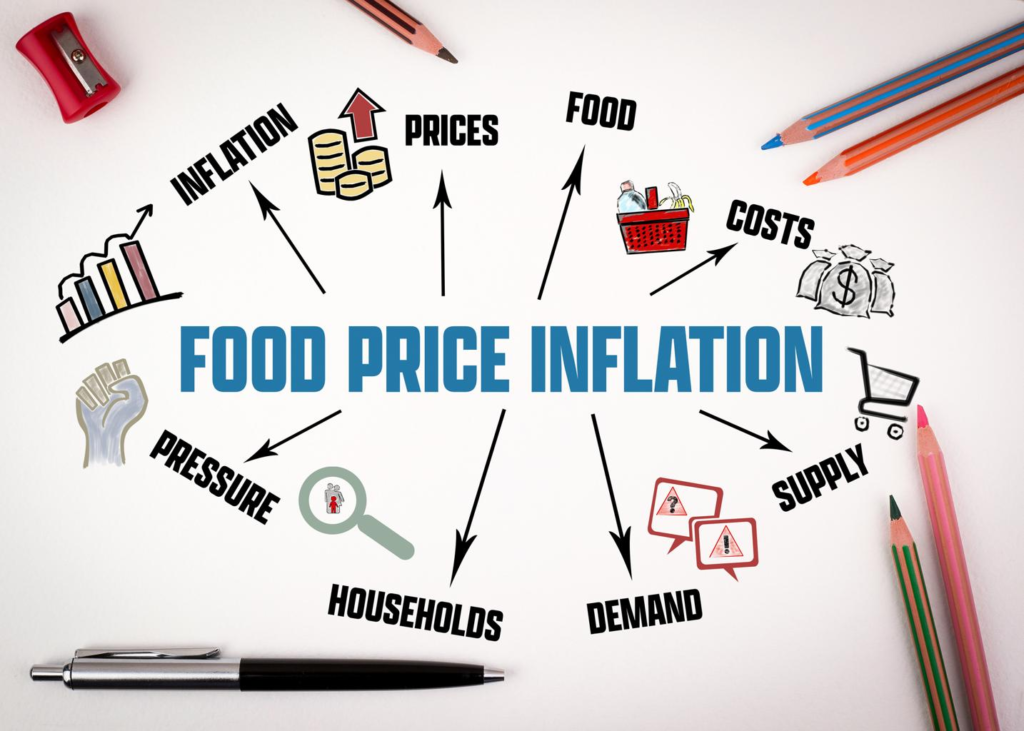
Inflation refers to the rate at which prices increase over time. The Fed generally targets about 2% annual inflation, a level economists consider healthy for economic growth.
A small amount of inflation encourages spending and investment. But sustained high inflation can destabilize an economy.
Between 2021 and 2022, inflation in the United States rose to levels not seen in four decades, peaking above 9% according to the Consumer Price Index (CPI). This surge was driven by several factors:
- Pandemic-era supply chain disruptions
- Massive fiscal stimulus
- Strong consumer demand
- Energy price volatility
- Labor shortages
When inflation accelerates, the Fed’s primary tool is raising interest rates. Higher rates reduce borrowing, cool spending, and slow demand, which helps bring prices down.
However, the impact of rate changes can take 6–18 months to fully filter through the economy.
That delay makes the Fed’s job especially difficult.
Economic Growth: Why Slowing the Economy Too Much Is Risky
While controlling inflation is critical, overly aggressive monetary tightening can create its own problems.
Economic growth supports:
- Job creation
- Wage increases
- Business investment
- Consumer confidence
When interest rates rise sharply, borrowing becomes more expensive for households and businesses. That can lead to:
- Fewer home purchases
- Reduced corporate investment
- Slower hiring
- Lower consumer spending
For example, higher mortgage rates in 2023 significantly slowed housing activity across the United States.
A housing slowdown has wide consequences because construction, real estate services, and home-related spending contribute heavily to economic growth.
This is why the Federal Reserve rarely acts in extreme ways. Instead, policymakers typically adjust rates gradually while monitoring economic indicators.
The Tools the Federal Reserve Uses
The Fed has several policy tools to manage the balance between inflation and growth.
1. Interest Rate Policy
The most widely discussed tool is the federal funds rate, which influences borrowing costs across the economy.
When inflation rises, the Fed typically raises rates.
When economic growth slows too much, it lowers rates.
Rate changes affect:
- Mortgage rates
- Auto loans
- Business financing
- Credit card interest
- Treasury yields
2. Open Market Operations
The Fed also buys or sells U.S. Treasury securities to influence liquidity in financial markets.
During economic crises, large asset purchases—known as quantitative easing—can support financial stability and stimulate lending.
3. Forward Guidance
Markets often react as much to what the Fed signals as to what it actually does.
By communicating expectations about future policy, the Fed shapes financial conditions ahead of time.
4. Balance Sheet Management
In recent years, the Fed has also used quantitative tightening, gradually shrinking its balance sheet to remove excess liquidity from the financial system.
Together, these tools form the core of modern U.S. monetary policy.
The Data the Fed Watches Closely
Federal Reserve policymakers rely heavily on economic data to determine whether inflation or economic weakness poses the greater risk.
Some of the most closely watched indicators include:
- Consumer Price Index (CPI) – measures inflation experienced by consumers
- Personal Consumption Expenditures (PCE) – the Fed’s preferred inflation gauge
- Unemployment rate – signals labor market strength
- Wage growth data – indicates inflation pressures from labor markets
- GDP growth – measures overall economic expansion
- Consumer confidence surveys
For example, strong wage growth combined with low unemployment may signal an overheating economy, which could justify tighter monetary policy.
But if unemployment rises quickly, the Fed may pause or reverse rate hikes.
The “Soft Landing” Goal
One of the most frequently discussed objectives in economic policy is achieving a soft landing.
A soft landing occurs when the Federal Reserve successfully reduces inflation without triggering a recession.
Historically, soft landings are difficult but not impossible.
Economists often reference the mid-1990s as an example where the Fed raised rates enough to slow inflation while allowing the economy to continue expanding.
However, other tightening cycles have led to recessions.
That uncertainty is why markets closely watch every Federal Reserve meeting and policy statement.
How Fed Policy Affects Everyday Americans
Many Americans assume Federal Reserve decisions primarily affect Wall Street. In reality, monetary policy touches nearly every household.
Consider a few practical examples.
Homebuyers
When the Fed raises rates, mortgage rates usually follow. Even small increases can significantly change monthly payments.
A one-percentage-point increase in mortgage rates can add hundreds of dollars per month to a typical mortgage.
Small Businesses
Entrepreneurs often rely on credit lines or bank loans to fund expansion. Higher borrowing costs can delay hiring or investment plans.
Retirement Investors
Interest rate changes influence stock and bond markets. Rising rates often pressure stock valuations while improving yields on fixed-income investments.
Consumers
Credit card interest rates are closely tied to the federal funds rate. When rates rise, revolving debt becomes more expensive.
Understanding the Fed’s policy direction helps consumers make better financial decisions.
The Political and Global Pressures on the Fed
Although the Federal Reserve operates independently from political leadership, its decisions often attract political attention.
High inflation can frustrate voters, while rising unemployment can trigger criticism of economic policy.
In addition, the Fed must consider global financial dynamics.
U.S. monetary policy influences:
- Global capital flows
- Currency exchange rates
- Emerging market stability
- International trade conditions
When U.S. interest rates rise, global investors often shift funds toward dollar-denominated assets, strengthening the U.S. dollar and affecting other economies.
This global dimension makes Federal Reserve decisions even more consequential.
Challenges the Federal Reserve Faces in the Coming Years
Looking ahead, policymakers face several structural economic uncertainties.
Structural Labor Shortages
Demographic trends—including an aging workforce—may limit labor supply, potentially keeping wage pressures elevated.
Supply Chain Realignment
Post-pandemic reshoring and geopolitical tensions are reshaping global supply chains, which may affect production costs.
Fiscal Policy Interaction
Large federal deficits and government spending can complicate monetary policy decisions.
Technological Disruption
Artificial intelligence and automation could reshape productivity, wage growth, and inflation dynamics.
Because of these factors, the Fed’s balancing act will likely remain complex for years to come.

FAQ: The Federal Reserve and Inflation Control
Why does the Federal Reserve target 2% inflation?
Economists consider 2% inflation a level that supports economic growth while preventing deflation and excessive price volatility.
How quickly do interest rate hikes reduce inflation?
Typically, monetary policy affects the economy with a delay of 6–18 months.
Does the Federal Reserve control mortgage rates directly?
No. Mortgage rates are influenced by bond markets, but they usually move in the same direction as Fed policy.
What happens if the Fed raises rates too aggressively?
Excessive tightening can slow economic activity and potentially lead to a recession.
Why doesn’t the Fed simply keep rates low to encourage growth?
Persistently low rates can allow inflation to accelerate, destabilizing the economy.
How often does the Federal Reserve change interest rates?
The Federal Open Market Committee (FOMC) meets eight times per year to evaluate economic conditions.
What is the Fed’s preferred inflation measure?
The Fed closely monitors the Personal Consumption Expenditures (PCE) price index.
Can the Federal Reserve completely eliminate inflation?
No. The goal is to manage inflation, not eliminate it entirely.
How does Fed policy affect the stock market?
Rate changes influence investor expectations, corporate borrowing costs, and economic growth projections.
Why do markets react strongly to Fed announcements?
Financial markets are highly sensitive to signals about future interest rate policy.
Why the Fed’s Policy Balance Shapes the Entire Economy
The Federal Reserve’s mission requires careful judgment rather than rigid formulas. Policymakers must interpret evolving economic signals and act before imbalances become severe.
For households deciding whether to buy a home, businesses considering expansion, and investors managing portfolios, the Fed’s balancing act between inflation and growth plays a central role in financial planning.
While no policy path eliminates uncertainty, thoughtful monetary policy helps sustain long-term economic stability.
Key Insights at a Glance
- The Federal Reserve balances price stability and employment.
- Inflation control typically requires higher interest rates.
- Excessive tightening can slow economic growth.
- Monetary policy affects mortgages, loans, jobs, and investments.
- The goal of policymakers is often a soft landing.
- Global financial conditions also influence Fed decisions.