Summary
The U.S. Federal Reserve shapes interest rates, credit conditions, and financial stability through a structured decision-making process led by the Federal Open Market Committee. Using economic data, expert analysis, and regional insights, policymakers debate and vote on monetary policy actions. Understanding how the Federal Reserve makes decisions helps Americans interpret rate changes, inflation trends, and broader economic policy signals.
Why the Federal Reserve’s Decisions Matter
The policies set by the Federal Reserve System influence nearly every corner of the American economy. Mortgage rates, car loans, business financing, employment trends, and inflation levels are all affected by decisions made inside the Fed.
When the central bank raises or lowers interest rates, the change ripples outward through banks, markets, and consumers. Businesses adjust hiring plans. Investors reprice risk. Households see borrowing costs shift.
For this reason, the Fed’s decision-making process is designed to be deliberate, data-driven, and insulated from short-term political pressure.
The central institution responsible for monetary policy is the Federal Open Market Committee, commonly called the FOMC.
Understanding how the FOMC operates helps explain why markets react so strongly to every Fed meeting.
Who Actually Makes the Decisions?
The FOMC consists of 12 voting members drawn from the leadership of the central banking system.
These include:
- The 7 members of the Board of Governors
- The President of the New York Federal Reserve Bank
- Four rotating presidents from the other regional Federal Reserve Banks
The Board of Governors is based in Washington, D.C. and currently led by Jerome Powell.
The United States has 12 regional Federal Reserve Banks, located in cities including:
- New York
- Chicago
- San Francisco
- Dallas
- Atlanta
- Boston
- Minneapolis
These regional banks provide ground-level economic insights from across the country.
This structure ensures monetary policy decisions reflect conditions not only on Wall Street but also in manufacturing regions, agricultural economies, and technology hubs.

The Fed’s Dual Mandate
Congress gave the Federal Reserve two core objectives known as the dual mandate:
- Maximum employment
- Stable prices
Stable prices typically mean keeping inflation around 2% annually, a target the Fed formally adopted in 2012.
When inflation rises too quickly, purchasing power erodes. When inflation is too low, economic growth can stall.
Balancing employment and inflation is rarely straightforward. A strong job market can push wages and prices upward, while aggressive rate hikes to fight inflation can slow hiring.
This trade-off is at the heart of the Fed’s decision process.
How the Federal Reserve Gathers Economic Intelligence
Before each policy meeting, Fed staff and regional economists compile a massive amount of economic data.
Key indicators include:
- Inflation data (Consumer Price Index and Personal Consumption Expenditures)
- Unemployment rates
- GDP growth
- Wage growth
- Housing activity
- Financial market conditions
One unique input is the Beige Book, a report summarizing economic conditions across the 12 Federal Reserve districts.
Regional business contacts provide anecdotal insights such as:
- Hiring challenges in manufacturing
- Consumer spending trends
- Supply chain disruptions
- Housing market activity
These qualitative observations help policymakers interpret what the raw numbers might be missing.
For example, during supply chain disruptions in 2021, local reports from manufacturers and logistics firms helped the Fed understand the scope of price pressures before they fully appeared in national data.
The FOMC Meeting Structure
The Federal Open Market Committee meets eight times per year in Washington.
Each meeting typically follows a detailed two-day agenda.
Day One: Economic Briefings
Economists from across the Federal Reserve system present detailed analyses of:
- Current economic conditions
- Financial market developments
- Global economic trends
- Inflation projections
These briefings often rely on hundreds of pages of data analysis and forecasts prepared by Fed staff.

Day Two: Policy Discussion and Vote
The second day is when policymakers debate potential policy actions.
Participants discuss:
- Risks to economic growth
- Inflation trajectory
- Financial stability concerns
- Labor market conditions
After discussion, voting members decide whether to:
- Raise interest rates
- Lower interest rates
- Keep rates unchanged
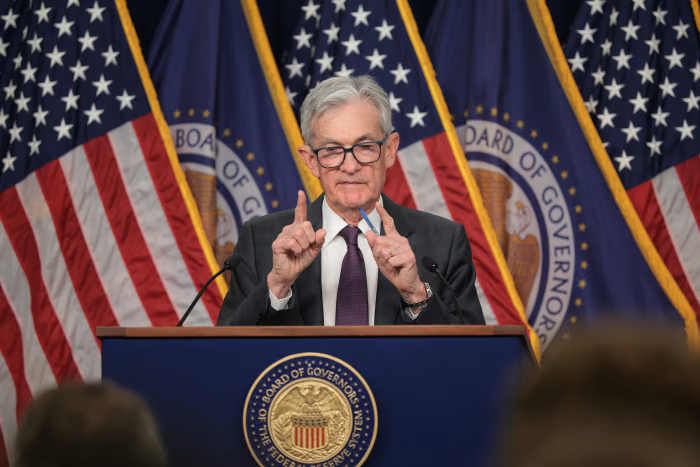
The decision is announced publicly at 2:00 PM Eastern Time, often followed by a press conference from the Fed Chair.
The Role of Interest Rates
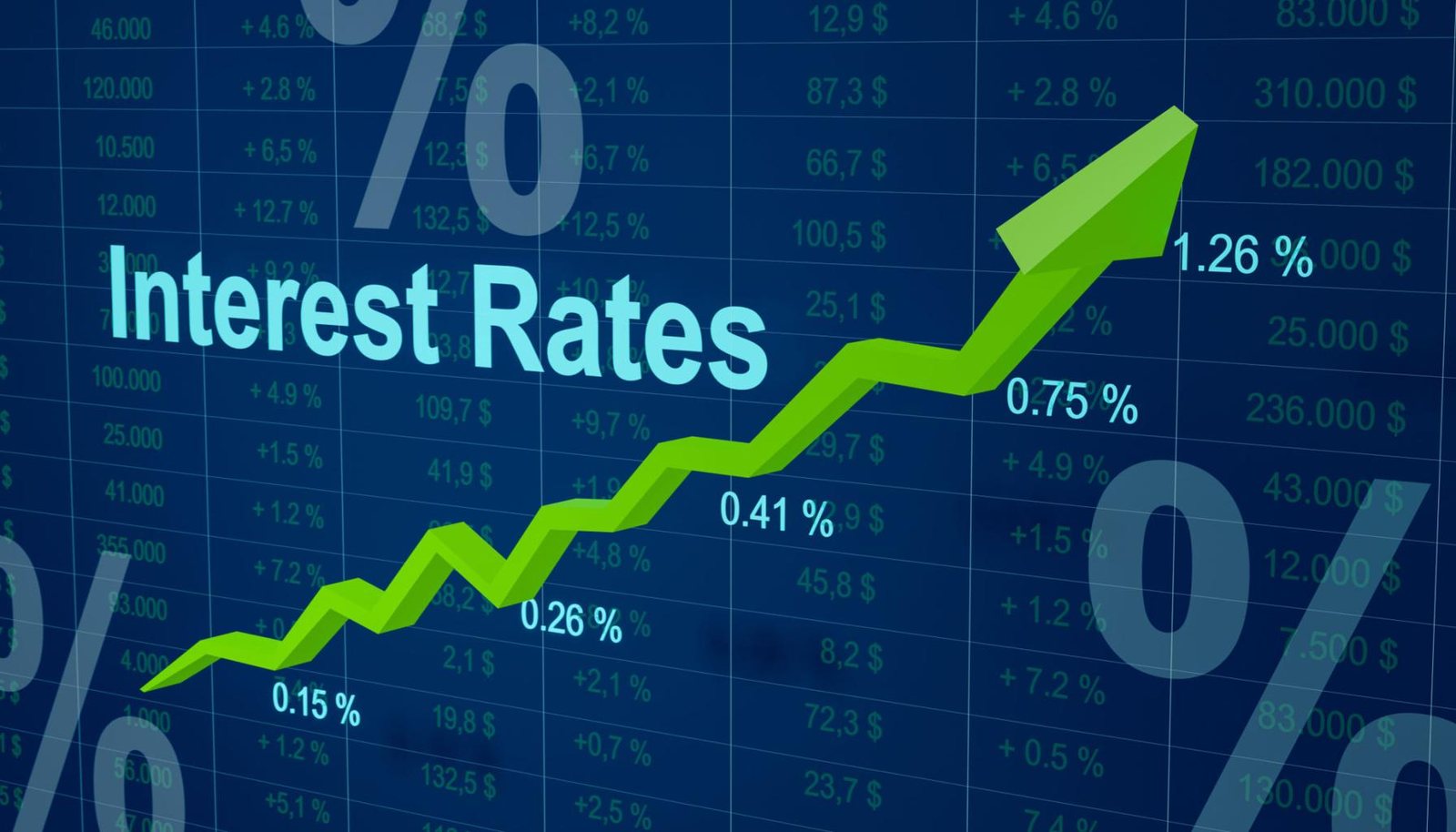
The primary tool used by the Federal Reserve is the federal funds rate, the interest rate banks charge each other for overnight lending.
By adjusting this rate, the Fed influences borrowing costs across the economy.
For example:
- Mortgage rates often rise when the Fed tightens policy
- Credit card interest rates increase
- Corporate borrowing becomes more expensive
Higher rates generally slow economic activity, while lower rates encourage spending and investment.
During the financial crisis of 2008 and the pandemic in 2020, the Fed lowered rates to near zero to support the economy.
When inflation surged in 2022, the Fed responded with the fastest rate-hiking cycle in decades.
Forecasting the Economy: The Fed’s Projections
At several meetings each year, policymakers publish the Summary of Economic Projections (SEP).
This document includes forecasts for:
- Inflation
- Unemployment
- Economic growth
- Future interest rates
The projections include the famous “dot plot,” which shows where individual policymakers expect interest rates to go in the future.
Markets closely analyze these forecasts because they offer insight into the Fed’s long-term strategy.
For example, if many policymakers expect higher rates for longer, investors may adjust bond yields and stock valuations accordingly.
Debate and Disagreement Inside the Fed
Although the Fed aims for consensus, disagreement is common.
Different policymakers often interpret economic data differently.
A regional president representing a manufacturing-heavy district may see slowing demand earlier than policymakers in technology-driven regions.
Dissenting votes occasionally occur when members disagree on the appropriate interest rate level.
This diversity of viewpoints is intentional. It helps prevent policy decisions from relying on a single perspective.
Transparency has also increased significantly in recent decades.
Meeting minutes are released three weeks after each meeting, allowing economists and journalists to see how the debate unfolded.
Communication: Guiding Markets Without Surprises
Modern central banking relies heavily on forward guidance.
Instead of surprising markets with abrupt changes, the Fed signals its intentions gradually through:
- Speeches by policymakers
- Economic projections
- Press conferences
- Meeting minutes
This approach helps stabilize financial markets.
For example, if investors expect gradual rate increases over the next year, bond markets and mortgage lenders can adjust smoothly.
Unexpected policy shocks can cause volatility across global markets.
Clear communication reduces that risk.
Real-World Example: Inflation and the 2022 Rate Cycle
One of the clearest demonstrations of the Fed’s decision process occurred during the inflation surge beginning in 2021.
After pandemic stimulus and supply chain disruptions pushed inflation above 8%, the Federal Reserve began rapidly raising interest rates.
Between March 2022 and July 2023:
- The federal funds rate rose from near zero to over 5%
- Mortgage rates doubled in many markets
- Inflation gradually began declining
The process illustrated how the Fed weighs economic risks:
- Raising rates too slowly could allow inflation to persist
- Raising them too aggressively could trigger recession
The eventual policy path reflected months of debate and analysis inside the FOMC.
Why the Fed’s Process Is Designed to Be Independent
Unlike many government agencies, the Federal Reserve operates with a high degree of independence from elected officials.
While Congress oversees the institution, policymakers are not required to align decisions with short-term political goals.
This independence helps preserve credibility in financial markets.
If investors believed interest rate decisions were politically motivated, long-term inflation expectations could rise dramatically.
Historical experience shows that central banks with greater independence tend to maintain lower and more stable inflation.

Frequently Asked Questions
What is the Federal Open Market Committee?
The FOMC is the Federal Reserve body responsible for setting U.S. monetary policy, particularly interest rates.
How often does the Fed meet?
The FOMC holds eight scheduled meetings per year, though emergency meetings can occur during financial crises.
Who votes on interest rate decisions?
Twelve officials vote: the seven governors, the New York Fed president, and four rotating regional bank presidents.
What economic data does the Fed rely on?
Key indicators include inflation, unemployment, GDP growth, wages, and financial market conditions.
Why does the Fed target 2% inflation?
A modest inflation rate encourages spending and investment while maintaining stable purchasing power.
What happens if the Fed raises interest rates?
Borrowing becomes more expensive, which generally slows spending and helps reduce inflation.
Can the Federal Reserve influence mortgage rates?
Yes. While the Fed does not set mortgage rates directly, its policy decisions strongly influence them.
Why does the Fed release meeting minutes?
Transparency helps markets understand policymakers’ thinking and reduces uncertainty.
What is the “dot plot”?
It is a chart showing policymakers’ projections for future interest rates.
Can the Fed prevent recessions?
The Fed can influence economic conditions but cannot fully eliminate business cycles.
Inside the Engine of U.S. Monetary Policy
The Federal Reserve’s decision-making process reflects a careful balance of data analysis, regional insight, economic theory, and policy debate.
Every interest rate change represents the culmination of months of research and discussion across economists, financial experts, and regional leaders.
While the outcomes may not always satisfy every stakeholder, the process itself is designed to maintain stability in the world’s largest economy.
Understanding how those decisions are made provides valuable context for interpreting the economic headlines Americans see every day.
Key Insights at a Glance
- The Federal Reserve sets U.S. monetary policy through the Federal Open Market Committee
- Twelve voting members debate and decide interest rate changes
- Policymakers analyze extensive economic data before each meeting
- Regional Fed banks contribute local economic insights
- The Fed aims to balance maximum employment with stable inflation
- Transparent communication helps prevent market volatility
- Interest rate changes influence borrowing costs across the economy
- Debate and dissent are normal parts of the decision process