Summary
Market headlines often focus on a handful of mega-cap tech giants, but a broader group of companies is quietly shaping market momentum behind the scenes. From semiconductor suppliers to financial infrastructure providers, these firms influence supply chains, capital flows, and enterprise productivity. Understanding their role helps investors and professionals better interpret economic trends and where the next phase of growth may emerge.
The Hidden Forces Behind Market Momentum
When people talk about market momentum in the United States, the conversation typically revolves around the biggest names on Wall Street. Companies like Apple, Microsoft, and NVIDIA dominate headlines and often drive the major indexes.
But beneath those widely discussed giants is a network of companies that shape the market’s direction in quieter ways.
These businesses rarely dominate daily financial news. Instead, they influence supply chains, financial plumbing, and enterprise technology infrastructure—areas that determine whether industries expand or stall.
For investors, analysts, and business leaders, recognizing these companies provides deeper context about where economic momentum is forming. Many of them operate in the background of the global economy, yet their decisions ripple across entire sectors.
Why “Behind-the-Scenes” Companies Matter More Than Ever
The modern economy is deeply interconnected. A single supplier, infrastructure platform, or financial intermediary can affect hundreds of publicly traded companies.
For example:
- Semiconductor manufacturing bottlenecks can affect consumer electronics, AI infrastructure, automotive production, and cloud computing.
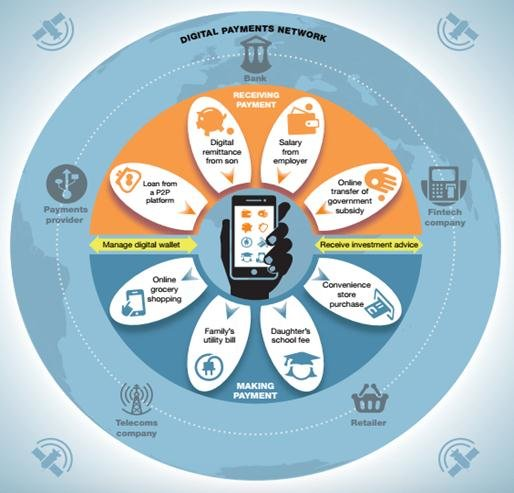
- Payment networks determine how quickly commerce flows across borders.
- Enterprise software platforms shape productivity across thousands of organizations.
Because of this interconnectedness, companies that operate at key chokepoints in the economy often exert disproportionate influence on market momentum.
Institutional investors increasingly monitor these firms as indicators of broader economic activity.

Semiconductor Backbone: The Companies Powering the AI Era
Few sectors illustrate quiet market influence better than semiconductor infrastructure.
While AI headlines often spotlight chip designers like NVIDIA, the companies enabling chip production have become just as important.
Two of the most influential are:
- Taiwan Semiconductor Manufacturing Company (TSMC)
- ASML
TSMC manufactures advanced chips used in smartphones, AI servers, and data centers. Meanwhile, ASML produces the extreme ultraviolet lithography (EUV) machines required to fabricate the most advanced semiconductors.
Without ASML’s machines, the latest chips from NVIDIA, Apple, or AMD could not exist.
This dynamic means that supply updates, capacity expansion announcements, or equipment shipments from these companies often signal future industry growth months in advance.
Analysts frequently watch:
- semiconductor equipment orders
- fabrication plant expansions
- advanced-node production capacity
These signals can hint at upcoming demand across the entire tech sector.
Financial Infrastructure Companies Steering Capital Flows
Another group quietly influencing markets sits inside financial infrastructure.
Companies such as BlackRock and Visa play critical roles in how capital and transactions move globally.
Asset Management Powerhouses
BlackRock, the world’s largest asset manager with more than $10 trillion in assets under management, influences markets in several ways:
- ETF creation and flows
- institutional portfolio allocations
- index design and benchmark structures
When capital moves into ETFs tied to certain sectors—such as AI, infrastructure, or energy—BlackRock often sits at the center of those flows.
Large inflows can accelerate momentum in specific industries.
Payment Networks as Economic Indicators
Visa operates one of the world’s largest payment networks.
Its transaction data offers near-real-time insight into consumer spending patterns.
When analysts examine quarterly earnings reports from Visa or Mastercard, they are often looking for signals about:
- consumer confidence
- travel demand
- cross-border commerce
- inflation pressures
Because payments occur across nearly every industry, these companies provide a snapshot of the broader economy before official data releases.
Enterprise Software Platforms Driving Productivity
Another powerful but understated influence on markets comes from enterprise software platforms.
Companies like ServiceNow and Salesforce provide the digital infrastructure that businesses rely on to manage workflows, automate processes, and coordinate large teams.
When these platforms expand adoption, productivity across entire industries often improves.
For example:
- ServiceNow’s workflow automation tools help companies reduce operational bottlenecks.
- Salesforce’s CRM platform helps organizations track and optimize sales pipelines.
- Integrations with AI tools are enabling faster decision-making inside corporations.
These shifts can lead to measurable improvements in corporate efficiency and profit margins, which ultimately show up in earnings across multiple sectors.
Data and Analytics Firms Shaping Strategic Decisions
Modern markets increasingly depend on data-driven decision making.
Companies like Palantir Technologies and Snowflake help organizations analyze enormous datasets, enabling better forecasting, supply chain optimization, and strategic planning.
For instance:
- Government agencies use Palantir’s platforms for national security analysis and logistics coordination.
- Corporations use Snowflake’s data cloud to manage complex analytics across global operations.
These companies do not sell consumer products, but their platforms guide major decisions in defense, healthcare, logistics, and finance.
When demand for their tools rises, it often signals that organizations are investing heavily in analytics and automation.
That investment tends to precede broader economic productivity gains.
The Logistics and Supply Chain Enablers
Supply chain efficiency plays a critical role in market momentum, particularly in an era of global trade and e-commerce.
Companies such as United Parcel Service (UPS) and FedEx offer valuable insights into shipping volumes, inventory trends, and business demand.
When shipping volumes rise, it usually signals:
- strong consumer demand
- expanding e-commerce activity
- increased manufacturing output
Conversely, declining shipping activity can indicate slowing economic momentum.
Logistics companies therefore serve as early indicators of economic direction.
Cloud Infrastructure Providers Enabling Digital Expansion
The rise of cloud computing has created another group of quiet market drivers.
Companies such as:
- Amazon (through AWS)
- Microsoft (through Azure)
- Alphabet (through Google Cloud)
provide the infrastructure supporting AI, software platforms, streaming services, and enterprise applications.
While these companies are well known, their cloud divisions operate like digital utilities for the global economy.
Growth in cloud spending often signals:
- expanding digital services
- increased AI deployment
- enterprise modernization initiatives
Because cloud infrastructure sits at the foundation of modern software, its expansion often precedes broader technology growth cycles.
Why Investors Are Paying Attention
Institutional investors increasingly monitor these quieter companies as indicators of where market momentum may develop.
Rather than focusing solely on headline stocks, analysts often look at the broader ecosystem surrounding major trends.
For example:
- AI growth depends on semiconductor manufacturing capacity.
- Global commerce depends on payment networks and logistics systems.
- Corporate productivity improvements depend on enterprise software platforms.
Understanding these supporting companies can provide earlier signals about industry shifts than simply watching the largest tech firms.

Frequently Asked Questions
Which companies influence market momentum the most?
Companies operating in financial infrastructure, semiconductor manufacturing, cloud computing, and logistics often influence markets significantly because their services support entire industries.
Why do semiconductor suppliers matter so much to markets?
They produce the physical components powering AI, data centers, smartphones, and vehicles. If supply tightens or expands, multiple industries are affected simultaneously.
How do asset managers influence market trends?
Large asset managers like BlackRock allocate capital across industries through funds and ETFs, shaping where institutional money flows.
Are payment networks good indicators of the economy?
Yes. Transaction data from networks like Visa reflects consumer spending patterns across travel, retail, and services.
Why are enterprise software companies important to market growth?
They help businesses automate operations, increase productivity, and reduce costs, which can boost corporate earnings across sectors.
How does cloud infrastructure affect the stock market?
Cloud providers enable AI, software platforms, and digital services. Increased cloud spending often signals expanding technology investment.
Do logistics companies provide economic signals?
Shipping volumes and freight demand often reflect broader consumer and industrial activity, making logistics firms useful economic indicators.
Are these companies good investment opportunities?
Many analysts track them closely, but investment decisions should depend on individual financial goals, risk tolerance, and broader market conditions.
Why aren’t these companies discussed as often in the media?
Because their influence occurs behind the scenes in supply chains and infrastructure rather than through consumer-facing products.
Reading the Market Through Its Infrastructure
Understanding the companies quietly shaping market momentum provides a more complete view of the economy.
Markets are rarely driven by a single headline company. Instead, they evolve through interconnected systems of suppliers, infrastructure providers, and data platforms.
By watching the businesses that enable entire industries to function—rather than just those that dominate headlines—investors and professionals gain a clearer picture of where the next wave of growth may emerge.
Key Insights at a Glance
- Market momentum often originates from infrastructure companies rather than headline tech giants
- Semiconductor manufacturers and equipment suppliers enable the AI industry
- Asset managers influence capital allocation across sectors
- Payment networks provide real-time signals about consumer activity
- Enterprise software platforms improve productivity across industries
- Logistics and supply chains reveal shifts in economic demand
- Cloud infrastructure providers support the expansion of digital services