New tax reform proposals are generating significant discussion among economists and policy analysts as the United States approaches the expiration of several provisions from the 2017 tax overhaul. Experts are evaluating how potential changes to tax rates, business deductions, family credits, and corporate rules could affect economic growth, federal revenue, and household finances in the coming decade.
Why the Current Tax Reform Debate Matters
Tax reform discussions in Washington often appear highly technical, but their effects reach into everyday financial decisions for millions of Americans. Changes to tax rates, deductions, and credits can influence how much households keep from their income, how businesses invest, and how the federal government funds programs.
The current debate is especially important because several provisions from the Tax Cuts and Jobs Act are scheduled to expire after 2025. Lawmakers must decide whether to extend these provisions, modify them, or replace them with new policies.
Analysts across research institutions and economic policy organizations are closely evaluating how these decisions could shape the U.S. economy. According to projections from the Congressional Budget Office, federal fiscal policy—including tax legislation—will play a central role in managing the country’s long-term budget outlook.
For households and businesses alike, understanding these policy discussions can help inform financial planning in the years ahead.
What Policy Analysts Mean by “Tax Reform”
When economists and policy analysts discuss tax reform, they typically refer to structural changes in how taxes are collected or how the tax system influences economic behavior.
Tax reforms often aim to address multiple objectives:
- Increasing economic efficiency
- Simplifying the tax code
- Supporting economic growth
- Improving fairness across income groups
- Ensuring sufficient government revenue
However, achieving all these goals simultaneously is challenging. A policy that promotes investment may reduce federal revenue, while a policy that increases revenue may affect economic incentives.
Because of these trade-offs, analysts carefully examine the long-term implications of any proposed reform.
Individual Tax Proposals Under Review
One of the most prominent areas of discussion involves individual income taxes.
Under current law, marginal tax rates introduced in 2017 remain in effect for most taxpayers, but these rates are scheduled to expire after 2025. If no legislative action occurs, tax brackets could revert to previous levels.
Policy analysts are evaluating several potential approaches:
- Extending the current tax rates for all taxpayers
- Extending them only for certain income levels
- Adjusting brackets to generate additional federal revenue
- Simplifying the structure of tax brackets
Each option has different economic implications.
For example, extending current rates could maintain the status quo for households and businesses. Increasing rates on higher-income households could generate additional federal revenue, though economists debate how such changes might influence investment or savings behavior.
The Role of Tax Credits for Families
Family tax credits have become a central topic in recent policy discussions.
The Child Tax Credit, in particular, has received significant attention after temporary expansions during the pandemic increased the benefit and distributed payments monthly.
Research from the U.S. Census Bureau showed that these temporary changes coincided with a measurable reduction in child poverty during their implementation.
Policy analysts are now evaluating several possible directions for the credit:
- Maintaining the current structure
- Expanding eligibility for low-income families
- Increasing the credit amount
- Introducing monthly payment options again
For families with children, these policy choices can significantly affect annual tax benefits.
Small Business Perspectives on Tax Reform
Small businesses often play a central role in tax reform debates because of their importance to the American economy. According to the U.S. Small Business Administration, small businesses represent more than 99% of U.S. companies.
Many small businesses operate as pass-through entities such as partnerships, S-corporations, or LLCs. Instead of paying corporate taxes, their profits are taxed on the owner’s personal tax return.
A key feature of the 2017 tax law is the Qualified Business Income deduction, which allows eligible owners to deduct up to 20% of certain business income.
Policy analysts are examining what would happen if this deduction expires.
Possible outcomes include:
- Higher taxable income for many small business owners
- Changes in business investment decisions
- Adjustments to hiring or expansion plans
For example, a regional consulting firm earning $250,000 annually may rely on this deduction to manage tax liability. If the deduction disappears, owners may reconsider future investment strategies.
Corporate Tax Policy and Global Competition
Corporate tax rules are another focal point of current policy analysis.
The 2017 tax reform reduced the federal corporate tax rate from 35% to 21%, a change intended to improve the global competitiveness of American companies.
Since then, analysts have debated whether the current rate strikes the right balance between encouraging investment and generating government revenue.
Key questions policy experts are examining include:
- Should the corporate tax rate remain at 21%?
- Would modest increases affect investment decisions?
- How should multinational corporations be taxed?
- How should global minimum tax agreements be implemented?
Corporate tax policy can influence where companies locate factories, conduct research, and hire employees.
Because of this, policymakers often weigh international competitiveness when designing tax legislation.
Investment Incentives and Economic Growth
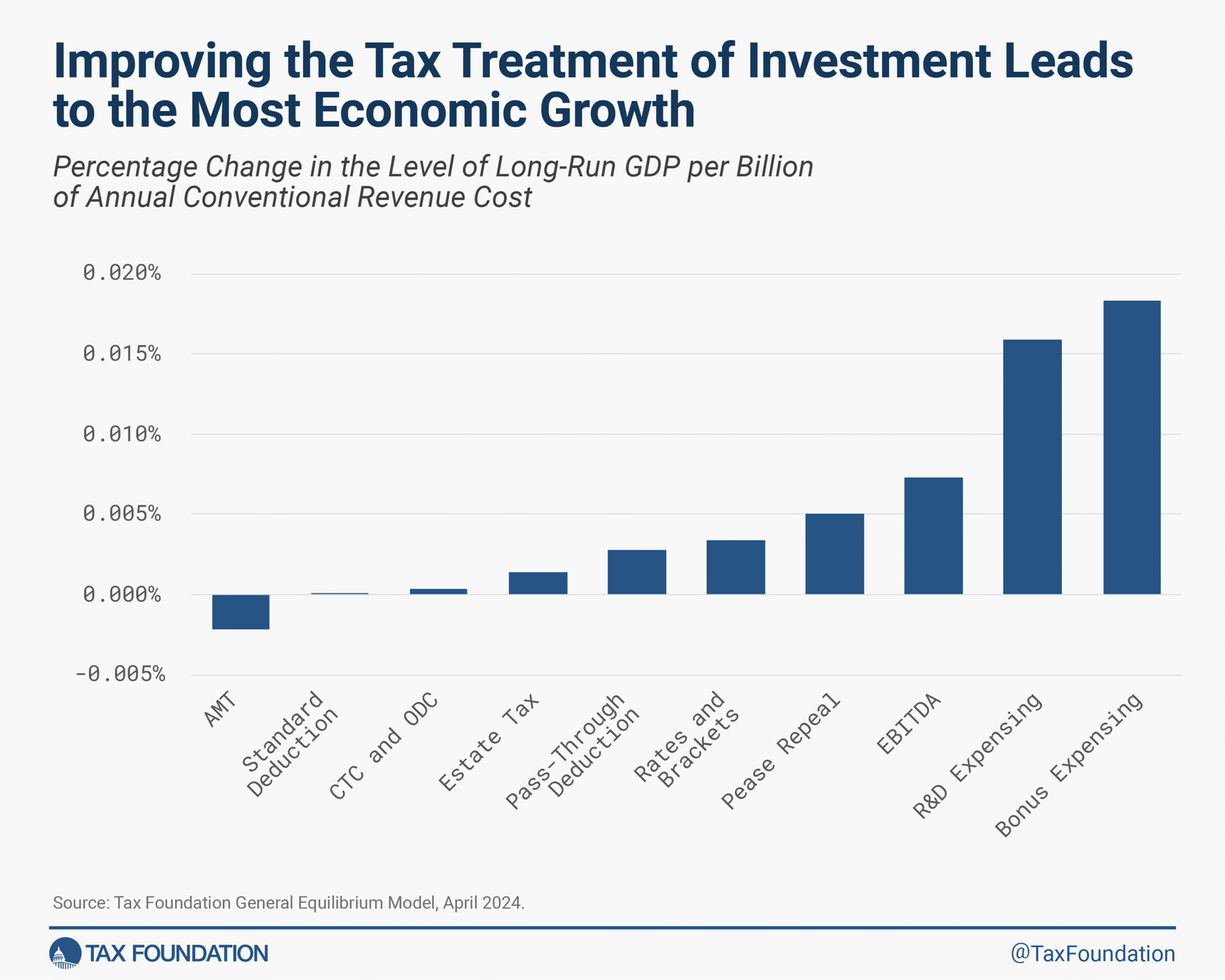
Another area that policy analysts closely study involves tax incentives designed to encourage investment.
Tax policies can influence whether businesses invest in equipment, research, or new facilities.
Examples of commonly discussed incentives include:
- Accelerated depreciation for capital purchases
- Tax credits for research and development
- Incentives supporting domestic manufacturing
- Energy-related tax credits
For example, a manufacturing company deciding whether to build a new facility may consider how tax deductions affect the overall cost of the investment.
Economists often analyze these incentives because investment is a key driver of long-term productivity growth.
Fiscal Sustainability and Federal Revenue
Beyond economic incentives, analysts also evaluate tax proposals through the lens of fiscal sustainability.
Federal spending on programs such as healthcare, retirement benefits, and interest on the national debt continues to grow. As a result, policymakers must balance tax reductions with revenue needs.
The Congressional Budget Office frequently publishes projections showing how tax policy changes could affect federal deficits and debt levels over time.
Analysts typically examine tax proposals based on several criteria:
- Expected impact on federal revenue
- Distribution across income groups
- Administrative complexity
- Long-term economic effects
These evaluations help policymakers understand the potential trade-offs involved in tax reform.
What Analysts Are Watching in the Next Few Years
Although many policy proposals are still under debate, analysts expect several key issues to shape the next phase of tax reform.
Among the most closely monitored developments are:
- Expiration of individual tax provisions in 2025
- Changes to the Child Tax Credit
- Future of the pass-through business deduction
- Corporate tax policy adjustments
- International tax coordination
- Incentives for domestic manufacturing and innovation
The decisions made on these issues will influence both the federal budget and economic activity.
Practical Implications for Households and Businesses
While policy debates may seem distant from everyday financial planning, tax reforms can influence important decisions for households and businesses.
For individuals, potential impacts include:
- Changes in annual tax liability
- Adjustments to tax credits and deductions
- Differences in retirement savings incentives
For businesses, reforms may affect:
- Investment timing
- Hiring decisions
- Capital purchases
- Long-term expansion strategies
Staying informed about policy discussions allows taxpayers to anticipate potential changes and adapt financial plans accordingly.
Frequently Asked Questions
1. Why is tax reform being discussed now?
Several provisions from the 2017 tax law are scheduled to expire after 2025, prompting policymakers to evaluate future tax policies.
2. Will individual tax rates change soon?
They could change if current provisions expire, though Congress may extend or modify them.
3. What is the Qualified Business Income deduction?
It allows eligible small business owners to deduct up to 20% of certain business income.
4. Why are analysts concerned about federal deficits?
Tax policy affects government revenue, which influences the federal budget and national debt.
5. How could tax reform affect families?
Changes to tax brackets, deductions, and family tax credits can influence household finances.
6. What role do corporate taxes play in the economy?
Corporate tax policy affects business investment decisions and global competitiveness.
7. Why are research tax credits important?
They encourage businesses to invest in innovation and technological development.
8. Are small businesses affected differently than large corporations?
Yes. Small businesses often rely on pass-through taxation rather than corporate tax rates.
9. How do economists evaluate tax proposals?
They analyze effects on growth, revenue, income distribution, and administrative complexity.
10. Where can Americans follow tax policy developments?
Official government reports and economic research institutions often publish updates on tax policy proposals.
The Policy Choices That Will Shape the Next Tax Era
Tax reform debates often reveal broader questions about economic priorities and fiscal responsibility. Policymakers must decide how to balance incentives for growth with the need to fund government programs and manage national debt.
As analysts continue examining the latest proposals, the next phase of tax reform will likely influence investment decisions, household finances, and federal fiscal policy for many years.
Understanding these discussions allows Americans to better anticipate how future legislation could affect the economic landscape.
Signals Emerging From the Current Tax Policy Debate
- Several individual tax provisions are set to expire after 2025
- Family tax credits remain central to policy discussions
- Small business deductions could change depending on legislation
- Corporate tax competitiveness continues to influence reform proposals
- Fiscal sustainability is shaping many tax policy decisions