
Summary
Regional Federal Reserve Banks play a critical role in shaping U.S. monetary policy by gathering economic intelligence, conducting research, supervising financial institutions, and participating in policy decisions through the Federal Open Market Committee. Their regional perspectives ensure national policies reflect real economic conditions across the country—from labor markets and small businesses to housing and banking stability.
Understanding the Structure of the Federal Reserve System
The U.S. Federal Reserve System is often associated with its central governing body in Washington, D.C. However, the system was intentionally designed to be decentralized. When Congress created the Federal Reserve in 1913, lawmakers wanted a structure that balanced national oversight with regional insight.
Today, the Federal Reserve System includes:
- 12 Regional Federal Reserve Banks
- The Board of Governors in Washington, D.C.
- The Federal Open Market Committee (FOMC)
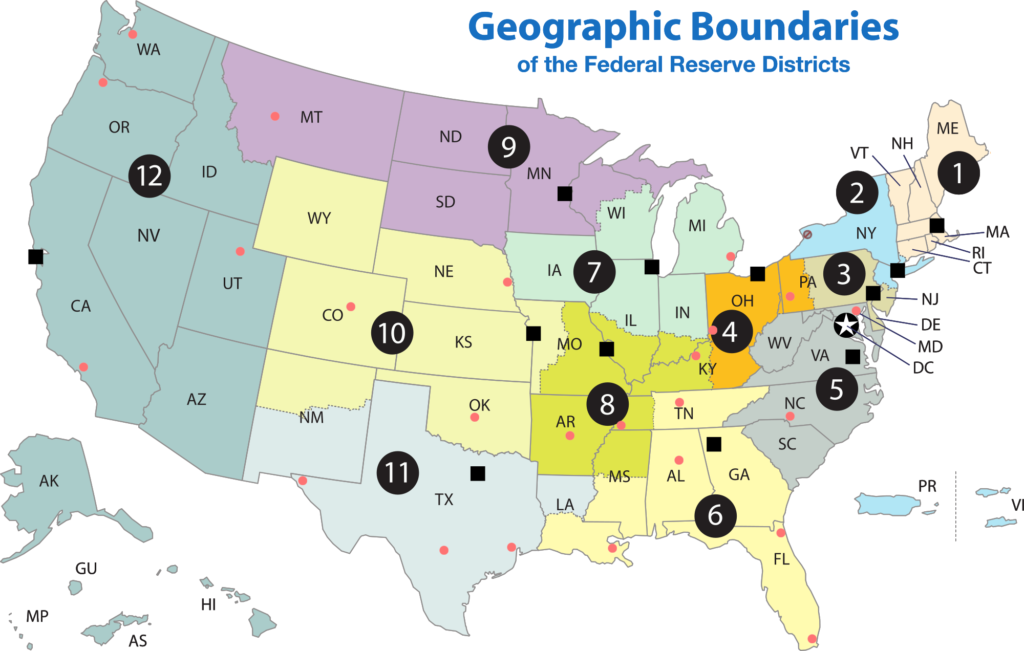
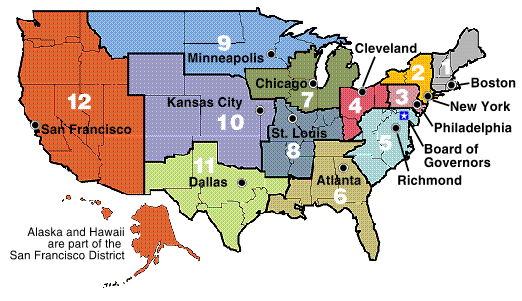
The regional banks are located in major cities such as Boston, New York, Chicago, Dallas, and San Francisco. Each serves a specific geographic district that includes multiple states and thousands of financial institutions.
This structure ensures that economic policy decisions are not shaped solely by conditions in Washington or on Wall Street. Instead, they incorporate perspectives from communities across the country—from manufacturing hubs in the Midwest to technology centers in California.
Why the Federal Reserve Is Organized Regionally
The United States is economically diverse. Agricultural production, manufacturing, technology, finance, and energy industries dominate different regions. A centralized monetary authority without regional input could miss important economic signals.
Regional Federal Reserve Banks help address this challenge by maintaining direct connections with local economies.
For example, the Federal Reserve Bank of Kansas City closely monitors agricultural credit conditions across the Plains states. Meanwhile, the Federal Reserve Bank of San Francisco tracks trends in the technology sector and West Coast housing markets.
By gathering data from businesses, banks, and labor markets in their districts, regional banks provide valuable insights that feed into national decision-making.
This decentralized approach remains one of the defining features of the Federal Reserve system.
The 12 Federal Reserve Districts and Their Roles
Each Federal Reserve district serves as an economic monitoring center for its region.
The twelve districts include:
- Boston
- New York
- Philadelphia
- Cleveland
- Richmond
- Atlanta
- Chicago
- St. Louis
- Minneapolis
- Kansas City
- Dallas
- San Francisco
These banks operate semi-independently while remaining part of the broader Federal Reserve system. Their responsibilities extend well beyond policy input and include:
- Supervising regional banks and financial institutions
- Conducting economic research
- Providing payment services
- Monitoring financial stability
- Supporting economic development initiatives
Because each district reflects unique economic conditions, their insights often differ. This diversity of perspectives is essential when forming national policy.
How Regional Banks Gather Economic Intelligence
One of the most influential contributions regional Federal Reserve Banks make is real-time economic intelligence.
National economic data often arrives with delays or revisions. Regional banks supplement these statistics with direct information from businesses and financial institutions.
Federal Reserve economists and staff regularly engage with:
- Small business owners
- Commercial banks
- agricultural producers
- labor market leaders
- community organizations
These conversations help identify emerging economic trends before they appear in official data.
The Beige Book
A well-known example of this information-gathering process is the Beige Book, a report published eight times per year by the Federal Reserve.
Each district compiles anecdotal reports on economic conditions, including:
- hiring activity
- wage pressures
- supply chain disruptions
- housing demand
- consumer spending patterns
These reports give policymakers a qualitative view of the economy that complements statistical data.
For example, during the COVID-19 recovery period, many Beige Book reports highlighted labor shortages in service industries months before those shortages appeared clearly in national employment data.
Regional Presidents and Their Role in Monetary Policy
Regional Federal Reserve Banks play a direct role in shaping monetary policy through representation on the Federal Open Market Committee (FOMC).
The FOMC is responsible for decisions such as:
- Setting the federal funds rate
- Conducting open market operations
- Guiding monetary policy strategy
The committee consists of:
- 7 members of the Board of Governors
- The president of the New York Fed (permanent member)
- Four rotating presidents from other regional Federal Reserve Banks
This structure ensures regional representation in policy discussions.
For instance, a president from the Federal Reserve Bank of Dallas may bring insights about energy markets, while the Chicago Fed president may highlight manufacturing conditions in the Midwest.
Even when they are not voting members, all regional bank presidents participate in FOMC discussions and contribute economic analysis.
Research and Economic Analysis From Regional Banks
Regional Federal Reserve Banks are also major contributors to economic research.
Their economists publish studies that examine topics such as:
- labor market dynamics
- inflation expectations
- housing affordability
- financial stability risks
- technological change
Many influential economic insights originate from these regional research teams.
For example:
- The Federal Reserve Bank of St. Louis operates FRED (Federal Reserve Economic Data), one of the world’s most widely used economic data platforms.
- The Federal Reserve Bank of New York produces detailed research on financial markets and banking stability.
- The Federal Reserve Bank of Atlanta created the widely followed GDPNow model, which estimates real-time economic growth.
These tools are used by economists, policymakers, journalists, and investors across the United States.
Bank Supervision and Financial Stability
Another major responsibility of regional Federal Reserve Banks is supervising financial institutions.
They oversee thousands of banks across their districts to ensure safety and stability in the financial system.
This oversight includes:
- examining bank risk management practices
- monitoring capital levels
- reviewing lending standards
- identifying emerging financial risks
During periods of financial stress, regional banks serve as critical monitoring hubs.
For example, during the 2008 financial crisis, regional Federal Reserve Banks played key roles in assessing local banking vulnerabilities and supporting emergency lending programs.
Their close relationships with regional banks allow them to identify potential financial stability risks early.
Payment Systems and Financial Infrastructure
Many Americans do not realize that the Federal Reserve operates a significant portion of the nation’s financial infrastructure.
Regional Federal Reserve Banks help manage payment services used by banks and financial institutions.
These services include:
- processing electronic payments
- clearing checks
- distributing U.S. currency
- supporting digital payment innovations
Recent initiatives such as FedNow, the Federal Reserve’s instant payment system launched in 2023, involve participation and coordination across multiple regional Federal Reserve Banks.
These operational functions help maintain the efficiency and reliability of the U.S. financial system.
Community Development and Economic Inclusion
Regional Federal Reserve Banks also support community development programs.
They conduct research and outreach related to:
- affordable housing
- small business financing
- rural economic development
- workforce participation
While the Federal Reserve does not provide direct financial assistance to communities, regional banks help connect policymakers, researchers, and local leaders.
For example, the Federal Reserve Bank of Minneapolis has conducted extensive research on income inequality and workforce participation in rural areas.
Similarly, the Federal Reserve Bank of Atlanta has studied the challenges facing small businesses in underserved communities.
These insights help inform national discussions about economic opportunity and long-term growth.
Why Regional Perspectives Matter for National Policy
Economic conditions vary significantly across the United States.
Housing affordability challenges in California look different from housing markets in the Midwest. Energy industry cycles affect Texas and Louisiana differently than technology sector shifts affect the West Coast.
Regional Federal Reserve Banks ensure that these diverse conditions are reflected in policy discussions.
Without regional input, monetary policy could risk being overly influenced by economic conditions in just a few major financial centers.
Instead, the current system provides policymakers with a fuller picture of the U.S. economy.
Frequently Asked Questions
How many regional Federal Reserve Banks are there?
There are 12 regional Federal Reserve Banks, each serving a different geographic district across the United States.
Do regional Federal Reserve Banks set interest rates?
Regional banks contribute to the decision-making process through the Federal Open Market Committee, but interest rate decisions are made collectively by the committee.
Why does the New York Federal Reserve have a permanent vote?
The New York Fed manages the Federal Reserve’s open market operations and plays a central role in financial markets, which is why its president always votes on the FOMC.
What is the Beige Book?
The Beige Book is a report summarizing economic conditions across the 12 Federal Reserve districts based on interviews with businesses and regional contacts.
Who owns regional Federal Reserve Banks?
Member commercial banks hold shares in regional Federal Reserve Banks, but these shares do not provide control in the same way corporate stock does. The system operates as a public institution.
How often do regional Fed presidents speak publicly?
Regional Fed presidents frequently give speeches, publish research, and participate in economic discussions to provide transparency about economic conditions.
What is FRED economic data?
FRED is an economic database maintained by the St. Louis Federal Reserve containing hundreds of thousands of economic data series.
Do regional Fed banks regulate banks?
Yes. They supervise many financial institutions within their districts to ensure financial stability and compliance with regulations.
Why does the Federal Reserve use regional districts?
The regional structure ensures that national monetary policy reflects economic conditions across the entire country.
How do regional banks influence national policy without voting?
Even when not voting members, regional presidents contribute economic analysis and perspectives during FOMC discussions.
A Distributed System Built for a Diverse Economy
The regional structure of the Federal Reserve reflects the economic diversity of the United States. By combining national oversight with regional insight, policymakers gain a more accurate understanding of the country’s economic conditions.
Regional Federal Reserve Banks serve as listening posts, research centers, and supervisory authorities. Their contributions help ensure that national monetary policy reflects real economic experiences—from rural communities to major financial centers.
This balance between local knowledge and national policy remains a defining strength of the Federal Reserve System more than a century after its creation.
Key Insights at a Glance
- The Federal Reserve System includes 12 regional banks across the United States
- Regional banks collect real-world economic data from businesses and communities
- Their presidents participate in Federal Open Market Committee discussions
- Regional economists produce influential research and economic models
- These banks supervise thousands of financial institutions
- They operate critical U.S. payment infrastructure
- Regional perspectives ensure national policy reflects diverse economic conditions