The Federal Reserve faces one of the most complex policy environments in decades. Its leaders must balance inflation control, economic growth, employment stability, financial market confidence, and global economic pressures simultaneously. Understanding how the Fed makes decisions helps consumers, investors, business owners, and workers better anticipate changes in borrowing costs, savings returns, investment conditions, and the broader economic outlook.
Understanding the Federal Reserve’s Role in the U.S. Economy
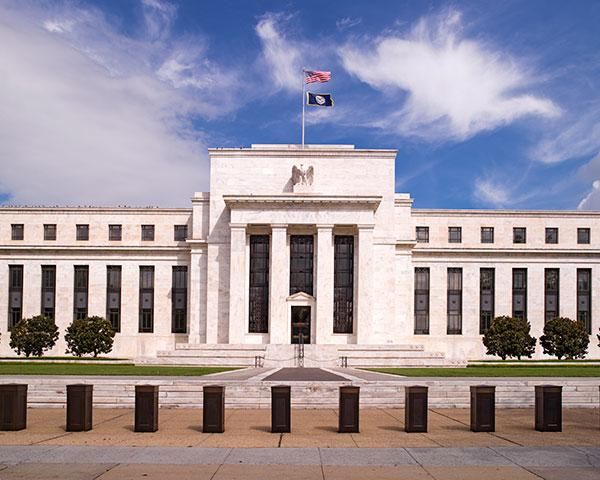
The Federal Reserve sits at the center of the American financial system. Often referred to simply as “the Fed,” it serves as the nation’s central bank and is responsible for managing monetary policy, promoting maximum employment, maintaining stable prices, and supporting a stable financial system.
Unlike many government agencies, the Fed’s decisions can influence nearly every household and business in America. Mortgage rates, auto loans, credit card interest rates, business borrowing costs, and investment markets are all affected—directly or indirectly—by Federal Reserve policy.
The challenge is that the Fed rarely focuses on a single economic goal. Policymakers must constantly weigh competing priorities. An action that helps reduce inflation may slow economic growth. A policy designed to stimulate employment may increase inflationary pressure. Every decision involves tradeoffs.
This balancing act becomes especially difficult during periods of economic uncertainty, when inflation, labor markets, consumer spending, and global developments move in different directions.
Why Inflation Remains the Fed’s Primary Concern
Inflation refers to the rate at which prices rise over time. While moderate inflation is considered healthy for economic growth, excessive inflation reduces purchasing power and creates uncertainty for consumers and businesses.
The Federal Reserve generally aims for inflation around 2% over the long term. This target is viewed as consistent with sustainable economic growth and stable prices.
When inflation rises significantly above that target, policymakers typically respond by tightening monetary policy. Their primary tool is adjusting the federal funds rate, which influences borrowing costs throughout the economy.
Higher interest rates generally:
- Reduce consumer spending
- Slow business investment
- Cool housing demand
- Lower borrowing activity
- Ease upward pressure on prices
However, these effects do not happen immediately. Monetary policy often works with delays that can last many months.
A practical example can be seen in the housing market. As mortgage rates rise, home affordability declines. Fewer buyers enter the market, demand slows, and home price growth may moderate. This contributes to broader efforts to control inflation.
The challenge for policymakers is determining how much tightening is necessary without unnecessarily weakening economic activity.
The Other Side of the Equation: Supporting Economic Growth
While inflation often dominates headlines, economic growth remains equally important.
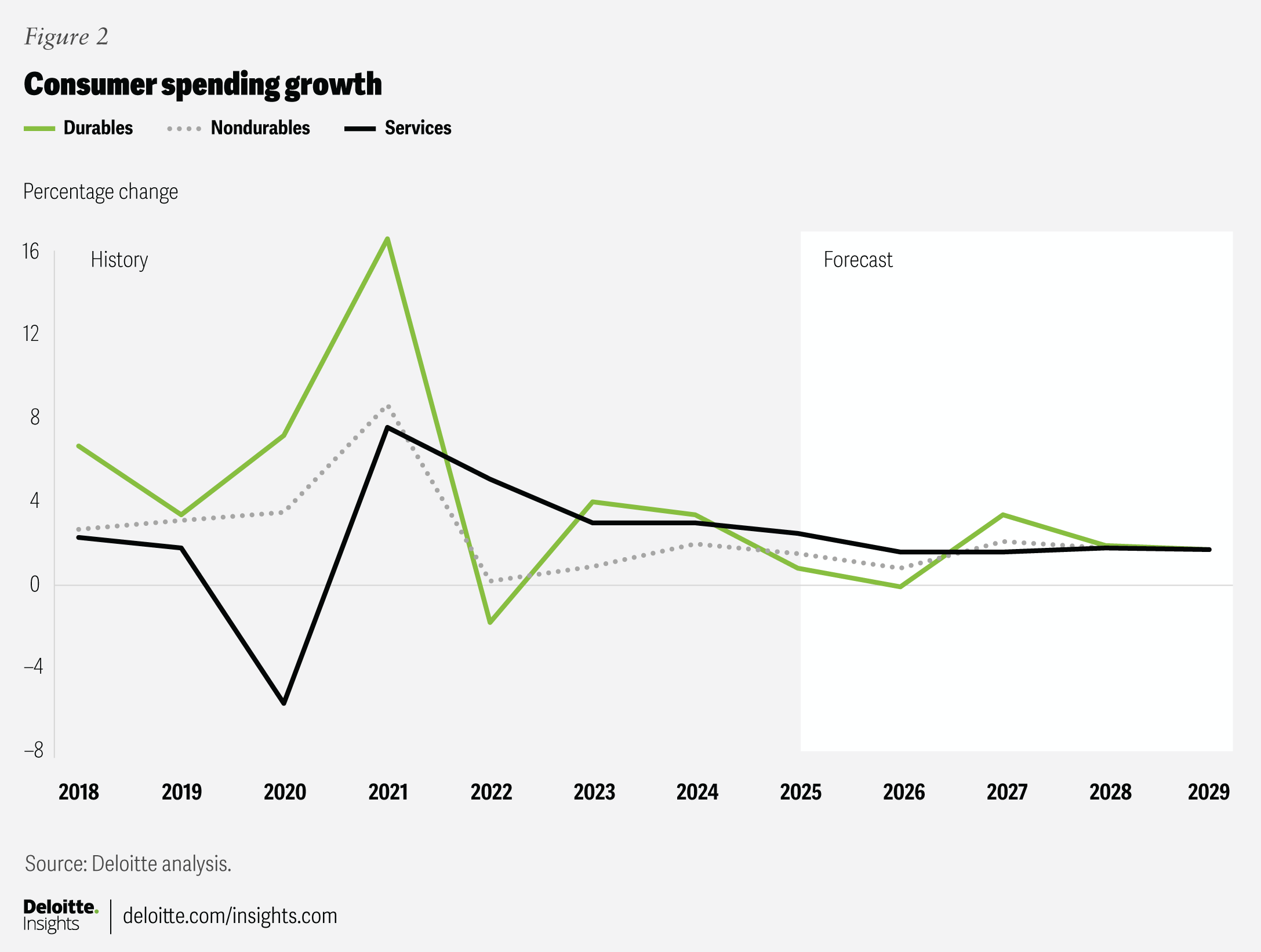
The U.S. economy depends on consumer spending, business investment, job creation, productivity growth, and financial stability. If interest rates rise too aggressively, economic momentum can weaken.
Businesses may postpone expansion plans. Consumers may delay large purchases. Construction projects can slow. Hiring activity may decline.
The Federal Reserve therefore faces a difficult question:
How much economic slowing is necessary to reduce inflation without triggering a recession?
This question has shaped many of the Fed’s recent policy discussions.
Historically, achieving a “soft landing”—bringing inflation down while maintaining positive economic growth—has proven difficult. Yet it remains one of the central objectives of modern monetary policy.
Economic growth indicators that policymakers closely monitor include:
- Gross Domestic Product (GDP)
- Consumer spending trends
- Business investment activity
- Manufacturing output
- Retail sales data
- Housing market performance
No single metric determines policy. Instead, Fed officials evaluate a broad range of data to build a comprehensive picture of economic conditions.
The Labor Market: A Critical Piece of the Puzzle
Employment occupies a unique position within Federal Reserve decision-making.
The Fed’s dual mandate requires policymakers to pursue both stable prices and maximum employment. These goals can sometimes complement each other, but they can also create tension.
A strong labor market generally benefits the economy through:
- Rising wages
- Increased consumer spending
- Higher household confidence
- Stronger business revenues
However, exceptionally tight labor markets can sometimes contribute to inflationary pressures.
When employers struggle to find workers, wages often rise rapidly. While higher wages benefit employees, businesses may pass increased labor costs to consumers through higher prices.
This does not mean wage growth is inherently inflationary. Rather, policymakers seek a sustainable balance where wage gains are supported by productivity improvements and economic growth.
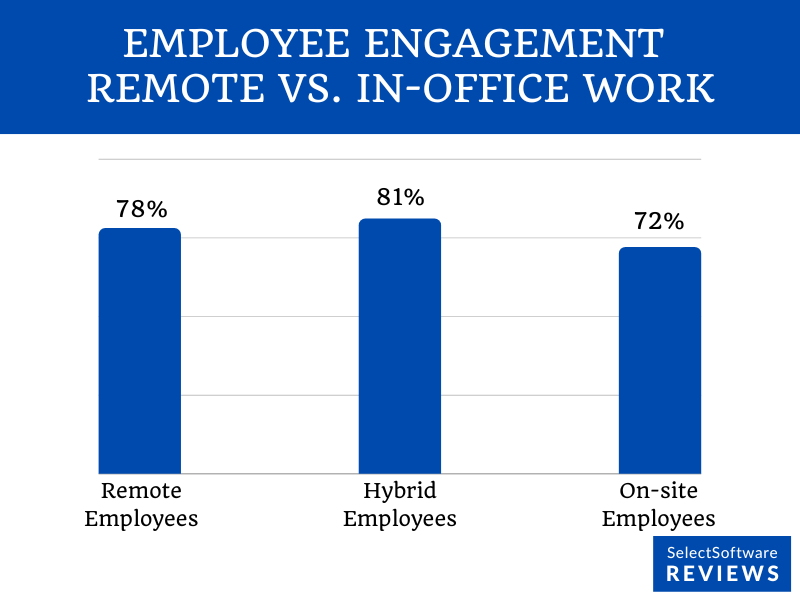
Recent labor market conditions have presented an unusual challenge. Employment levels have remained relatively strong even as policymakers worked to reduce inflation. This resilience has complicated forecasts and required ongoing adjustments to policy expectations.
How Interest Rates Influence Everyday Americans
Many people hear discussions about Federal Reserve rate decisions but wonder how those decisions affect their daily lives.
The effects extend far beyond Wall Street.
Borrowers
Consumers often feel the impact through:
- Mortgage rates
- Auto loan rates
- Credit card interest charges
- Home equity loans
- Small business financing
When rates rise, borrowing becomes more expensive. Monthly payments increase, reducing disposable income for many households.
Savers
Higher rates can benefit savers by increasing returns on:
- Savings accounts
- Certificates of deposit (CDs)
- Money market accounts
- Treasury securities
For years, savers experienced historically low returns. Higher interest rates have improved opportunities for conservative income-focused investors.
Businesses
Companies face changing financing conditions as rates move.
A manufacturer considering a new facility, for example, may reassess expansion plans if financing costs rise significantly. Similar decisions occur across industries, affecting hiring, investment, and production levels.
Why Market Expectations Matter So Much
Financial markets do not simply react to current policy decisions. They constantly attempt to anticipate future decisions.
As a result, expectations often become nearly as important as the decisions themselves.
Investors closely analyze:
- Federal Reserve statements
- Economic projections
- Inflation reports
- Employment data
- Public speeches by policymakers
When markets expect rates to remain elevated, financial conditions may tighten before any official policy change occurs.
Similarly, if investors anticipate future rate cuts, borrowing conditions may ease even before the Fed takes action.
This dynamic explains why communication has become one of the Federal Reserve’s most powerful tools.
Modern central banking increasingly relies on transparency and forward guidance. Policymakers use speeches, press conferences, and official reports to help markets understand their thinking.
Clear communication can reduce uncertainty and improve policy effectiveness.
The Challenge of Balancing Inflation and Growth Simultaneously
One of the most difficult aspects of monetary policy is that economic conditions rarely send perfectly consistent signals.
Consider a hypothetical scenario:
- Inflation remains above target
- Employment remains strong
- Consumer spending stays resilient
- Manufacturing activity weakens
- Housing demand softens
Should policymakers continue tightening?
Should they pause?
Should they begin preparing for future easing?
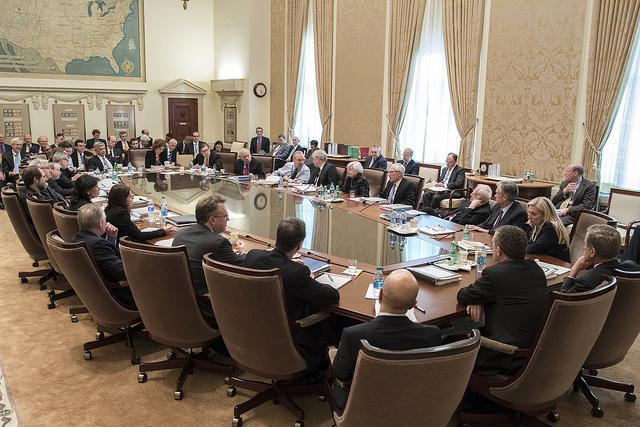
These situations illustrate why Federal Reserve meetings involve extensive analysis and debate.
Economic indicators often point in different directions. Policymakers must evaluate both current conditions and future risks.
Acting too slowly can allow inflation to become entrenched.
Acting too aggressively can unnecessarily damage economic growth.
The ideal policy path often becomes clear only in hindsight.
Global Factors Complicate Domestic Decisions
Although the Federal Reserve focuses on the United States, international developments frequently influence domestic policy decisions.
Global factors that can affect inflation and growth include:
- Energy price fluctuations
- Geopolitical tensions
- Supply chain disruptions
- International trade patterns
- Foreign economic slowdowns
- Currency movements
For example, disruptions in global supply chains can increase prices even when domestic demand remains stable.
Similarly, major economic weakness abroad can reduce demand for American exports, affecting U.S. growth prospects.
The interconnected nature of modern economies means that policymakers must monitor developments far beyond U.S. borders.

What Americans Often Ask About Federal Reserve Policy
Will the Fed always raise rates when inflation rises?
Not necessarily. Policymakers evaluate the source, persistence, and severity of inflation before determining an appropriate response. Temporary price increases may not require aggressive action.
Can the Federal Reserve prevent recessions?
The Fed can influence economic conditions but cannot eliminate all economic downturns. Monetary policy can reduce risks and support recovery efforts, but many factors affecting growth lie outside its control.
Why doesn’t the Fed simply lower inflation immediately?
Monetary policy works gradually. Rapid policy shifts can create unintended consequences, including financial instability and economic contraction.
Do rate cuts automatically help the economy?
Rate cuts can stimulate borrowing and spending, but their effectiveness depends on broader economic conditions, consumer confidence, and business sentiment.
How Policymakers Evaluate Incoming Data
Federal Reserve officials increasingly emphasize a data-dependent approach.
Rather than committing to a predetermined path, policymakers regularly reassess conditions using new information.
Key reports often include:
- Consumer Price Index (CPI)
- Personal Consumption Expenditures (PCE) inflation
- Monthly employment reports
- GDP growth estimates
- Wage growth data
- Consumer confidence surveys
This flexible approach allows policymakers to adapt as economic conditions evolve.
However, it also means that market expectations can change quickly when new data emerges.
For investors and consumers, understanding this process helps explain why forecasts frequently change.
Looking Ahead: The Ongoing Policy Balancing Act
The Federal Reserve’s task remains extraordinarily complex. Policymakers must make decisions under conditions of uncertainty while considering millions of workers, businesses, consumers, investors, and financial institutions.
The central challenge remains unchanged: maintaining price stability without unnecessarily restricting economic growth.
Success requires balancing competing objectives, interpreting imperfect data, communicating clearly with markets, and responding appropriately to changing economic conditions.
For Americans, understanding these dynamics provides valuable context for everything from mortgage decisions and retirement planning to business investments and household budgeting.
While monetary policy may appear distant from everyday life, its effects reach nearly every corner of the economy.